














Children’s daily life in woods
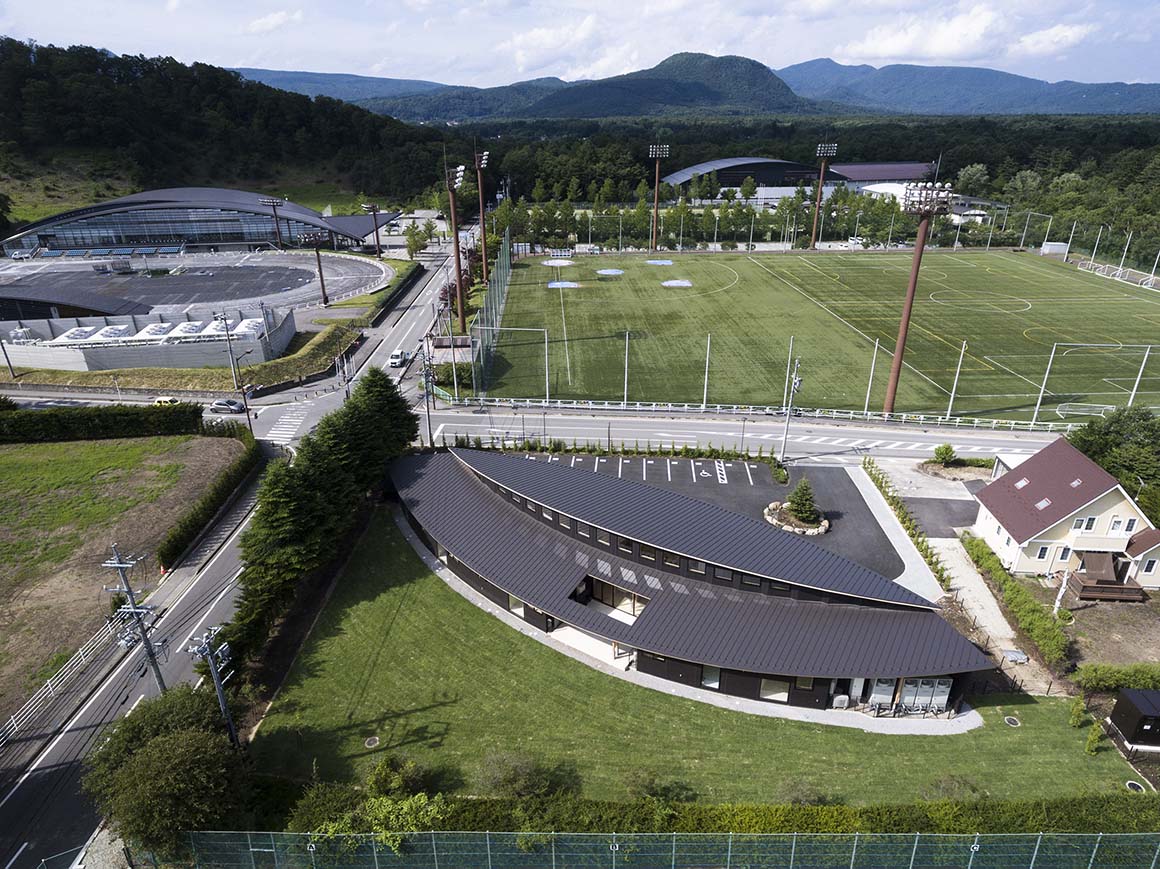
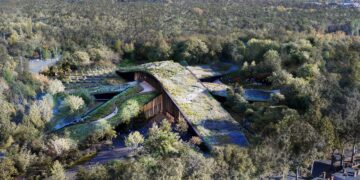
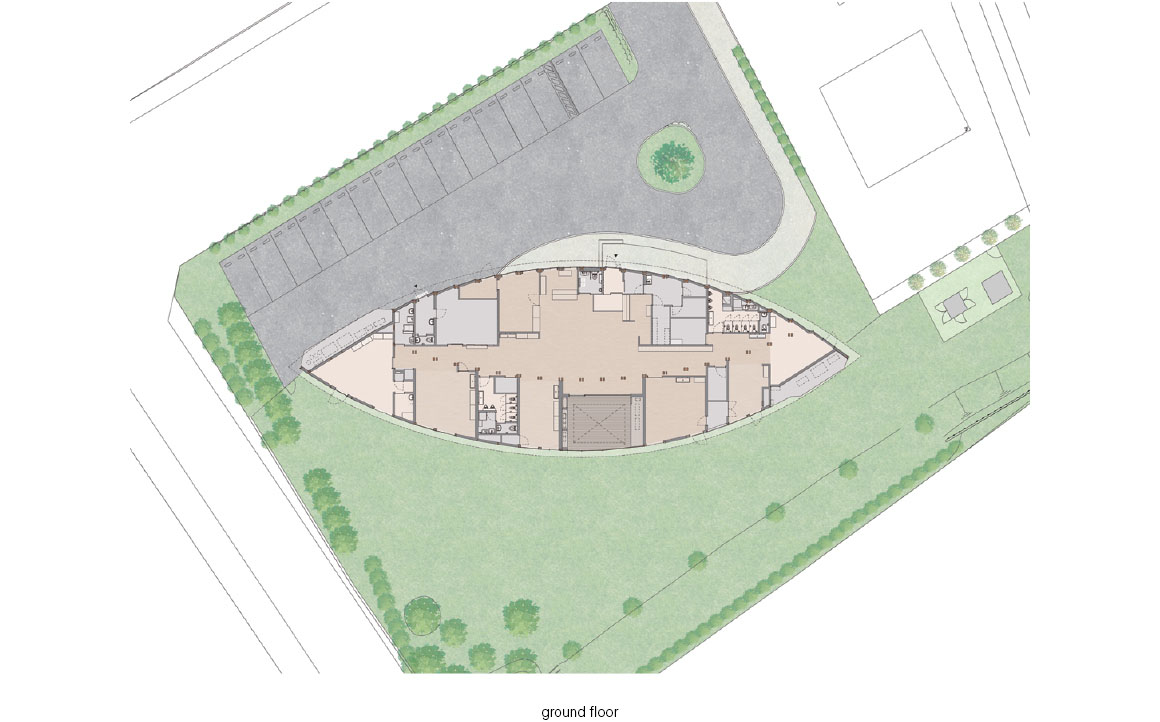
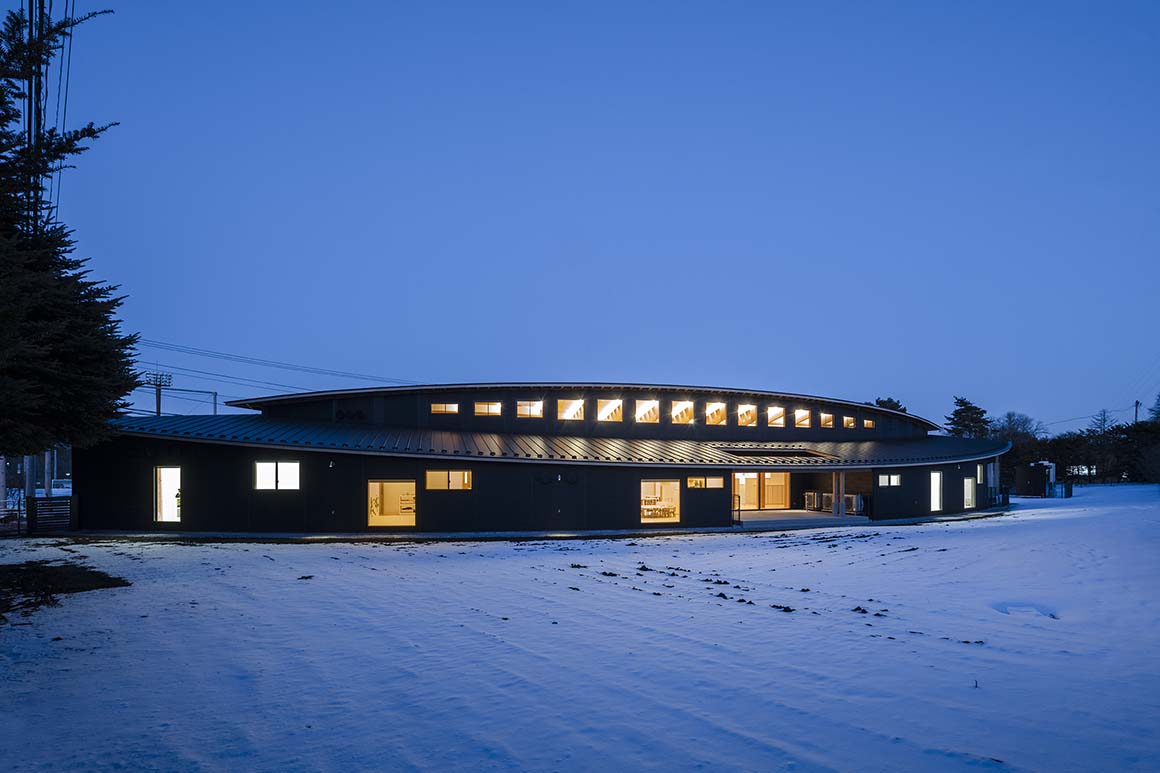
A single fallen leaf resting in the courtyard, beneath it a world that gently embraces children. In the quiet resort town of Karuizawa, this nursery school is closely connected to the richness of its surrounding natural environment. The nursery’s layout crossing the lawn, the large windows, and the space between two roofs of differing heights capture the changing seasons. On the sunlit southern slope lies a playground. The nursery forms a boundary between the southern playground and the northern parking area, while a retaining wall to the west replaces a conventional fence, dissolving edges and harmonizing with its surroundings—this is the landscape of Karuizawa Kazakoshi Nursery School.
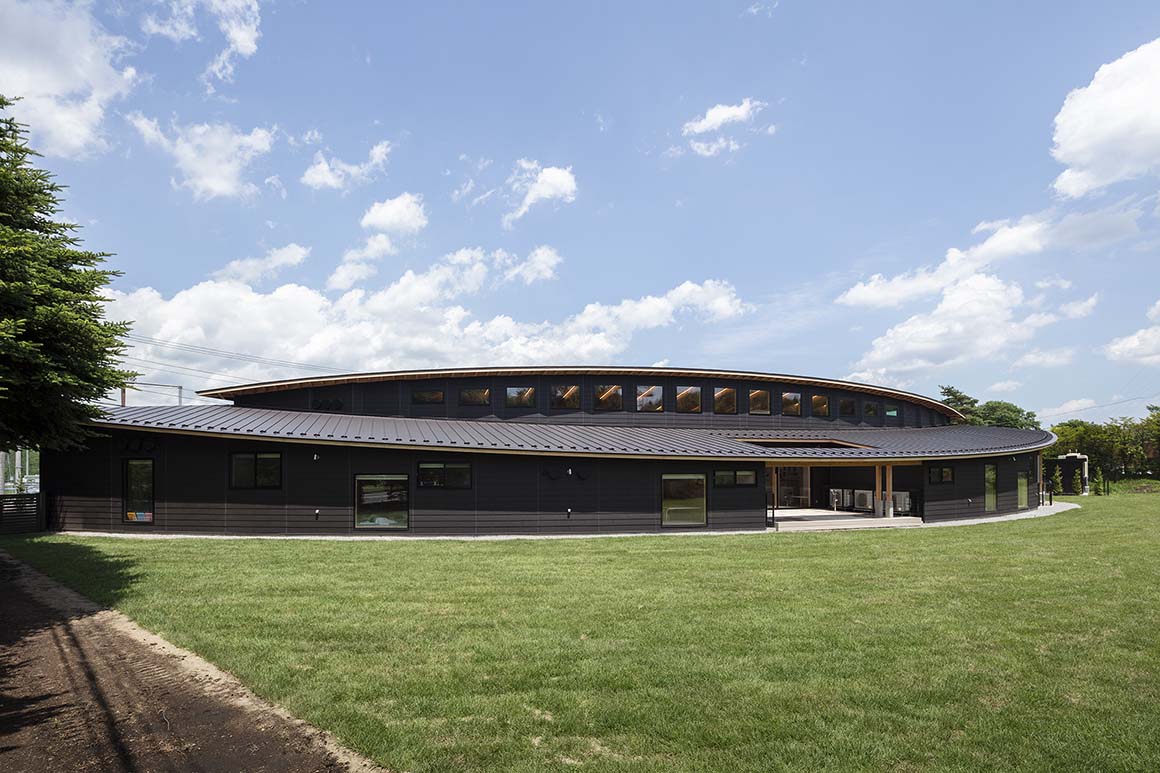
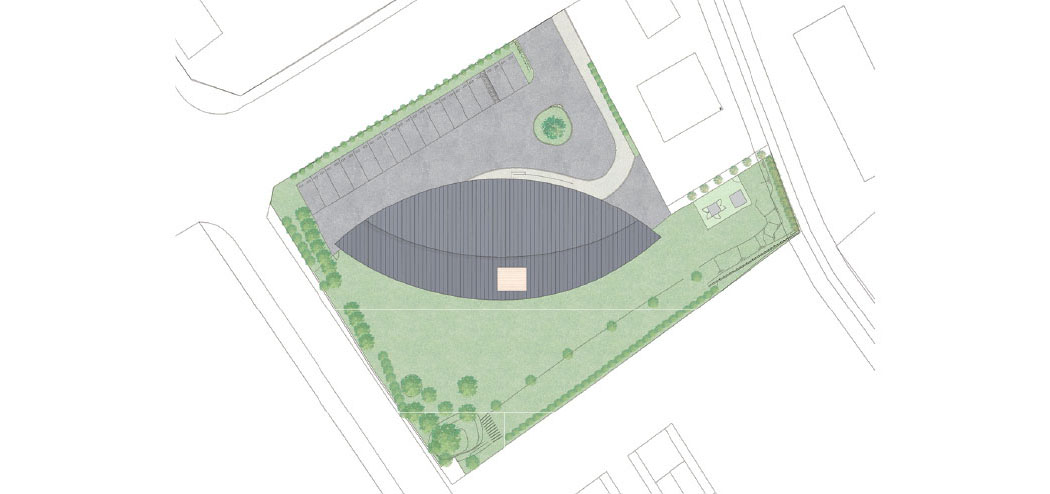
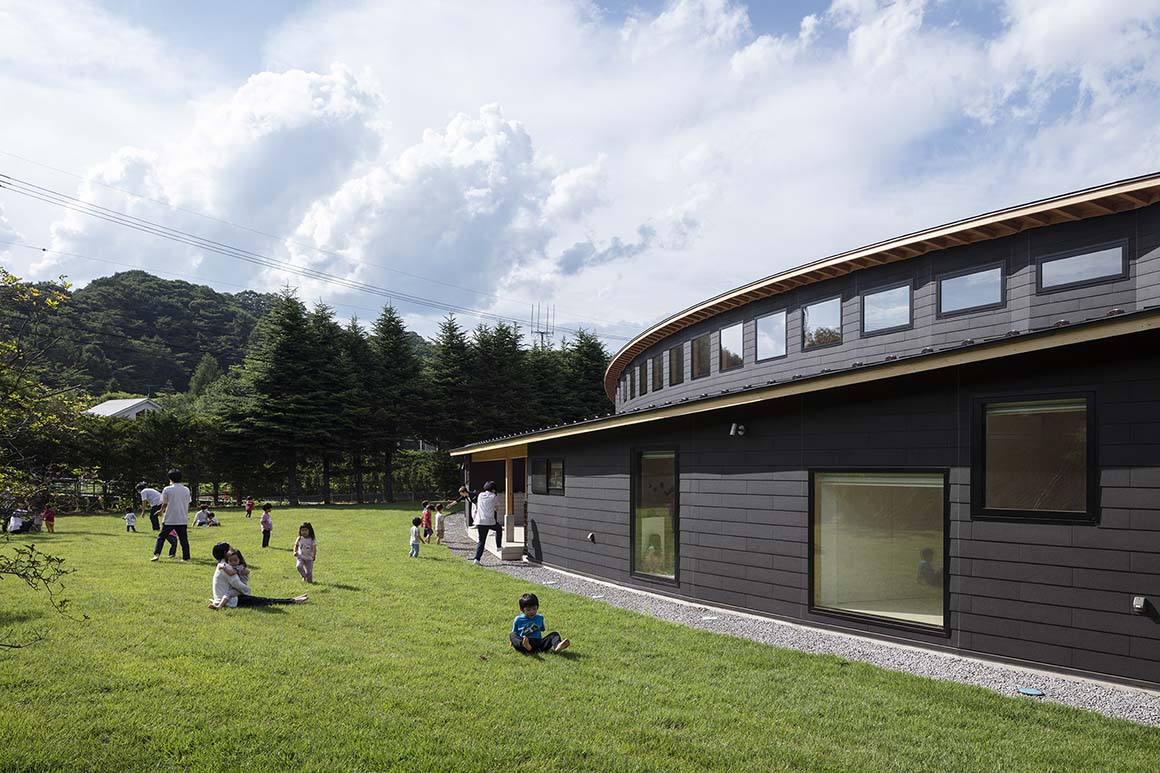
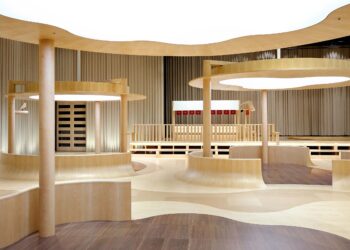
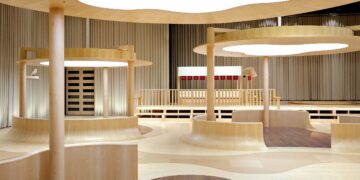
The leaf-shaped plan opens in gentle curves so that every classroom connects broadly to the courtyard. Beneath the lower of the two roofs are the classrooms, while the higher roof shelters the multipurpose hall and staff rooms. The hall serves as the heart of the nursery, with generous width and height to accommodate a range of activities. Sunlight pours in through the windows set between the two roofs, filling the interior with light. To the east of the hall, a large white wall displays artworks created by the children, while the kitchen to the west is designed with glass windows that allow views of the cooking process, revealing everyday scenes within the space.
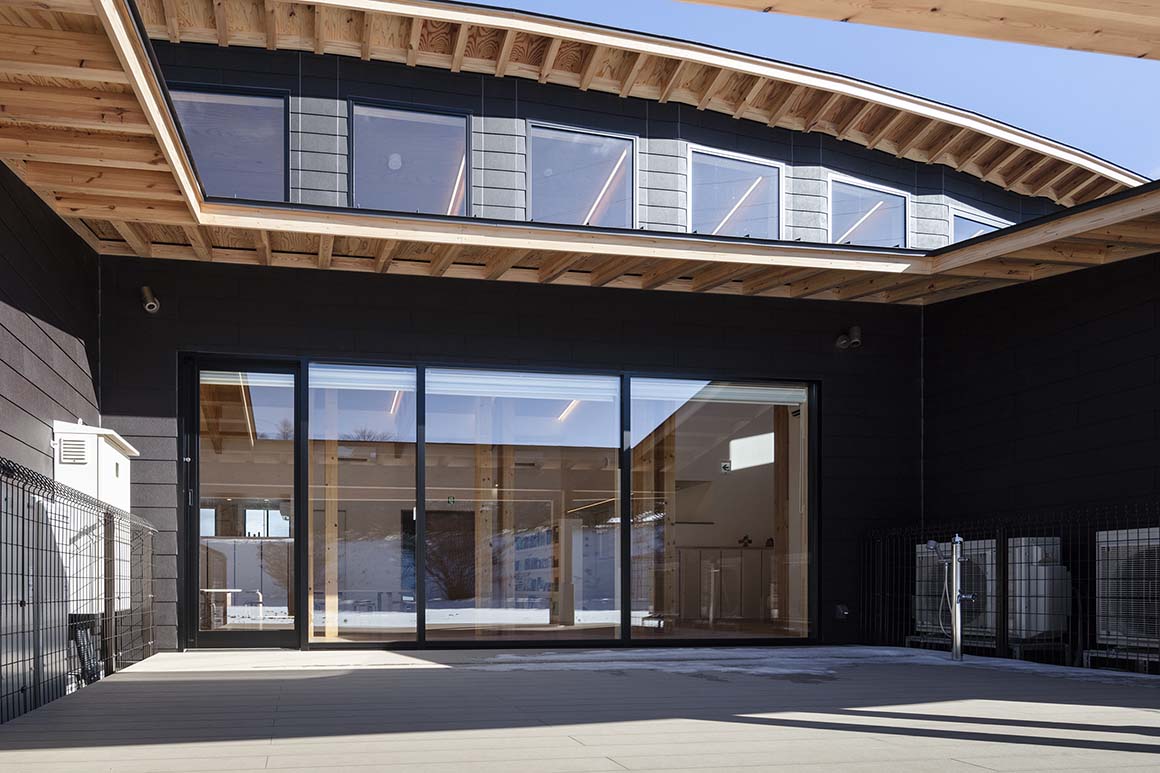
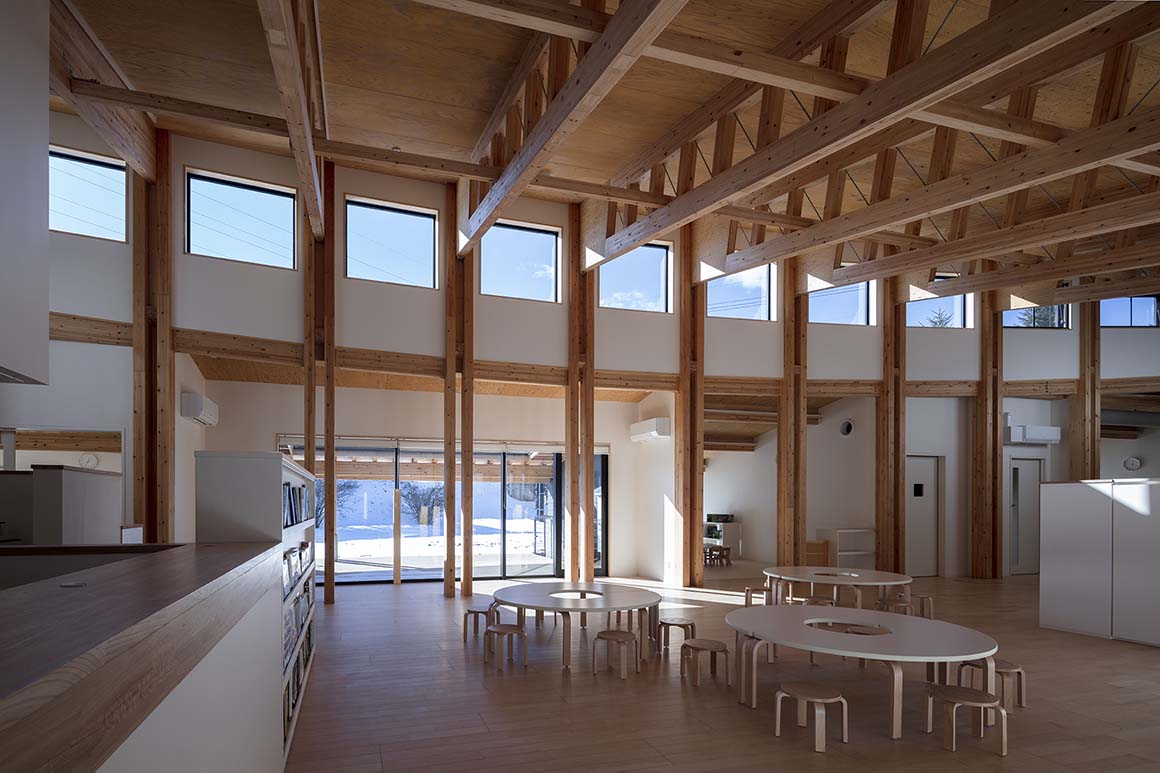
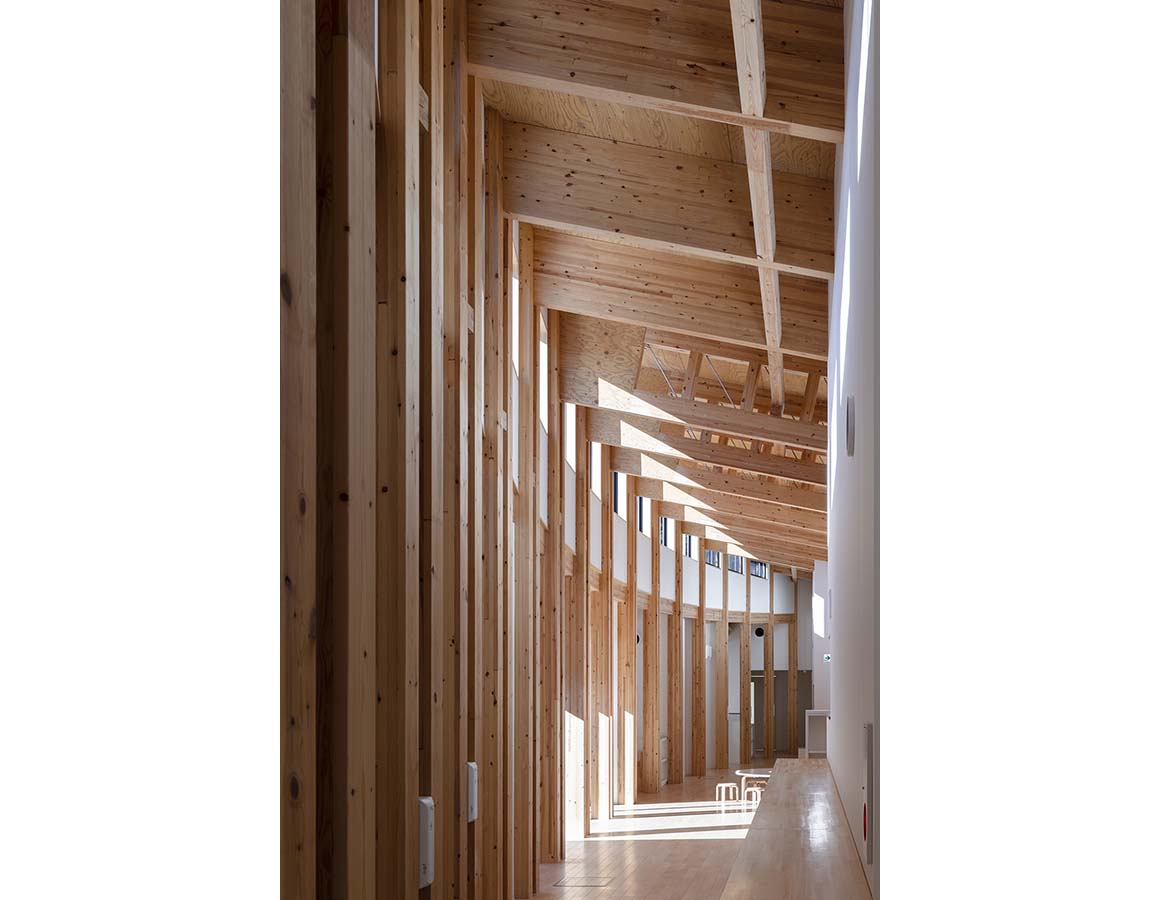
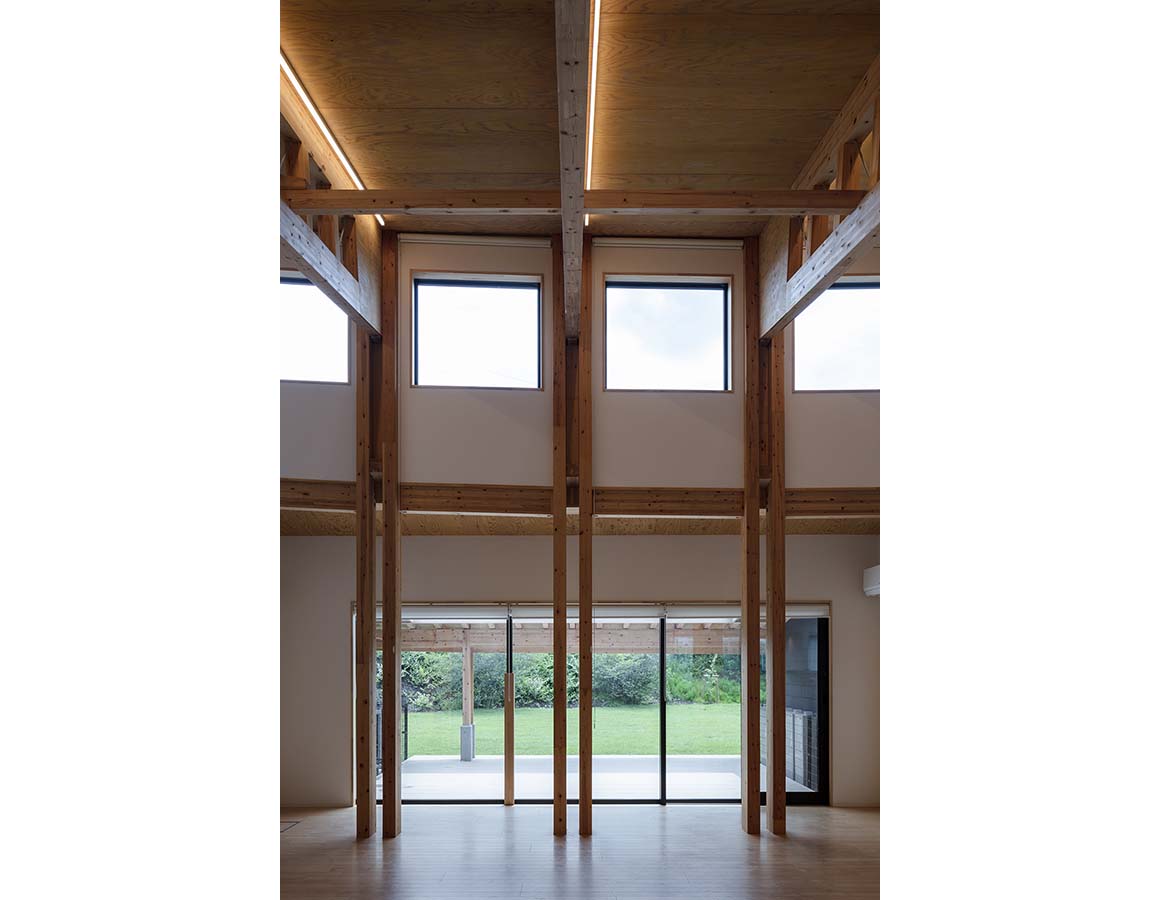
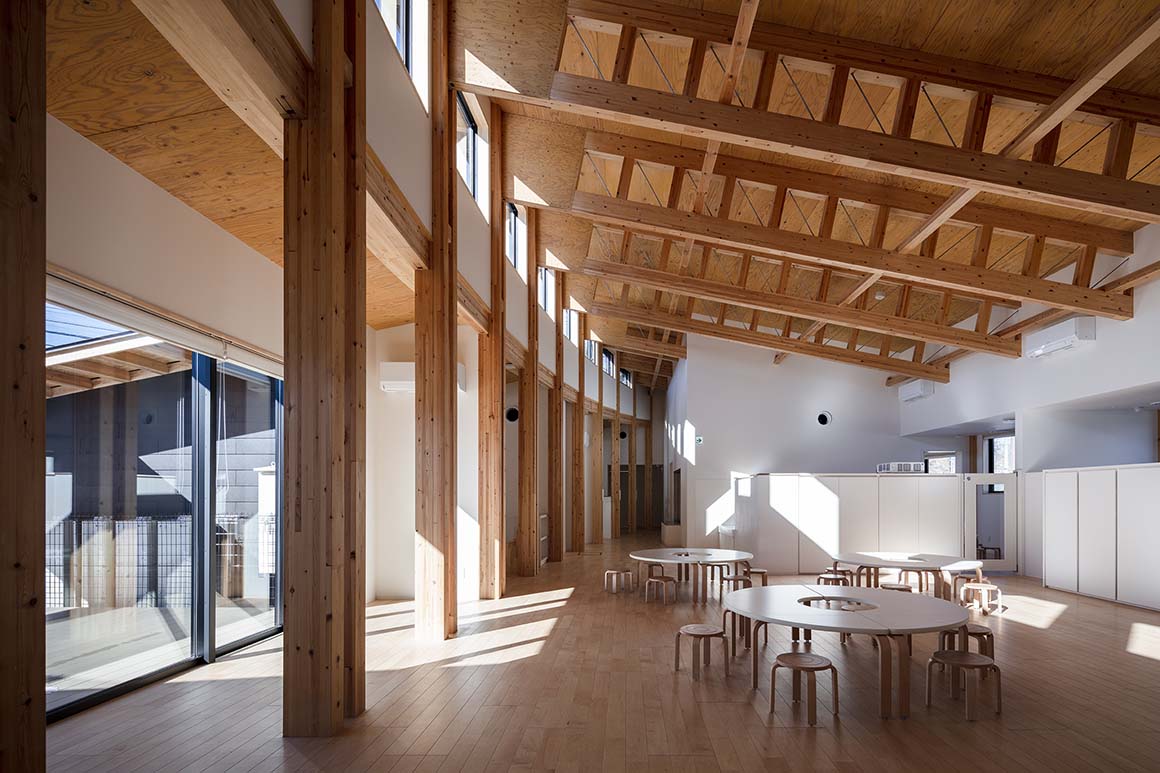
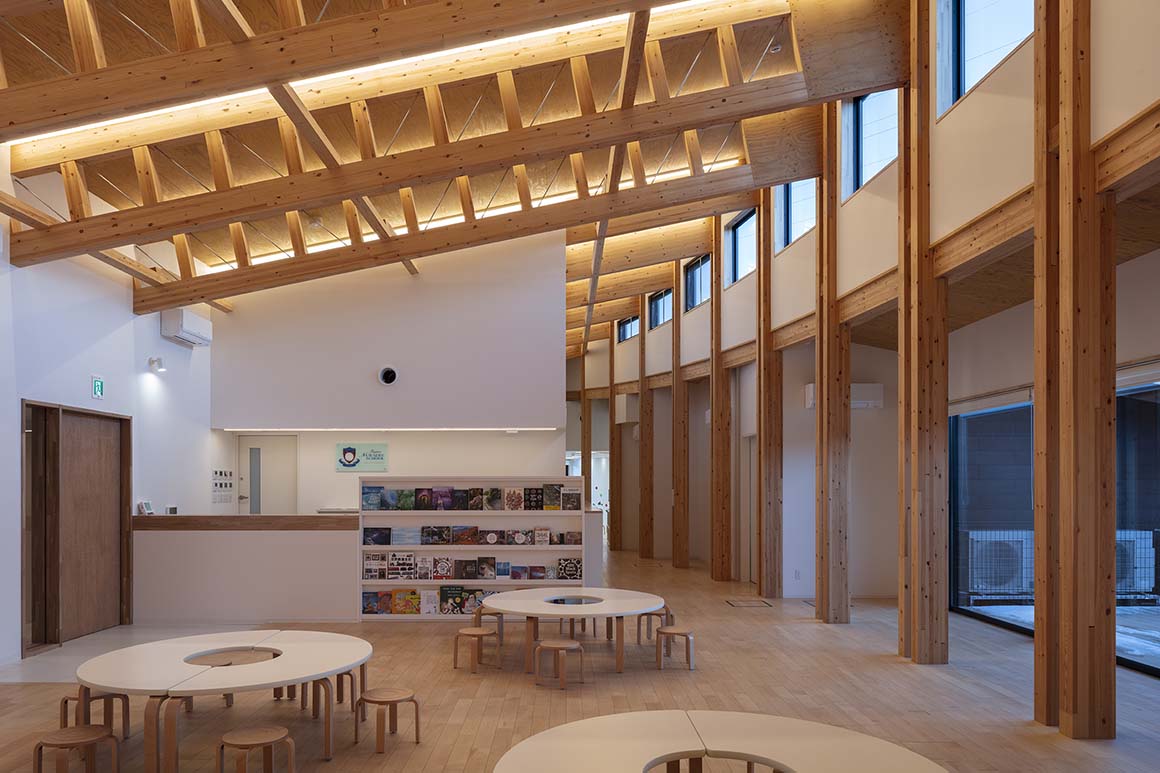
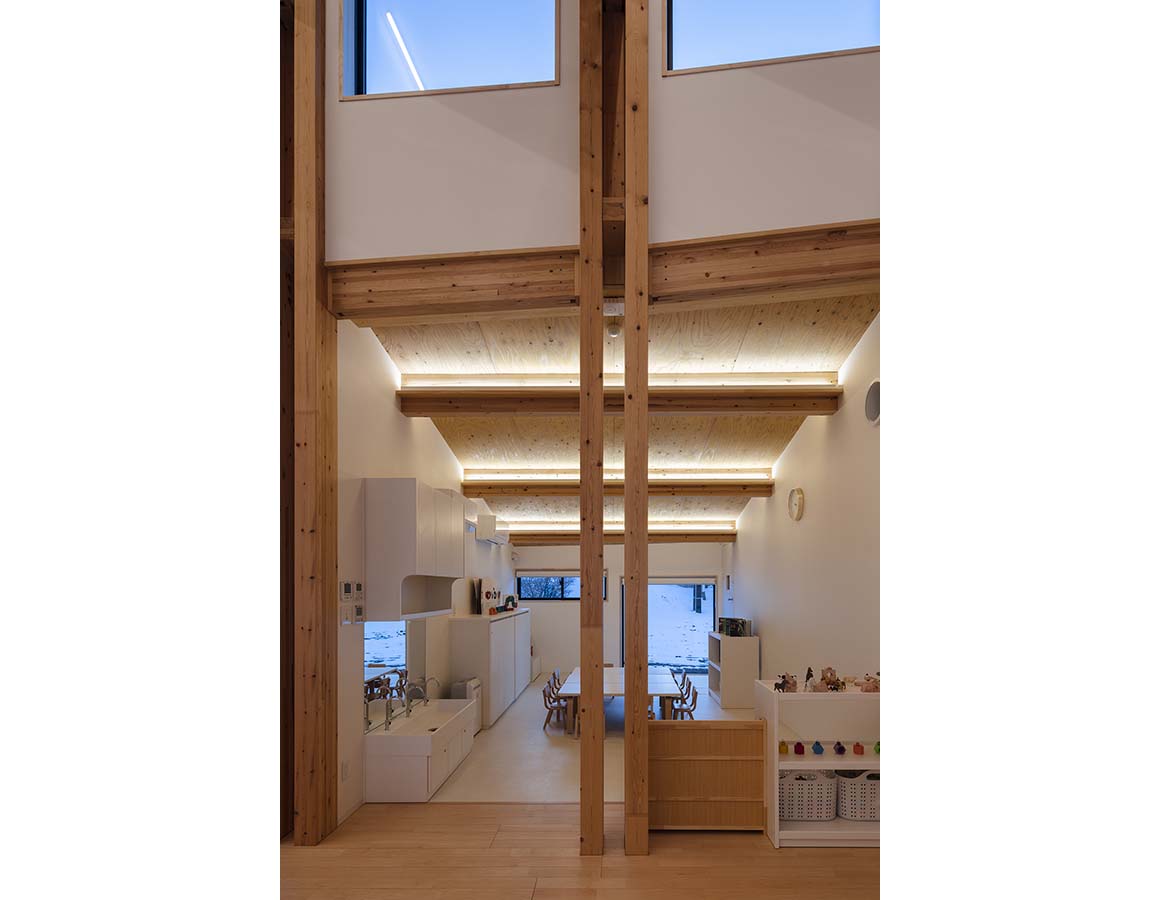
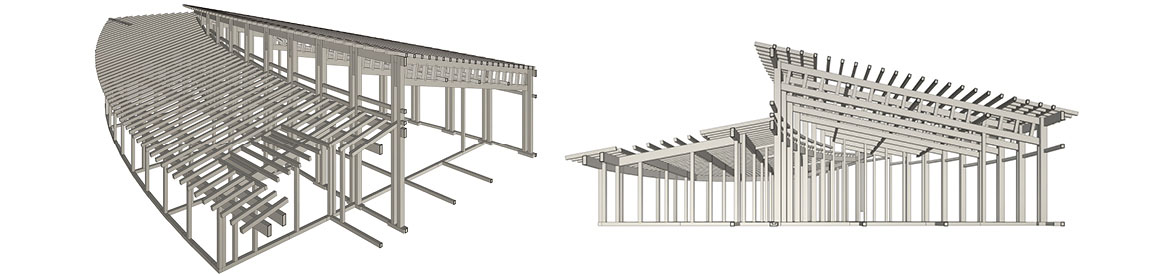
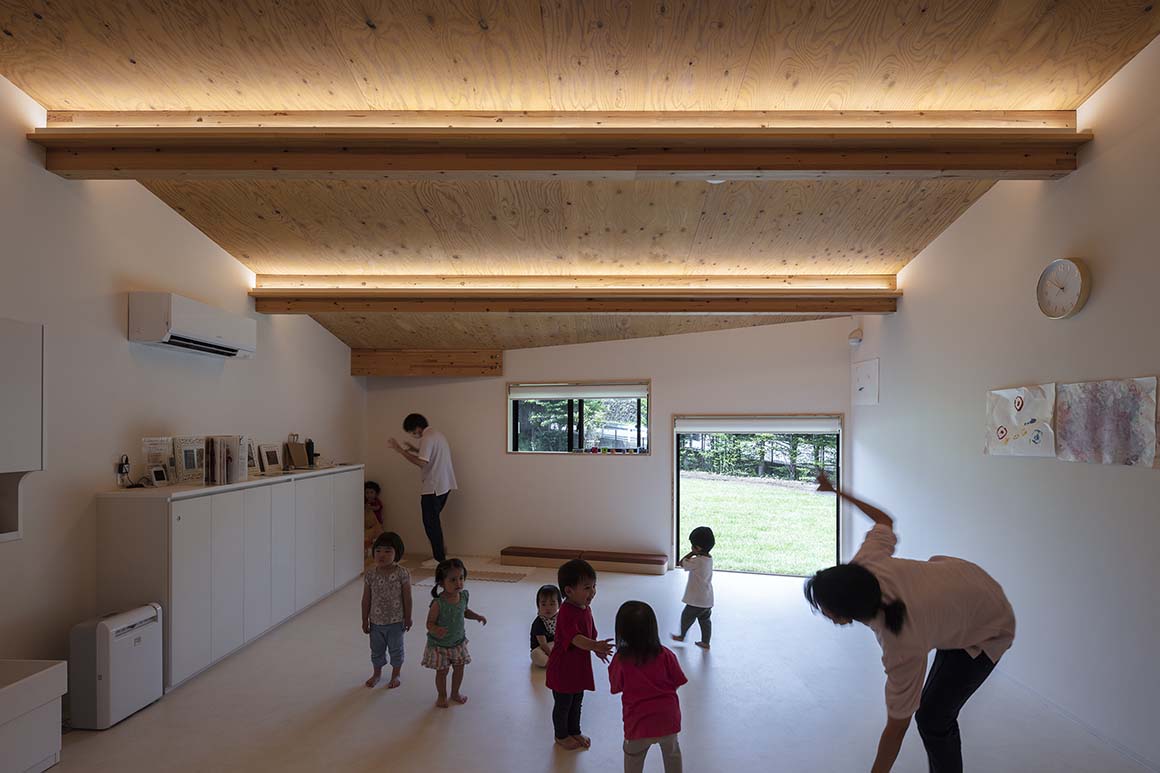
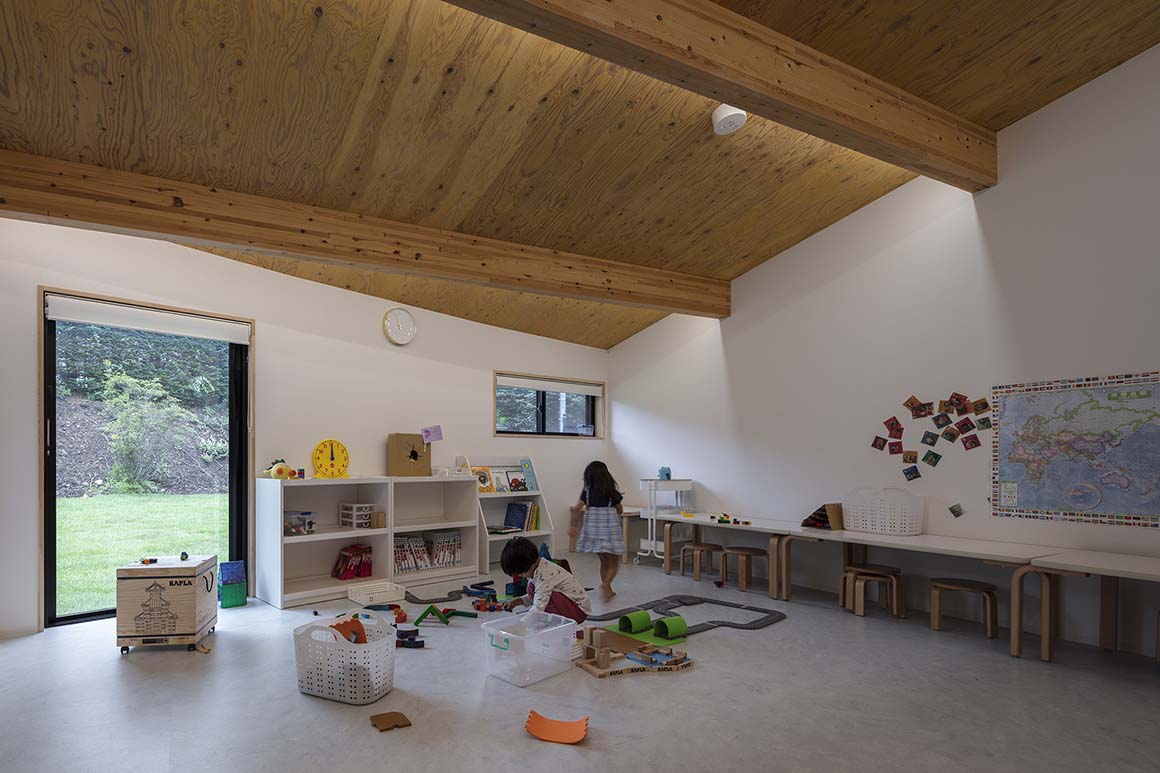

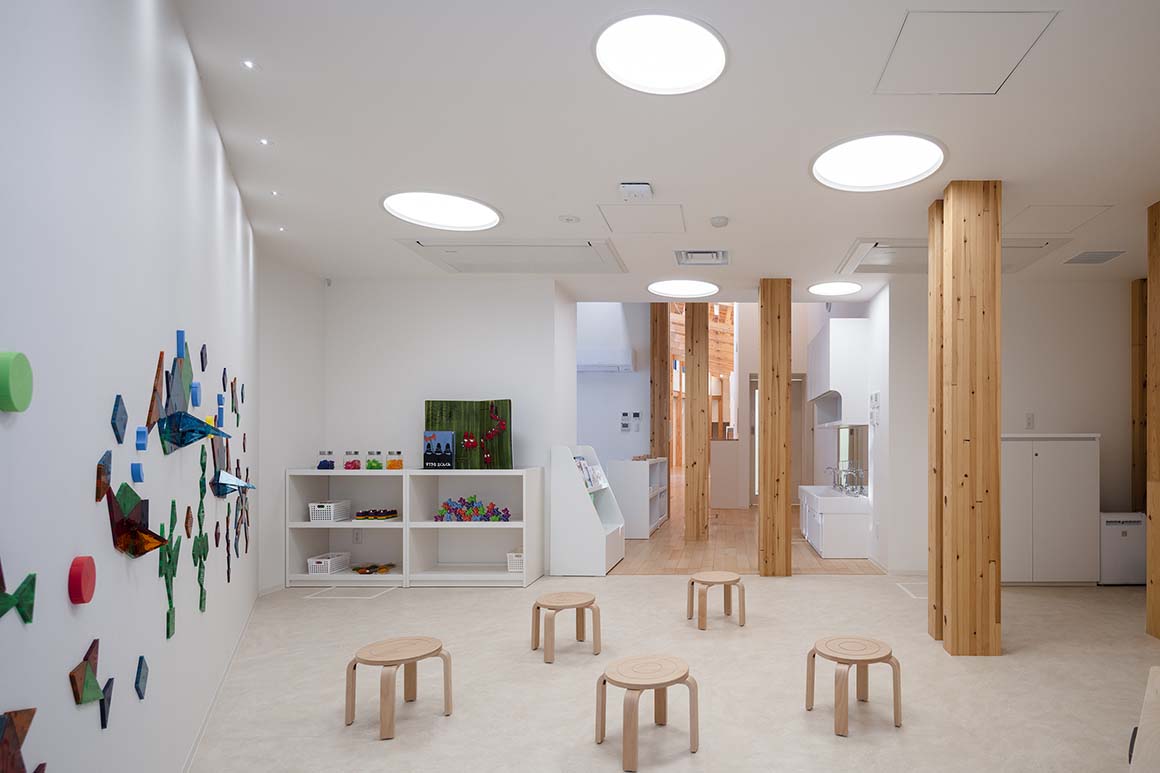
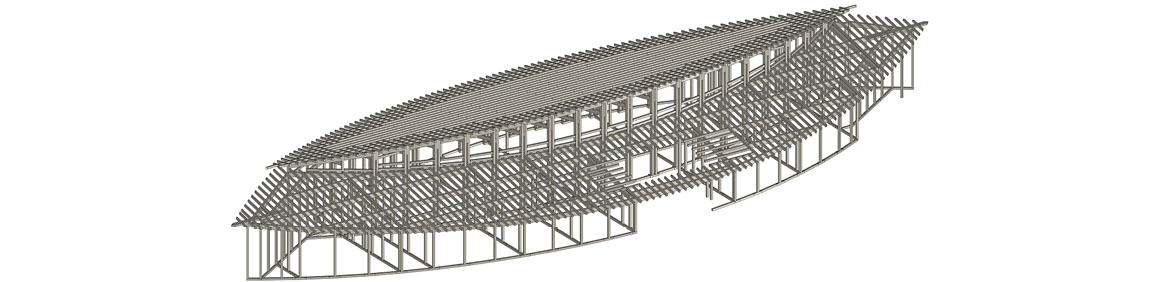
The nursery consists of six classrooms. Located beneath the lower roof, the classrooms have lower ceilings than the hall and are designed at a smaller scale aligned with children’s eye level. As the spaces where children spend most of their time, comfort and a sense of ease were carefully considered. Double columns measuring 120mm by 240mm, arranged at 1,820mm intervals to match plywood dimensions, line up like trees in a forest. Along this rhythm of columns, each space is defined from the hall while remaining spatially connected rather than fully separated. Planning the nursery as a single continuous space allows children to move freely indoors and avoids rigid divisions. The spatial configuration also ensures that activities in the hall are shared across the nursery.
The rhythmic column grid proved an effective choice, enabling a clear structural system while improving construction efficiency within a limited schedule and budget. The use of wood as the primary material reflects the hope that children will grow up breathing alongside Karuizawa’s nature and developing an affection for the region. The children’s spaces are filled with the movements of everyday life. Here, with nature close at hand, sensing the passage of time and encountering one another, children continue to grow, step by step.
Project: Poppins Nursery school Karuizawa Kazakoshi / Location: Karuizawa, Kitasaku-gun, Nagano Prefecture, Japan / Architect: Nikken Sekkei Ltd / Project team: Takeyuki Katsuya, Ken Sogawa / Supervision: Seibu Construction Co., Ltd. / Client: Poppins Educare Inc. / Use: nursery school / Site area: 2699.04m² / Gross floor area: 494.46m² / Height: 6.3m / Bldg. scale: one story above ground / Structure: wood / Completion: 2022.11 / Photograph: ©Norihito Yamauchi (courtesy of the architect)