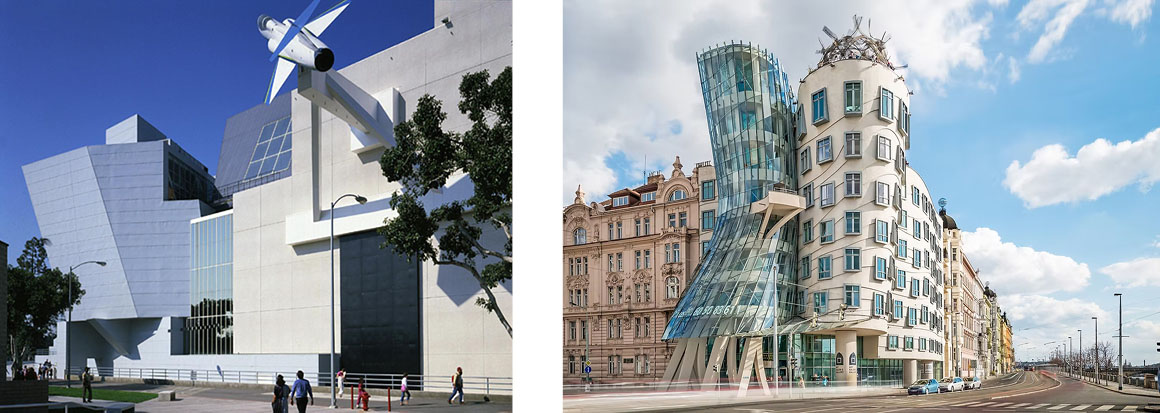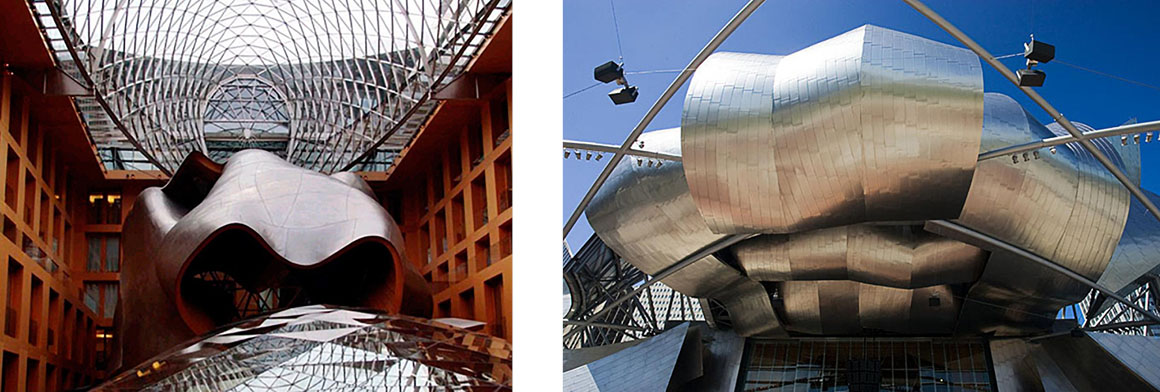



















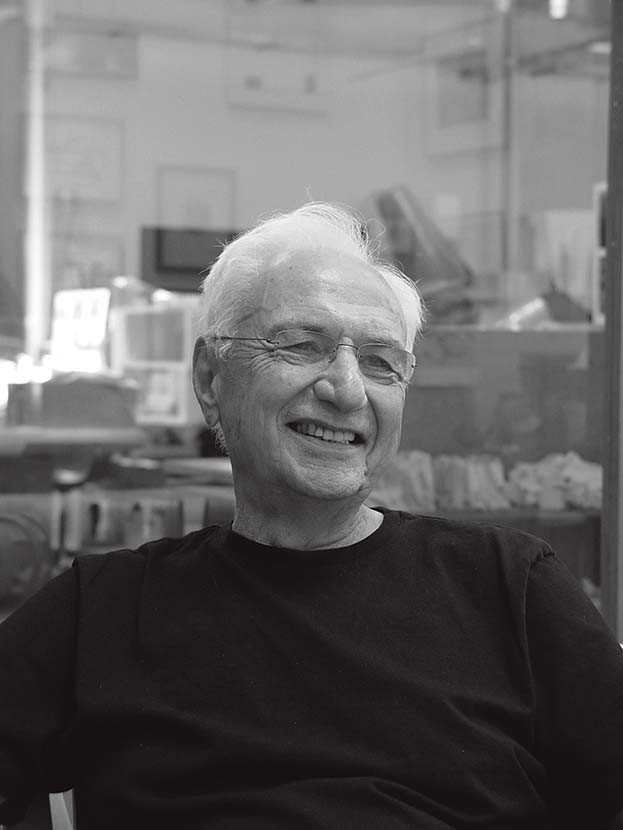
Frank Gehry, the Canadian-born American architect, died on December 5 at the age of 96. Gehry gained global recognition with the Guggenheim Museum Bilbao, completed in 1997. The building drew attention for its sculptural metal panels and sweeping curves. It also became notable for its role in revitalizing a declining industrial city, offering a new paradigm for architecture. The term “Bilbao Effect” came to describe the power of cultural buildings to drive major urban transformation. It has been widely used as cities around the world sought their own versions of the Guggenheim and pursued improvements to their urban environments.
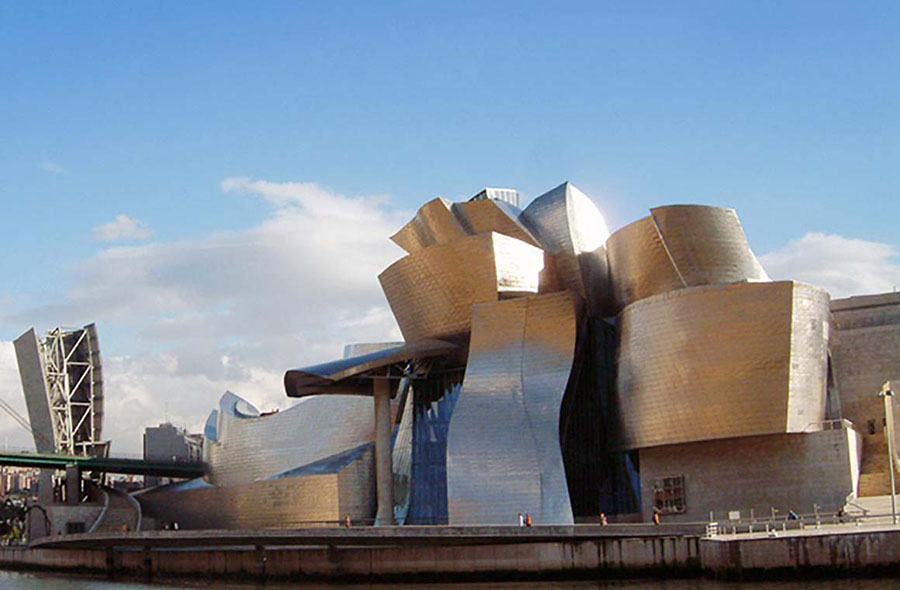
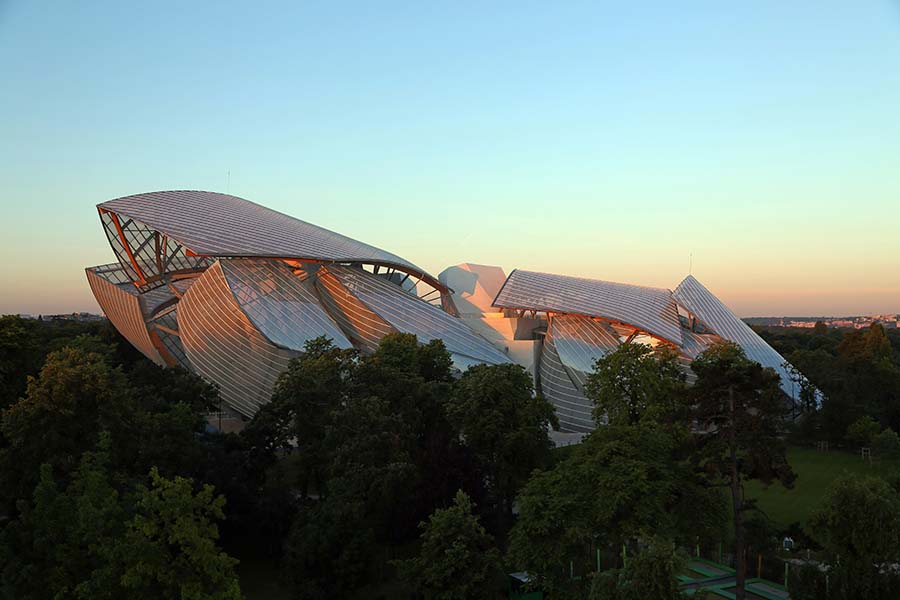
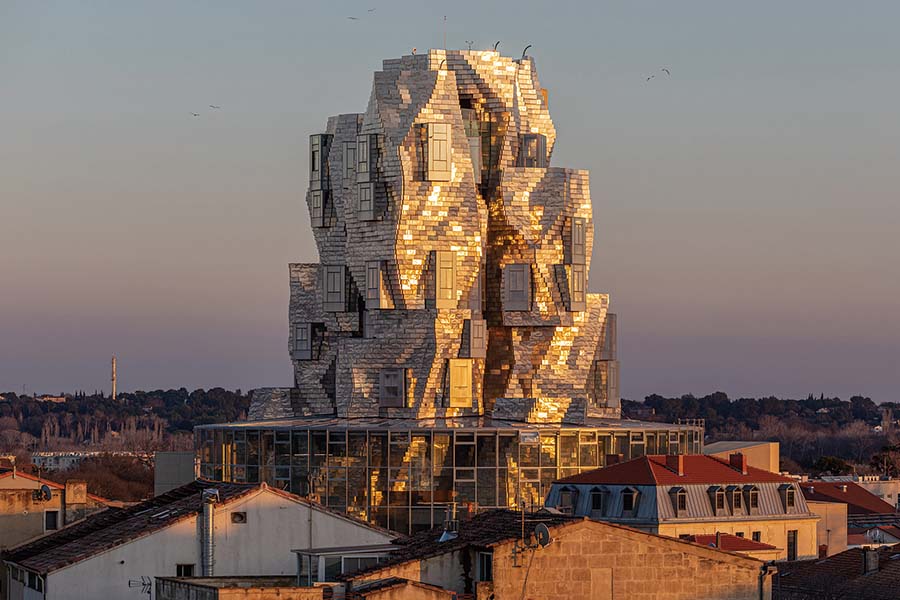
Frank Gehry’s buildings, which emerged in the late twentieth century, introduced unprecedented experimentation in technology, materials, and form. The linear and rationalist modernism that had long defined contemporary architecture expanded into nontraditional, curvilinear expressions that helped shape new urban landscapes and signaled the beginning of an era in which architecture held cultural and economic influence. Curved surfaces clad in titanium and stainless-steel panels became a hallmark of Gehry’s work. Their undulating forms conveyed a sense of dynamism while subtly revealing the material qualities of the metal. Fragmented and overlapping compositions—characteristic of deconstructivist architecture—also played a central role in his approach. This style, marked by dismantled structural principles and deliberate imbalance, gives the building its sense of tension. These complex and irregular forms were made possible through the precision of digital design.
Gehry’s architecture combined technological innovation, formal experimentation, and a distinct urban impact, and it can be said that he reshaped the trajectory of contemporary architecture. Although his imagination will no longer produce new works, the legacy he leaves around the world will remain a lasting source of inspiration and momentum for generations to come.
Frank Gehry was born on February 28, 1929, in Toronto to a Jewish family. He moved to Los Angeles with his family in 1947. He began studying architecture at the University of Southern California in 1949. In 1954, after receiving his degree, he changed his name from “Goldenberg” to “Gehry” to avoid antisemitism in American society. He later studied urban planning at the Harvard Graduate School of Design and worked at several architecture firms. In 1962, he founded his own practice under the name Frank O. Gehry & Associates; it was renamed Gehry Partners, LLP in 2001. His major works include his Santa Monica Residence1978, the Dancing House in Prague1996, the Guggenheim Museum Bilbao1997, Walt Disney Concert Hall in Los Angeles2003, Beekman Tower in New York2011, and the Luma Arles Tower2021. He received the Pritzker Architecture Prize in 1989, the RIBA Royal Gold Medal in 2000, and the U.S. Presidential Medal of Freedom in 2016. Even in his nineties, he continued to take part in design work and demonstrated enduring passion and energy.