


A house within a house linking a century of time
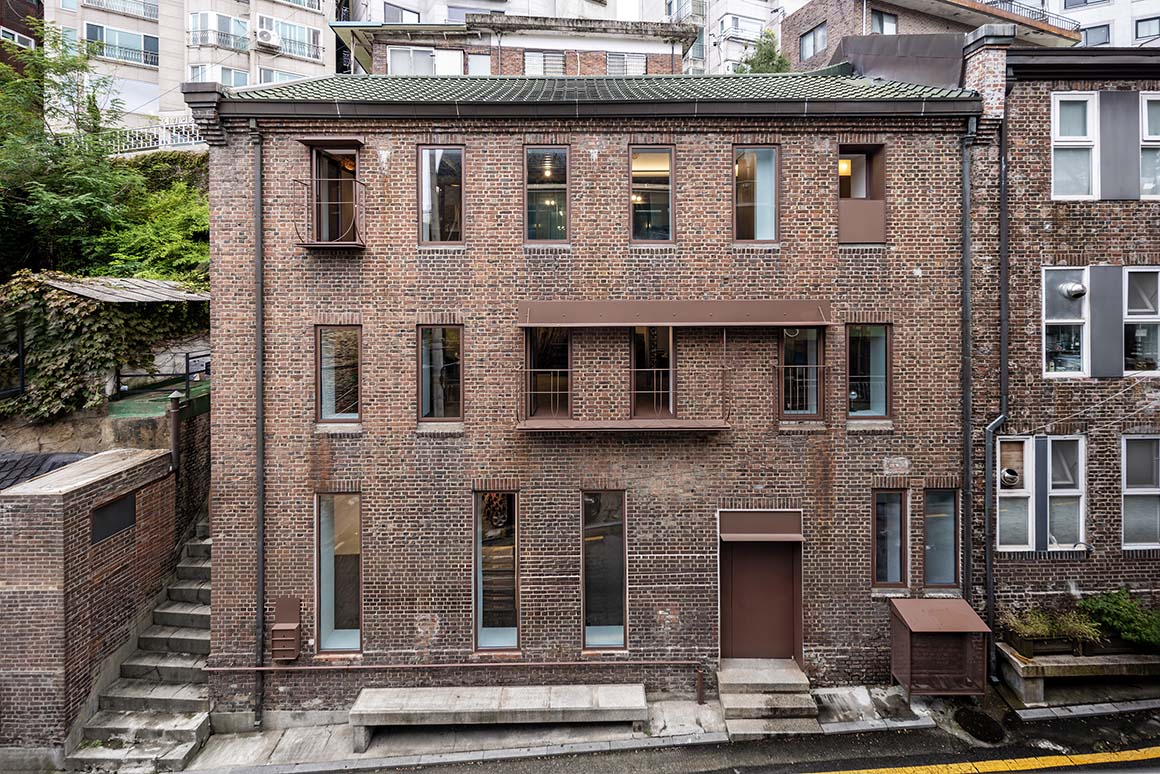
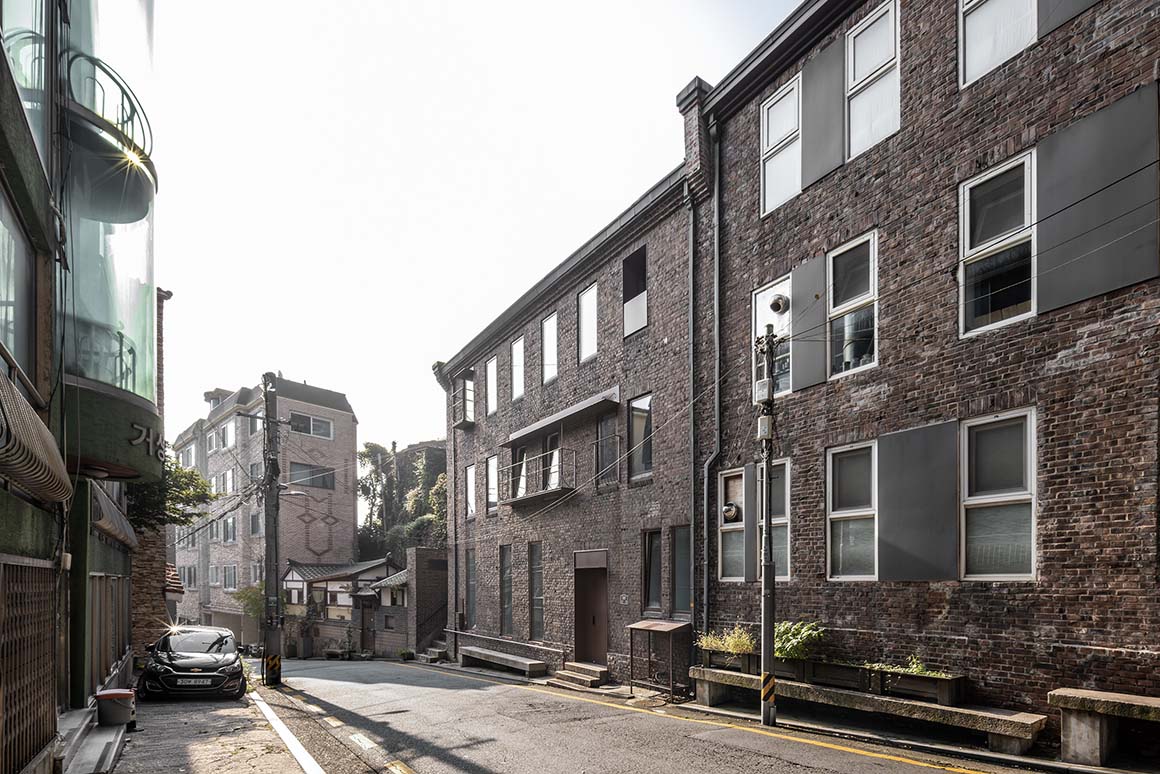
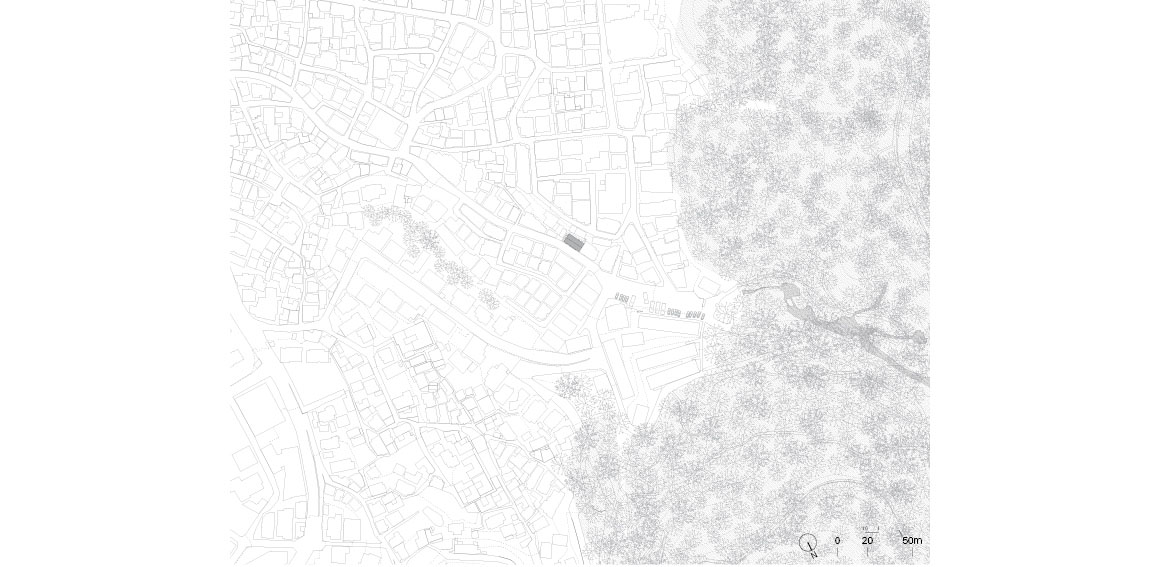
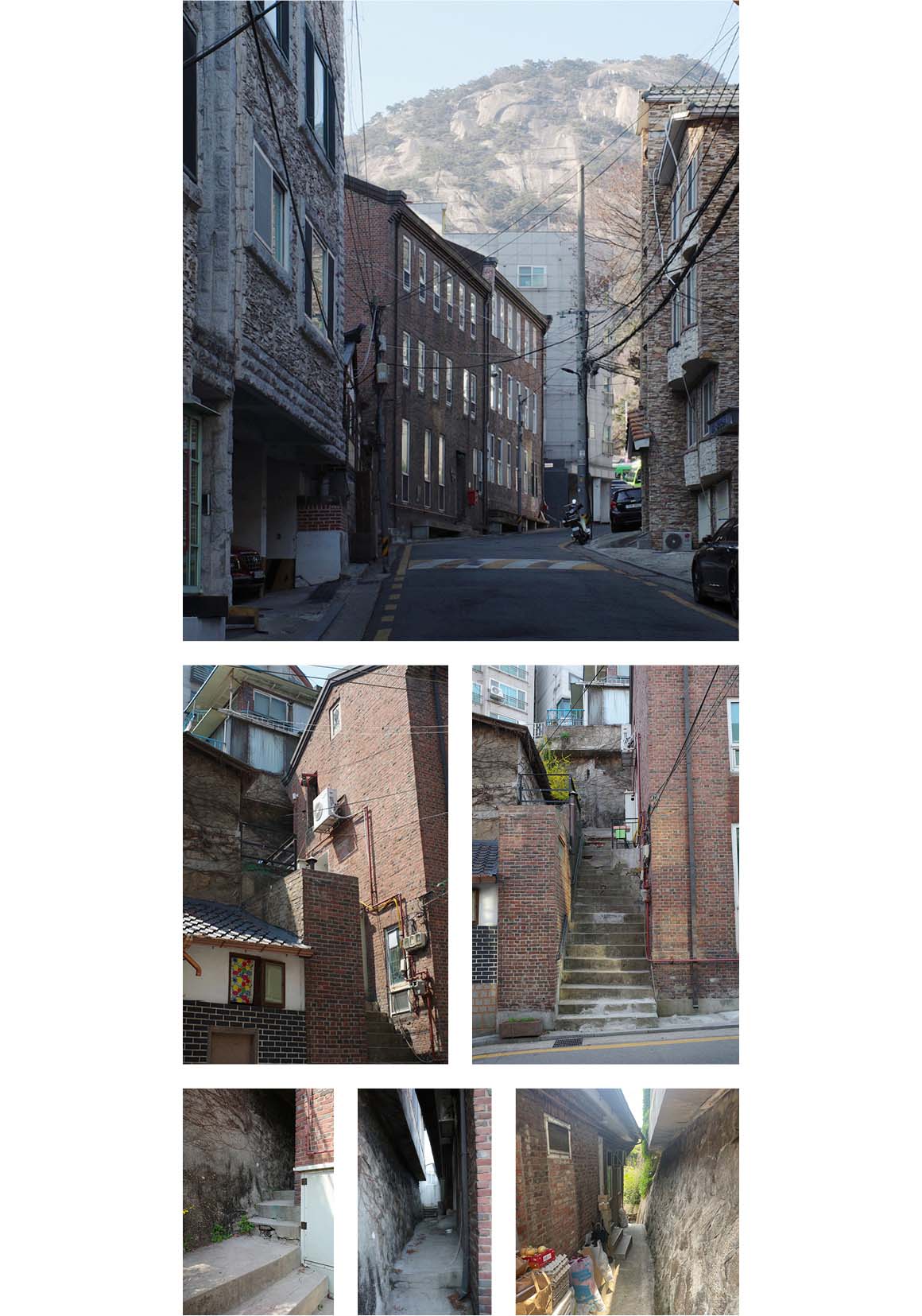
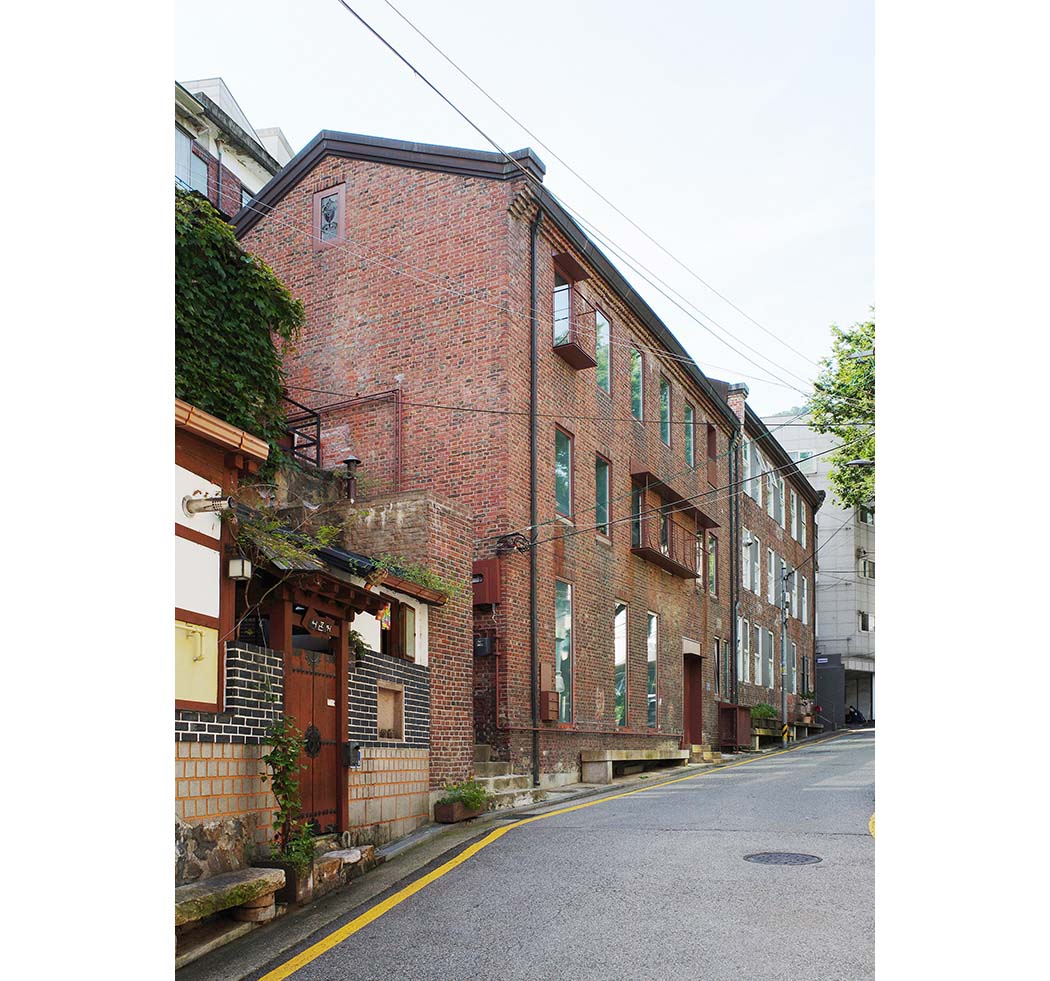
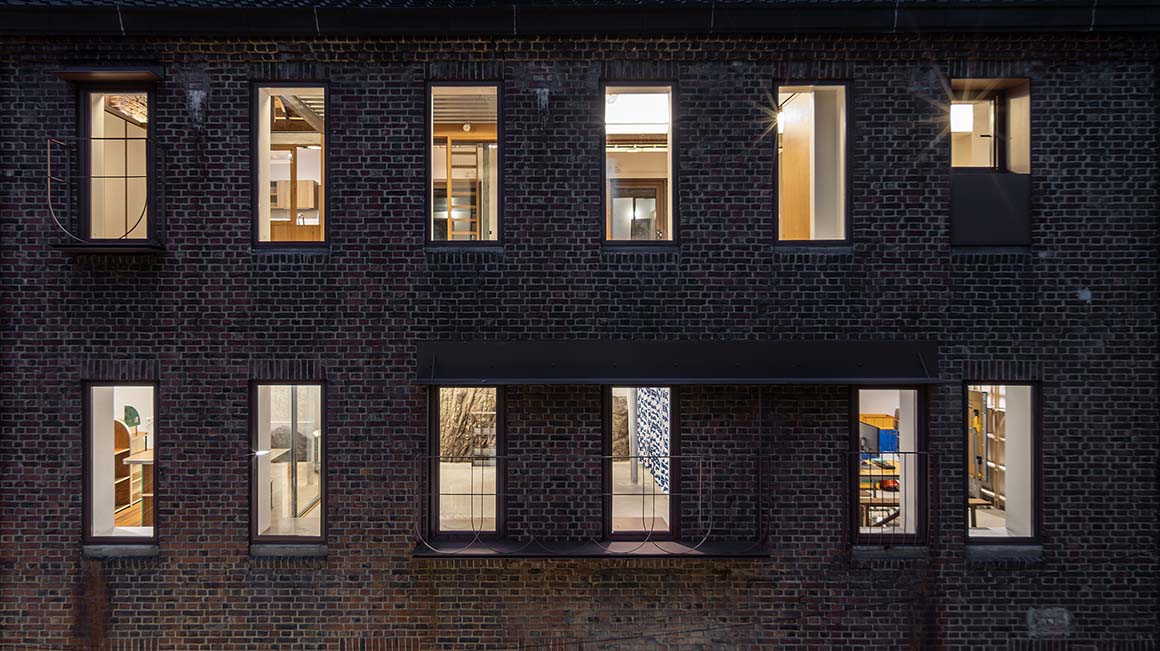
A narrow alley in Ogin-dong, Seoul, leads to the Suseong-dong Valley at the foot of Inwangsan Mountain. Among the surrounding buildings stands a striking brick structure: a three-story red-brick masonry building, narrow and vertically elongated, with European-style windows, leaning against a rock face that gradually rises behind it. Although its exact year of construction is unknown, it is believed to have been built some 100 years ago and used variously as workers’ housing, a missionary residence, and a military warehouse. Photographs taken in the 1970s at the former site of poet Yun Dong-ju’s boarding house nearby show the building as it once stood. More recently, records confirm that it operated as the Tibet Museum from 2009 to 2024. This year, the building acquired a new name—Mooyongso—when a couple who had run a studio and whisky bar of the same name in Seochon became its new owners.
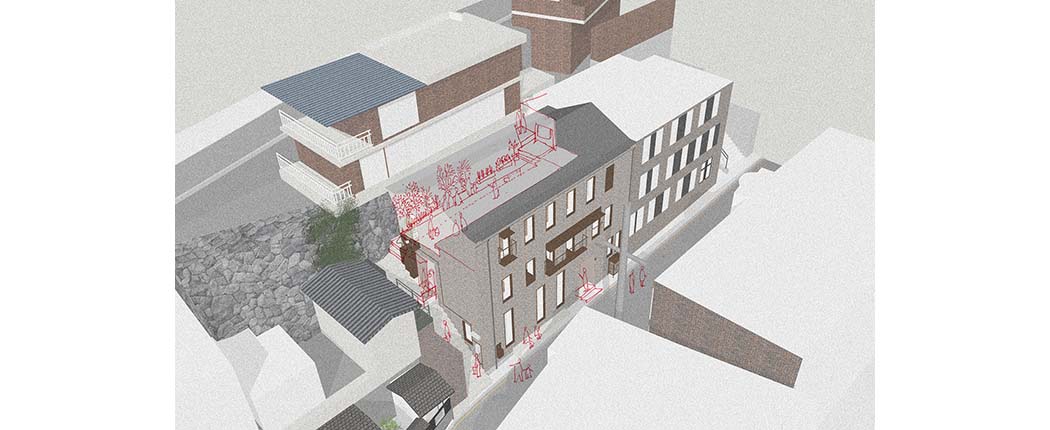
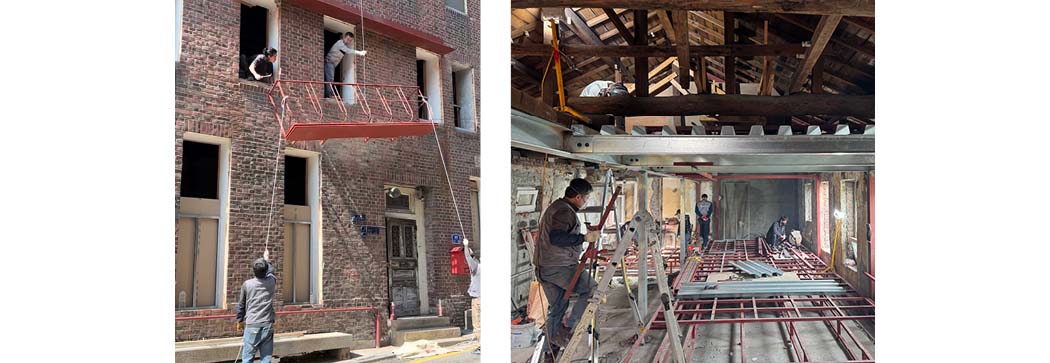
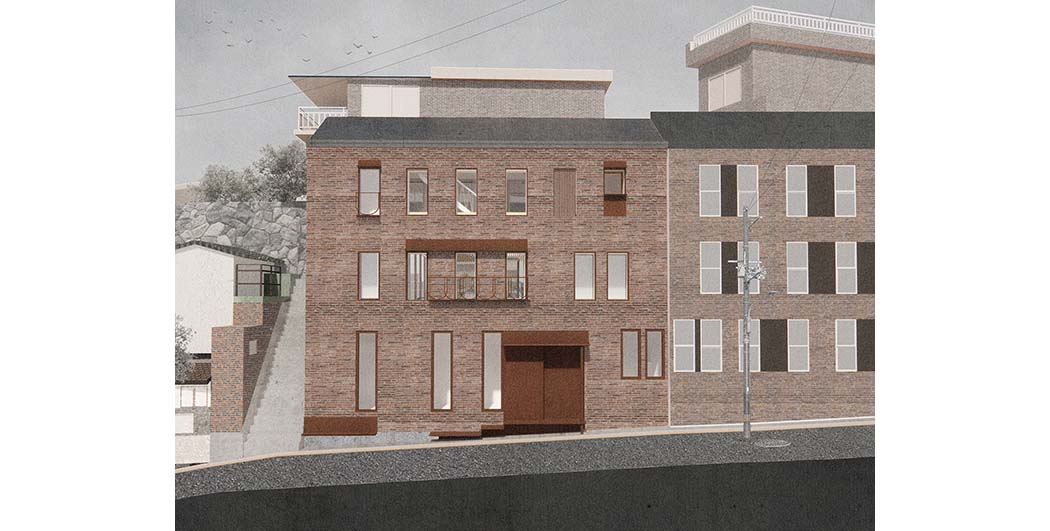
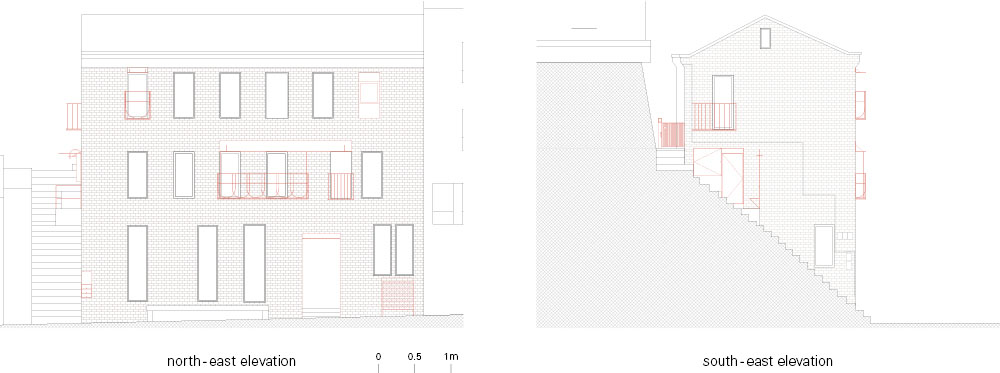
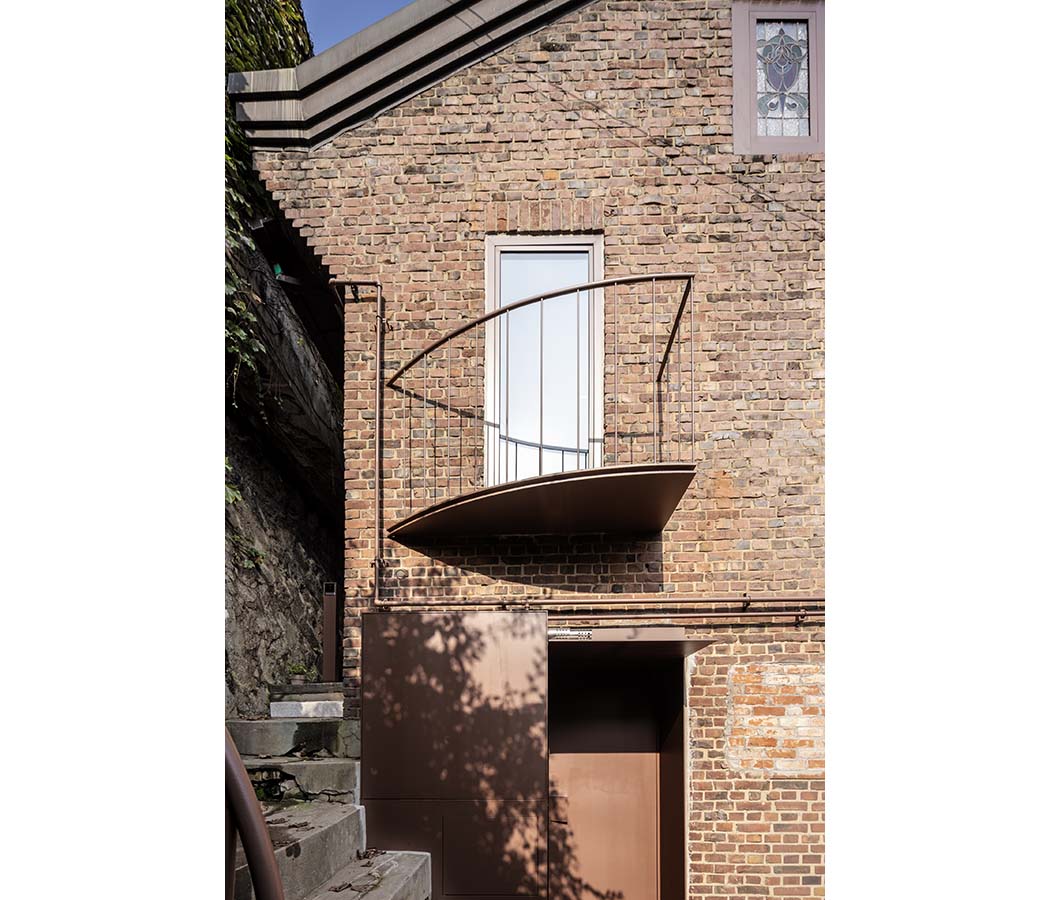
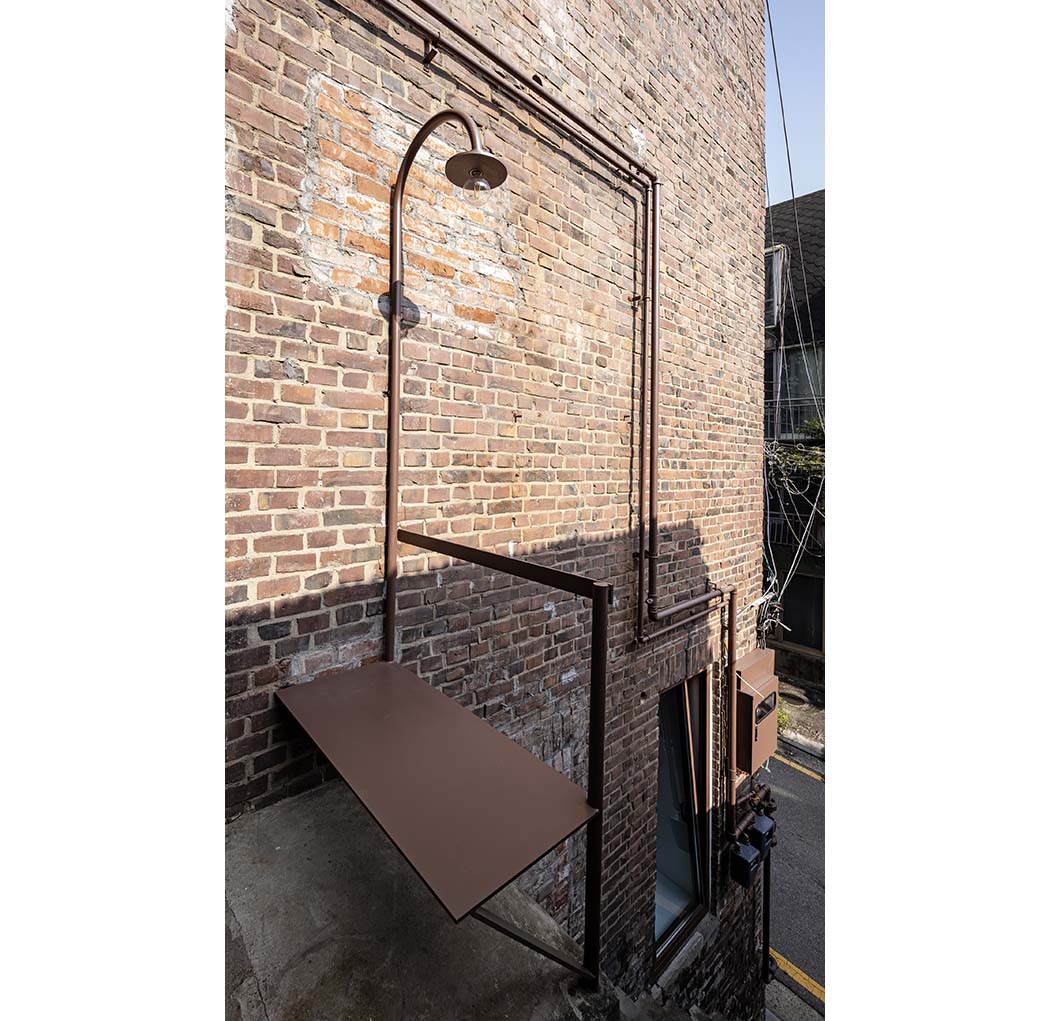
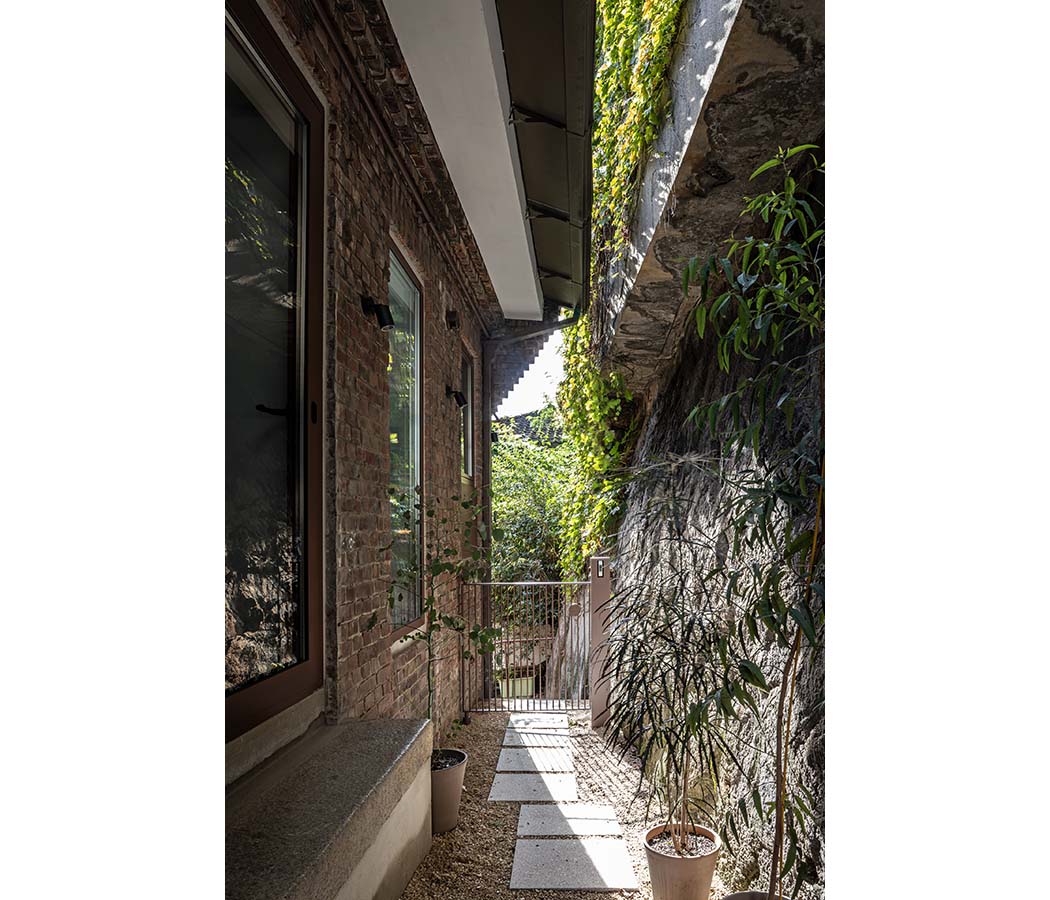
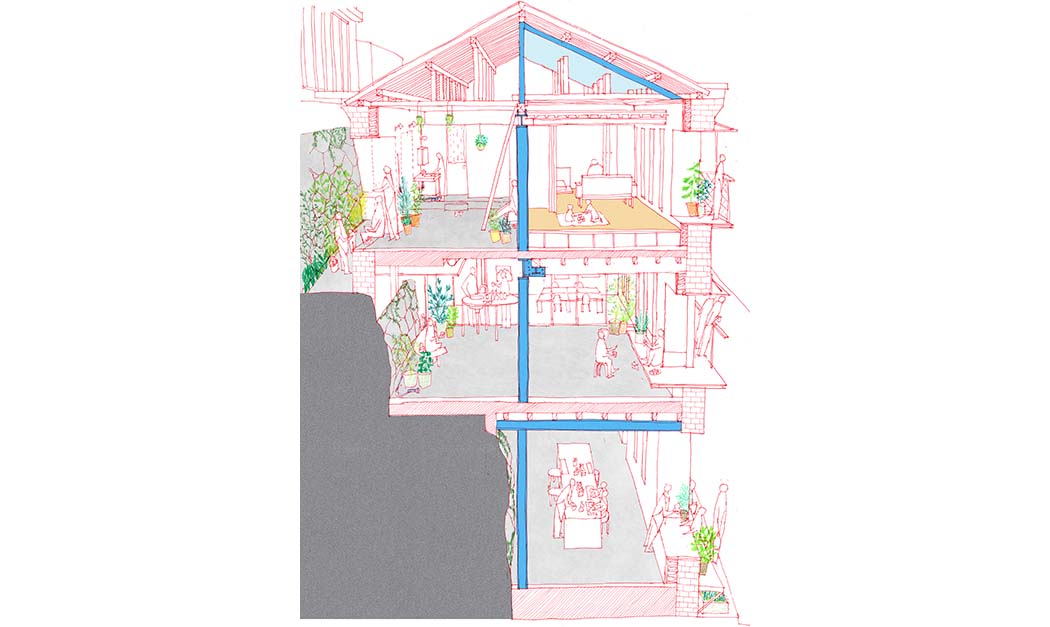
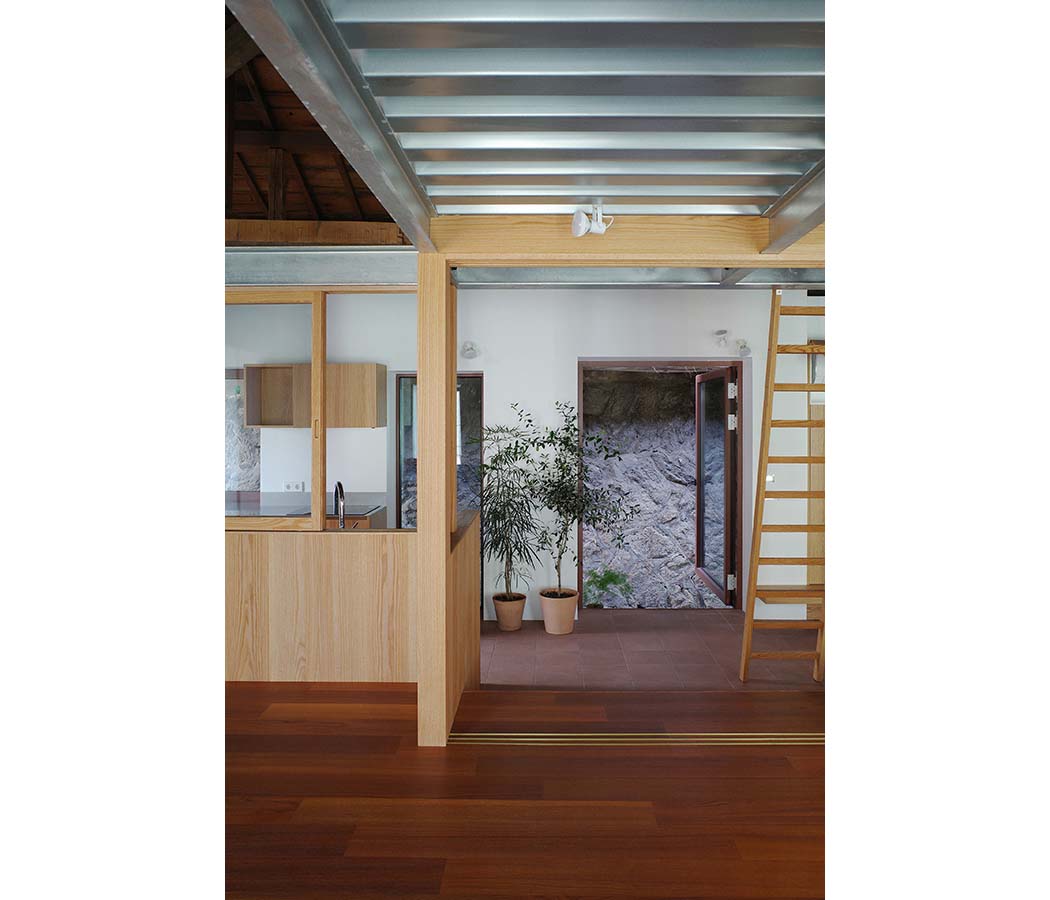
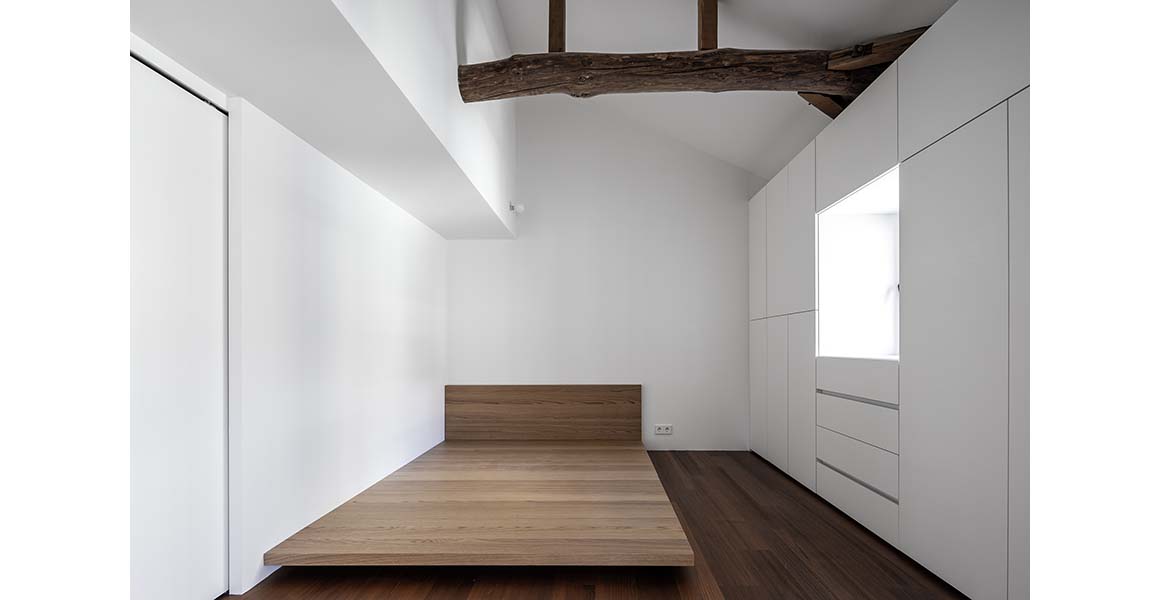
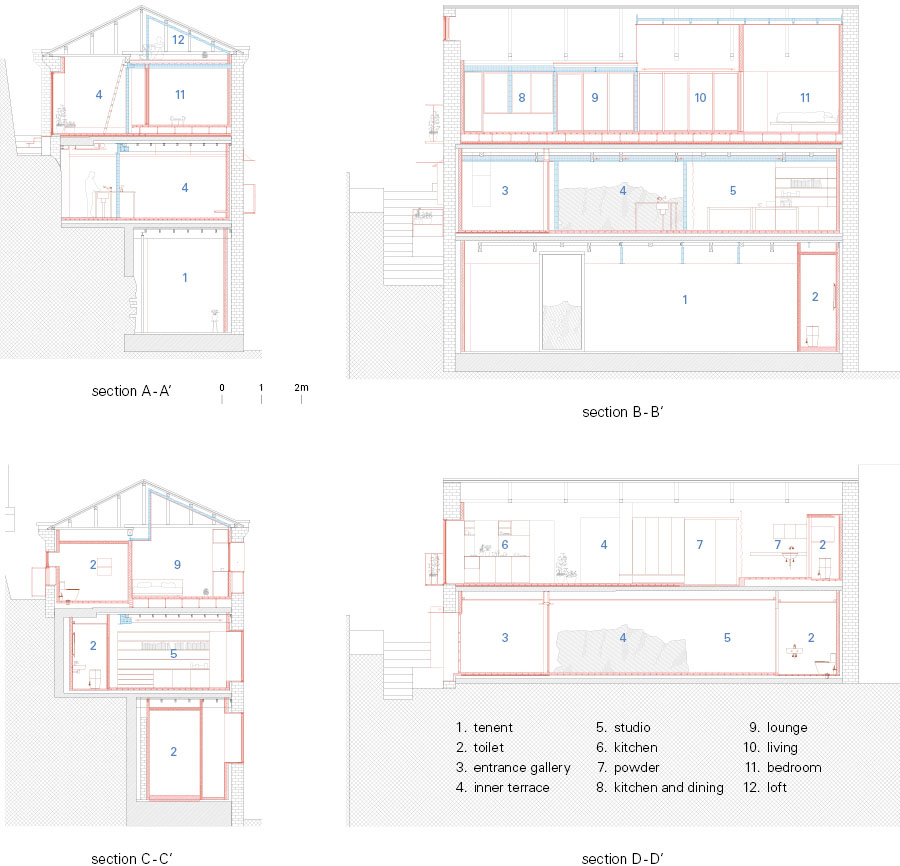
Within the century-old brick masonry and timber structure, a new structure forms a “house within a house.” The old structure functions as the outside, the new as the inside, translating time into space. This unfamiliar relationship draws exterior qualities into the interior. On the third floor, an inner terrace opens generous apertures toward the stone-walled yard beyond the entrance. Windows extend to the floor or open fully, naturally linking the two realms. Brick-toned floor tiles reinforce its exterior quality. The living room, dining area, and bedroom are raised by level changes and fitted with transparent sliding wooden doors, remaining visually connected while prompting spatial transitions and a sense of inwardness. Covered by the umbrella structure, the living room and bedroom become more intimate. The attic occupies an in-between position—between inside and outside, past and present. Accessed by a ladder from the inner terrace, it reveals a view enclosed by the wooden roof structure. On the second floor, beside the rock face that enters the interior, a continuous bench extending from the exterior terrace and sink-like furnishings create a courtyard-like space. Centered on this “courtyard,” a gallery and studio face each other, separated by glass sliding doors and curtains. Owing to the building’s peculiar history, in which interior and exterior systems have become entangled, spatial perception expands without clear boundaries.
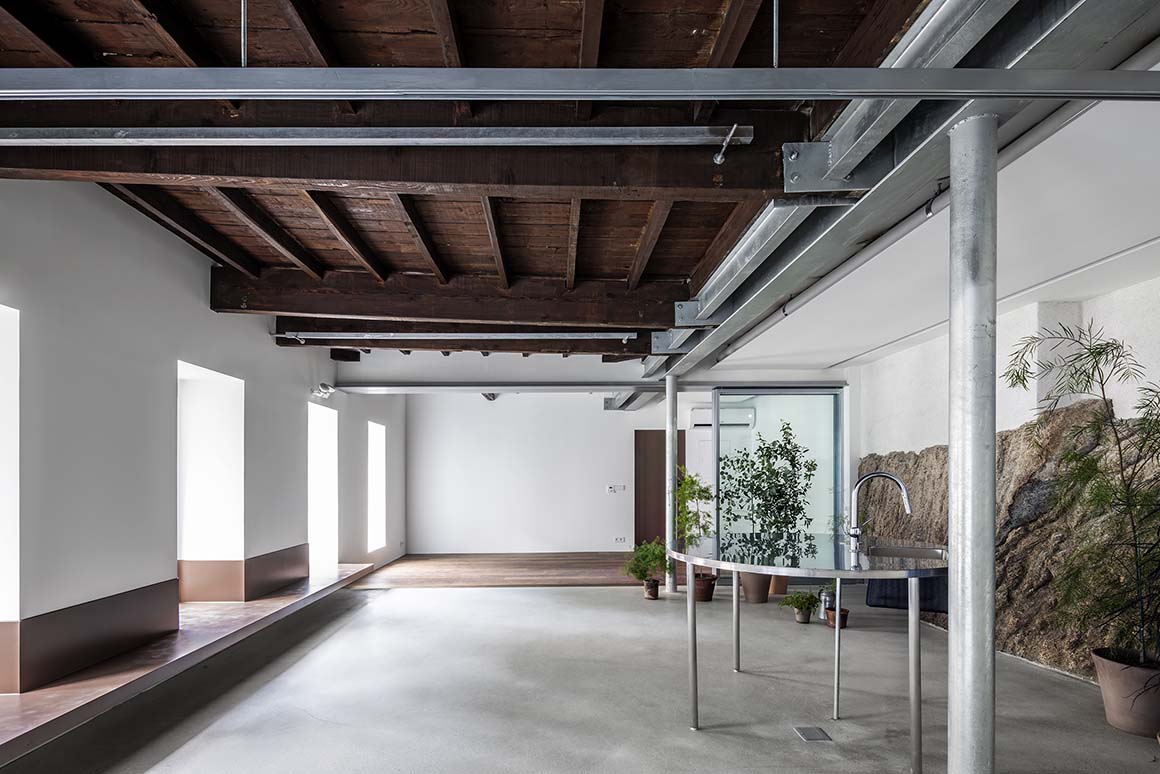
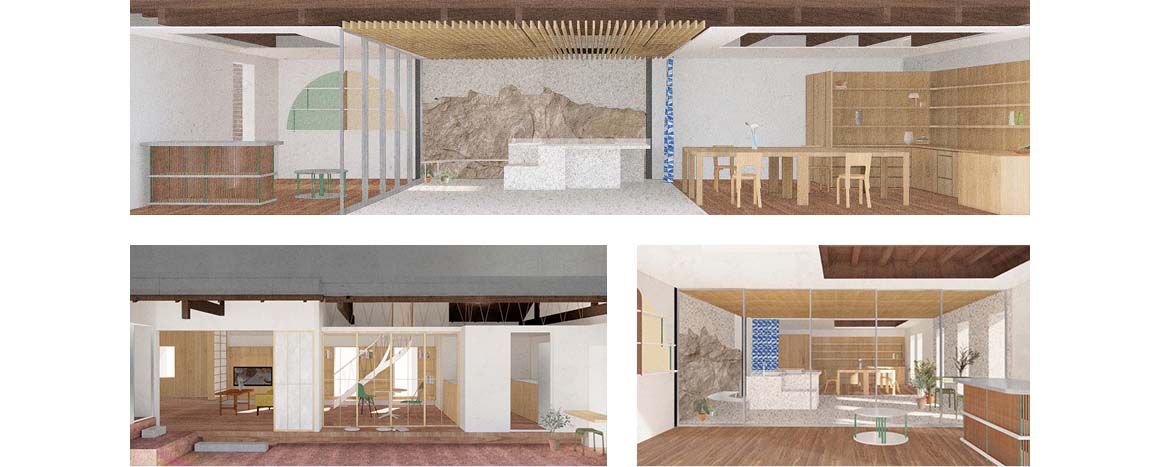
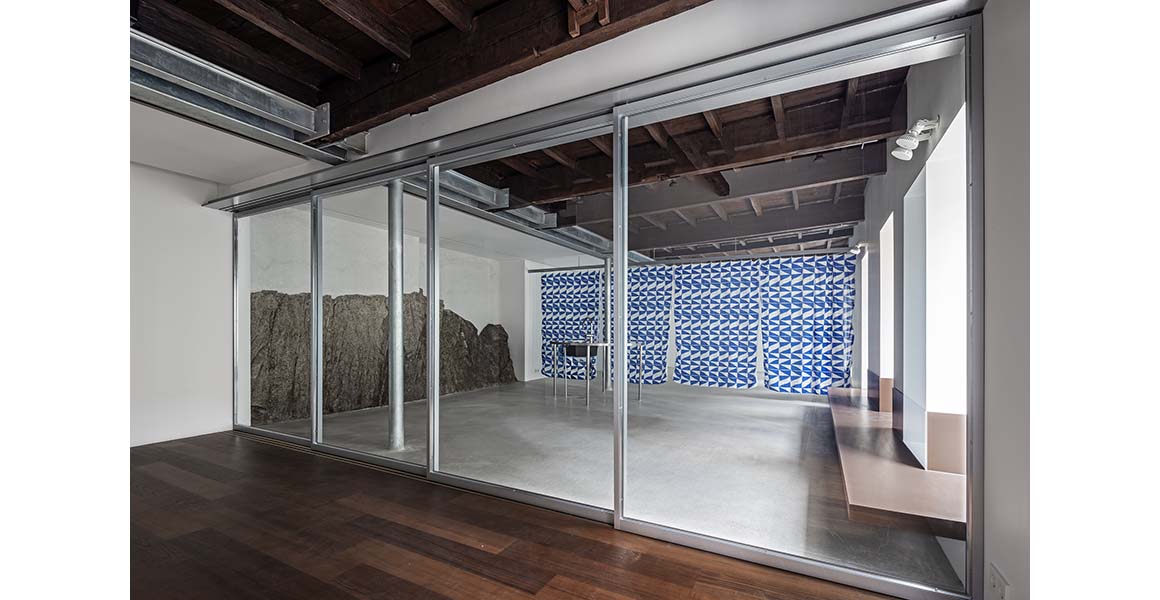
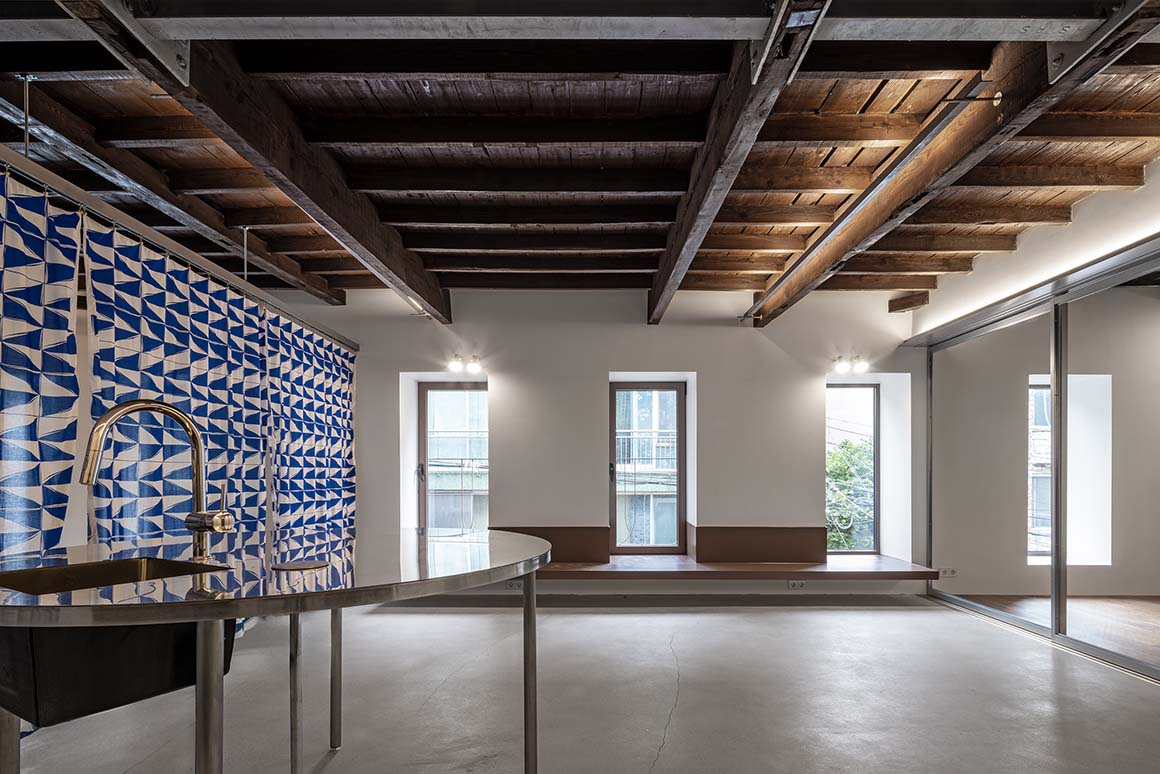
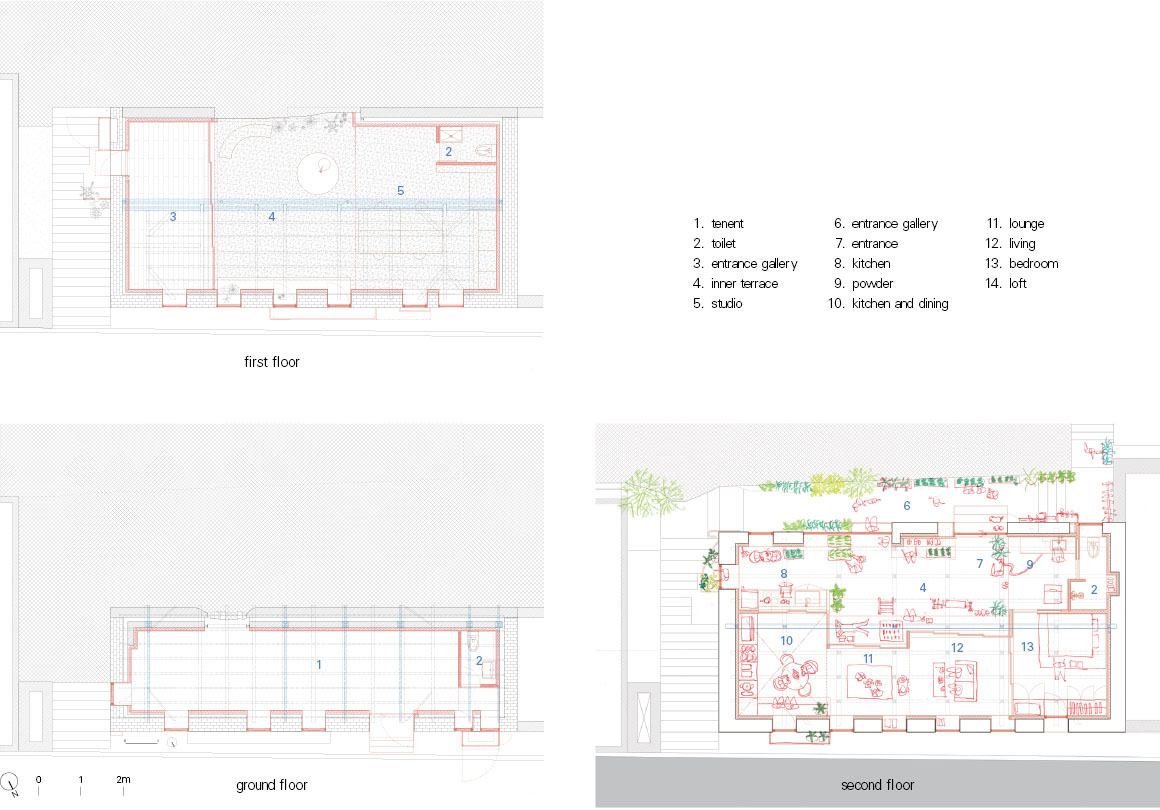
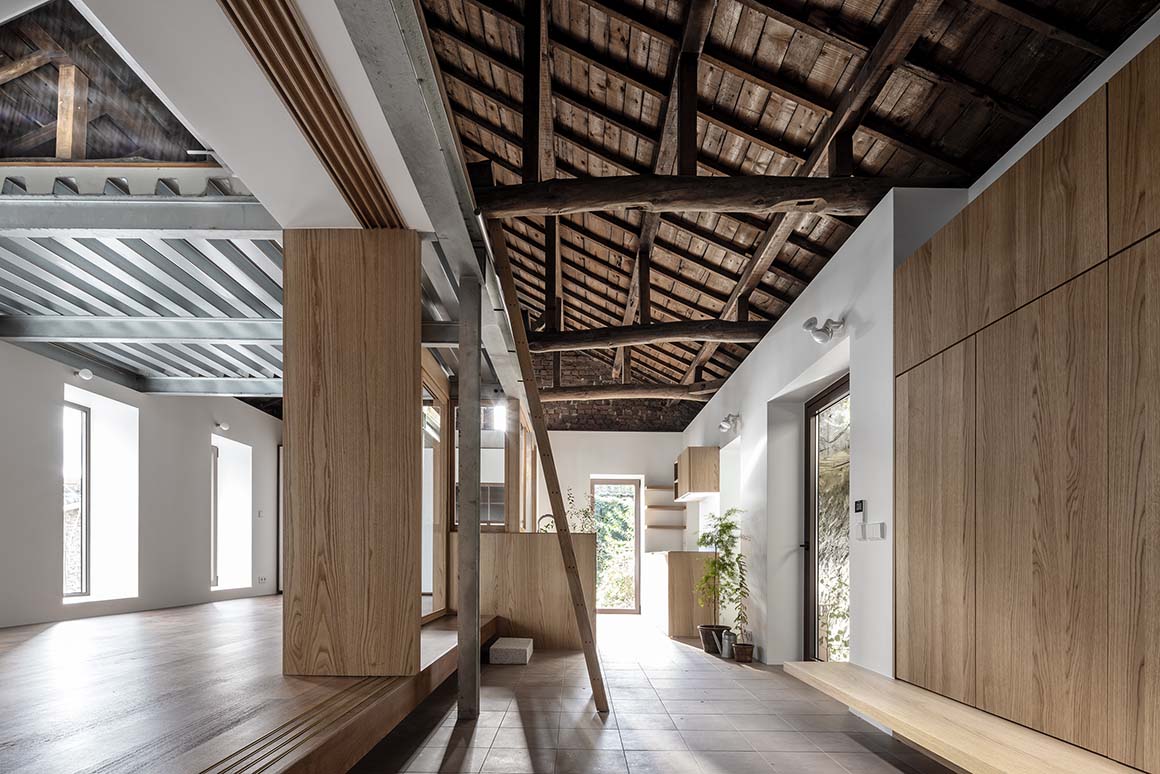
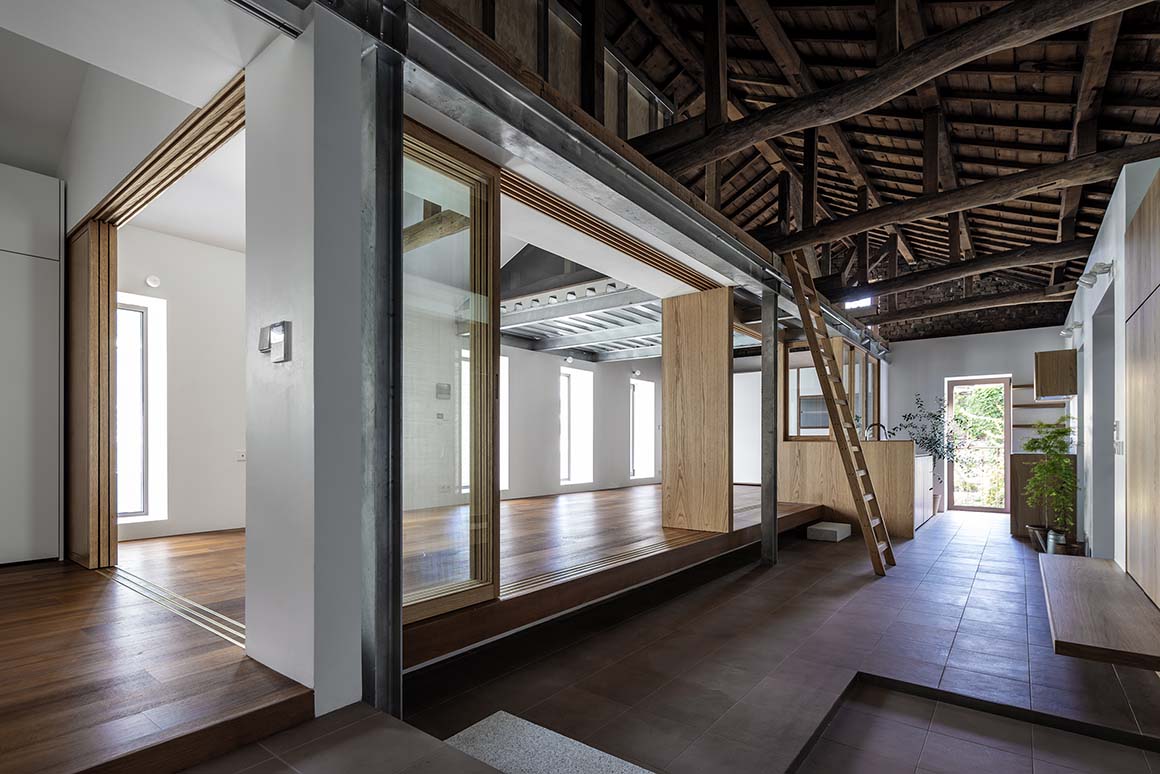
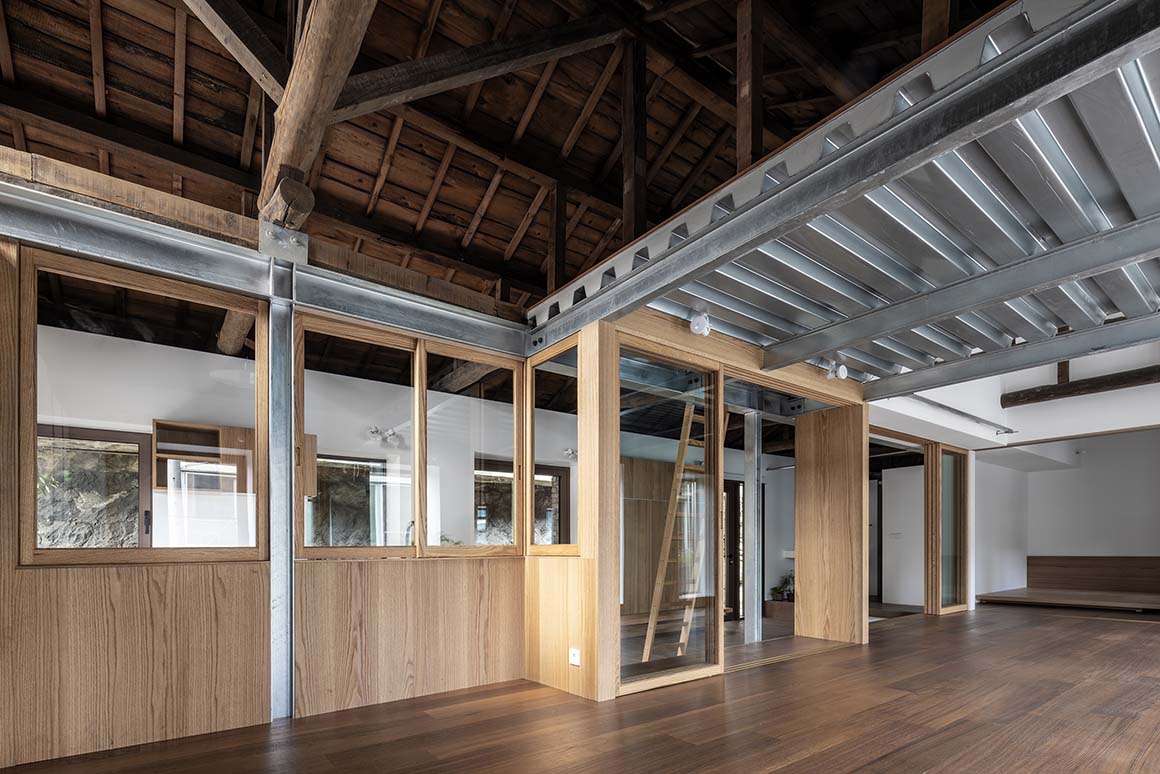
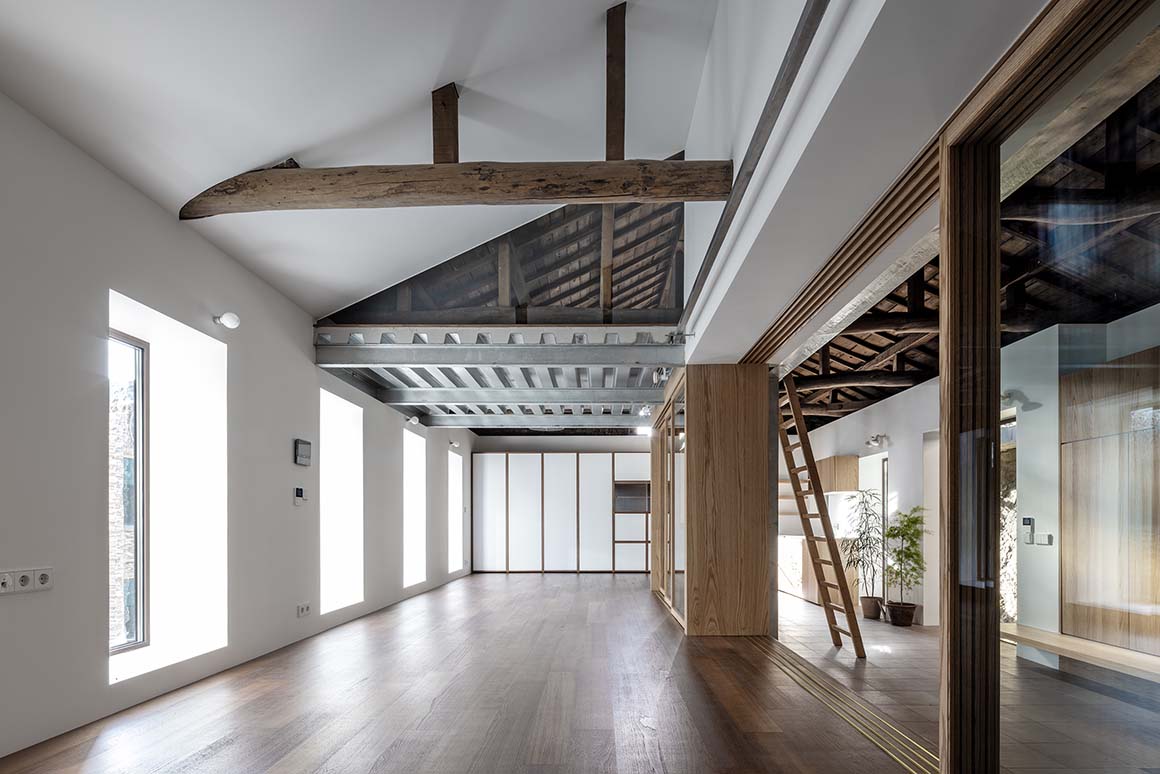
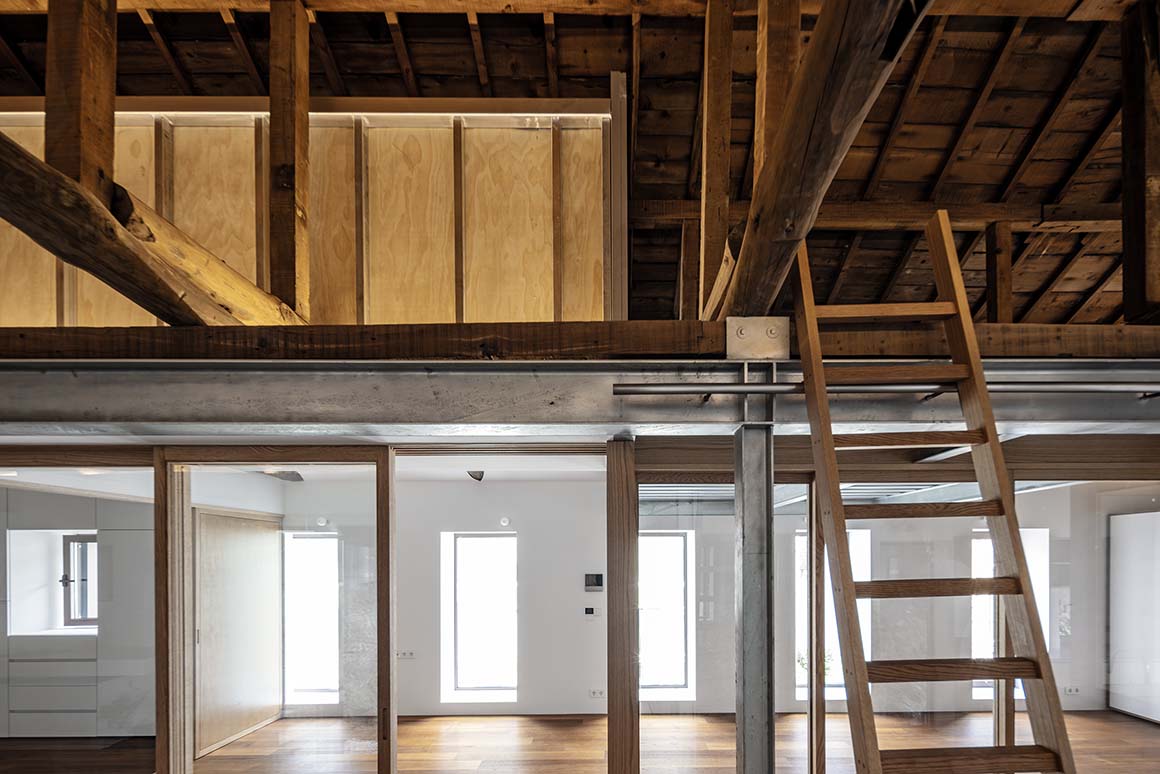
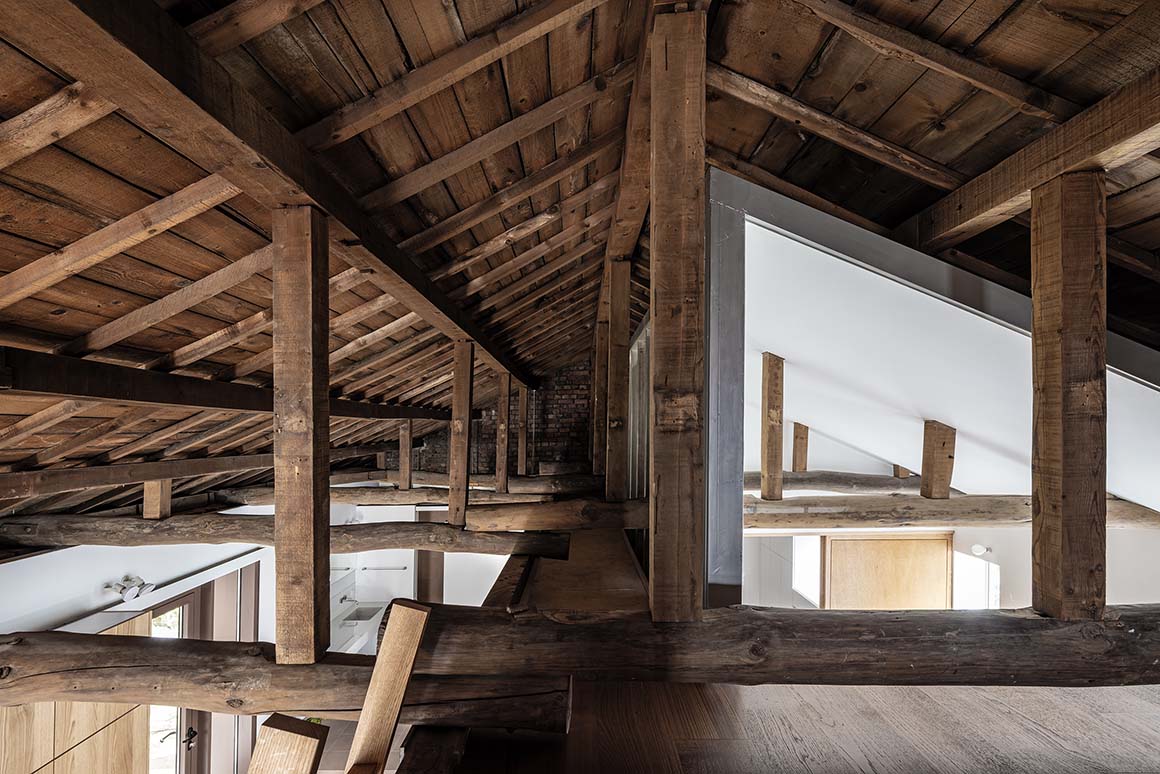
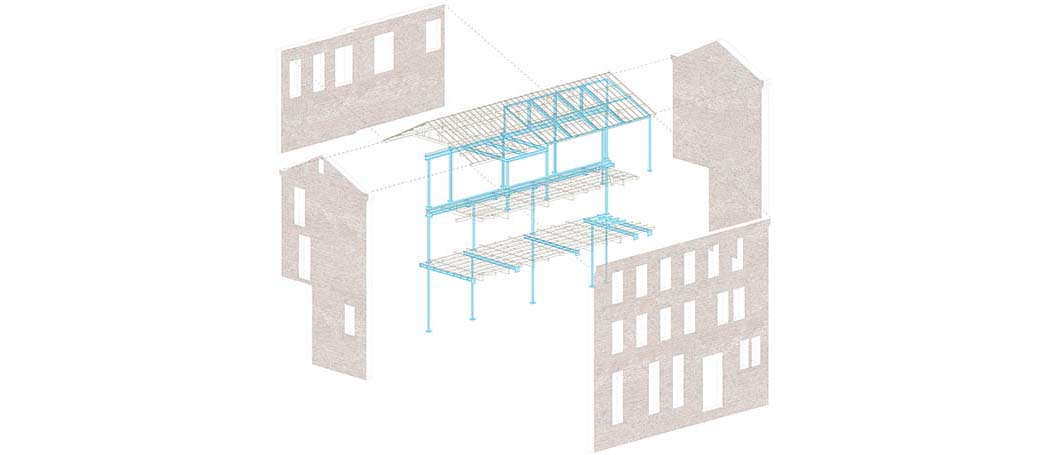
Brick walls were stacked, wooden floor frames infilled with concrete slabs, and the process repeated to form three floors. The traces left behind are rough and unrefined, reflecting the passage of time and the many hands that altered the building. Columns were cut, walls added, and floors overlaid with concrete. Some floors slope, ceilings sag, and the wooden roof has shifted from its original position. Accumulated changes left the structure unstable. A new structural core was introduced to support all three floors, topped by an umbrella-like canopy to improve thermal performance.
The first floor is leased, the second used as an office, and the third serves as a residence. Access to the upper floors is via neighborhood stairs beside the building, which lead to a terrace overlooking the Seochon area. Behind the building, a rock face commands attention. Rather than touching the exterior, the rock penetrates deep into the interior, exposed from the first to the second floor, as if the building were embedded within it. As one ascends, the rock gradually recedes, disappearing entirely by the third floor. In front of the third-floor entrance, now the owners’ home, the ground opens into a small yard, alongside which a tall stone retaining wall extends and reconnects with the neighborhood path.
Project: House and Studio O / Location: Jongno-gu, Seoul, Republic of Korea / Architect: o.heje architecture / Project team: Haedeun Lee, Jaepil Choi, Donggyeong Kim, Jiyoung Lee / Structural engineer: Eun structural engineering / Contractor: Yigak Construction Co. Ltd. / Use: house, studio, tenant / Site area: 86.3m² / Bldg. area: 80.43m² / Gross floor area: 197.97m² / Bldg. scale: three stories above ground / Structure: masonry + wood + steel / Design: 2024.5~2025.2 / Completion: 2025.9 / Photograph: ©Wooseop Hwang (courtesy of the architect)