










A Restrained Aesthetic Aligned with the Stillness of Memorial Grounds
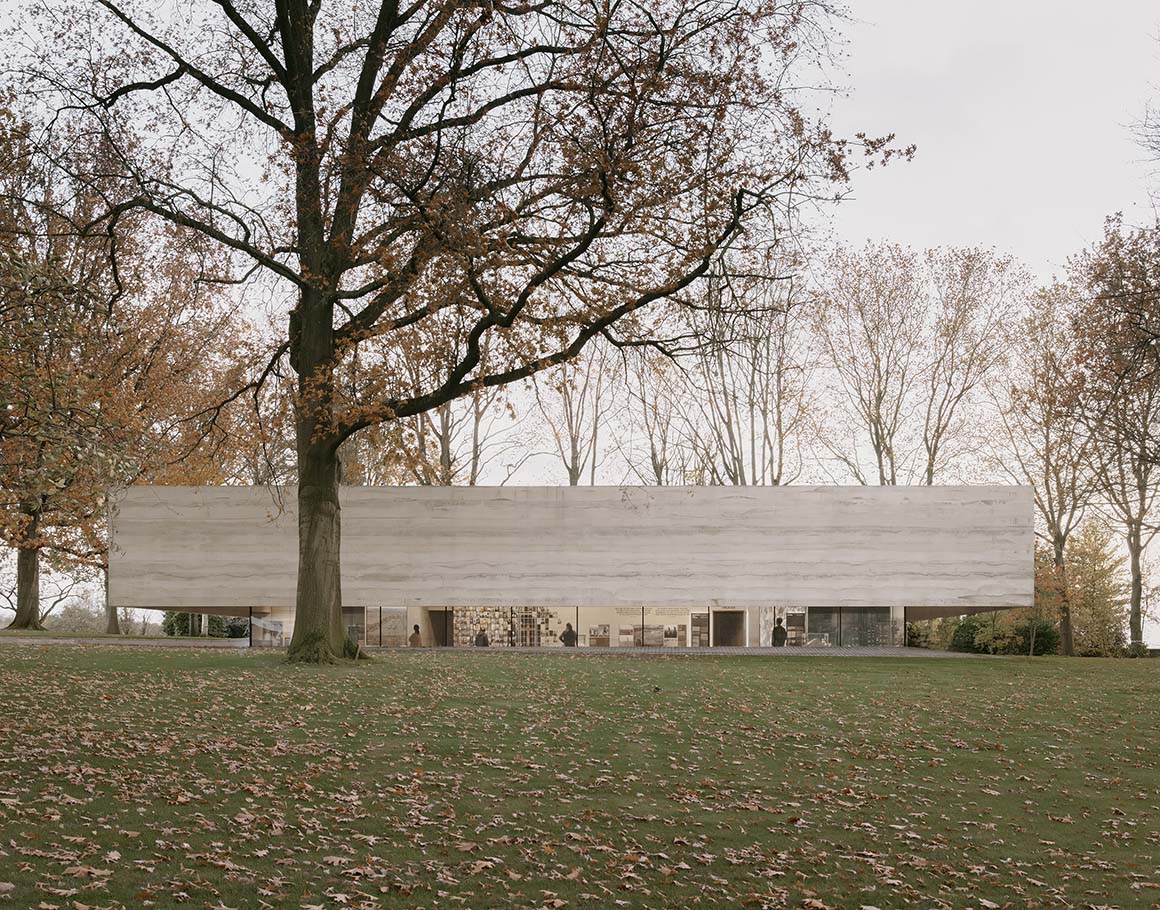
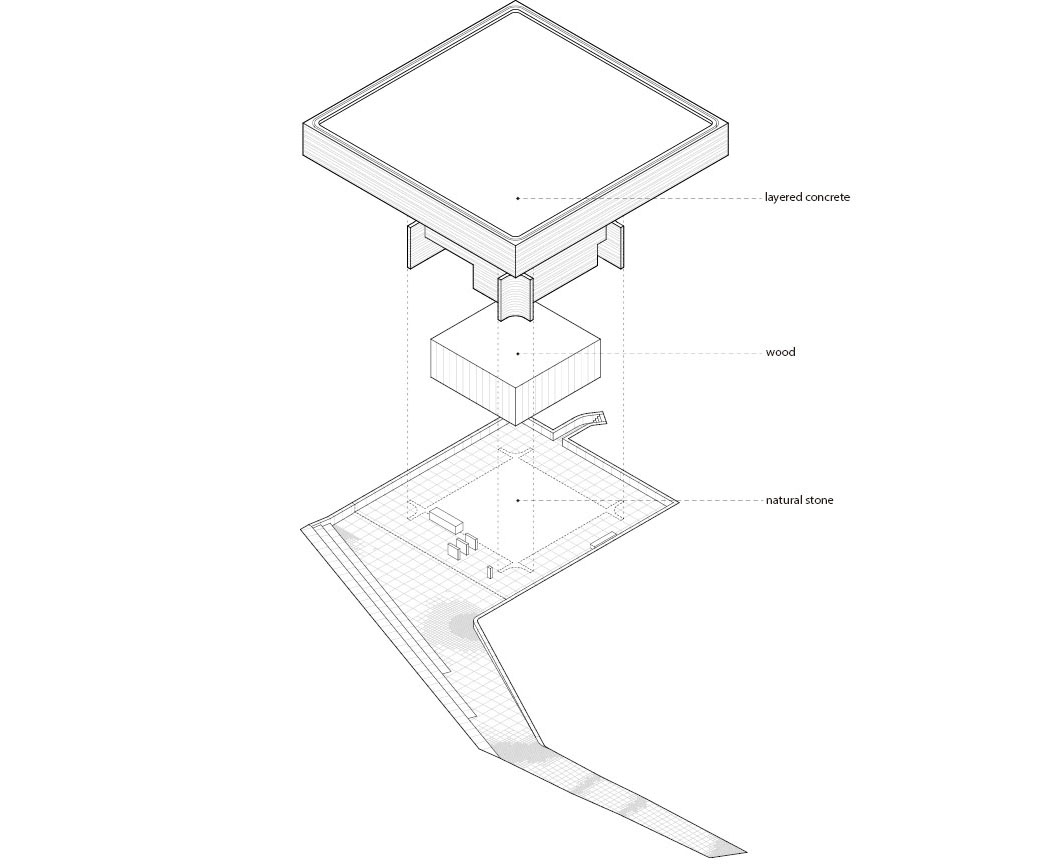
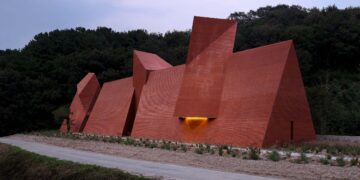
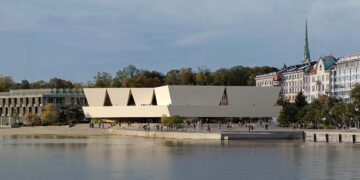
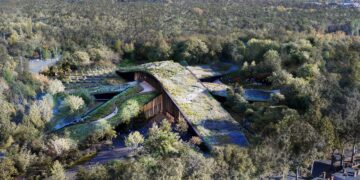
The Netherlands American Cemetery (NEAC) was established in 1960 on a 265,000㎡ site near Maastricht to commemorate American soldiers who died in the World War II. Conceived as a place of remembrance honouring the many struggles fought in the name of freedom and the lives lost in that pursuit, the visitor center introduced to the site is a robust structure intended to endure over time. Formed of finely finished stone and cast concrete in a concise geometry, the building clearly defines its own presence while remaining naturally continuous with the surrounding landscape. Its restrained aesthetic respects the site‘s monumental atmosphere, calmly complementing the stillness of the expansive memorial grounds without disrupting it.
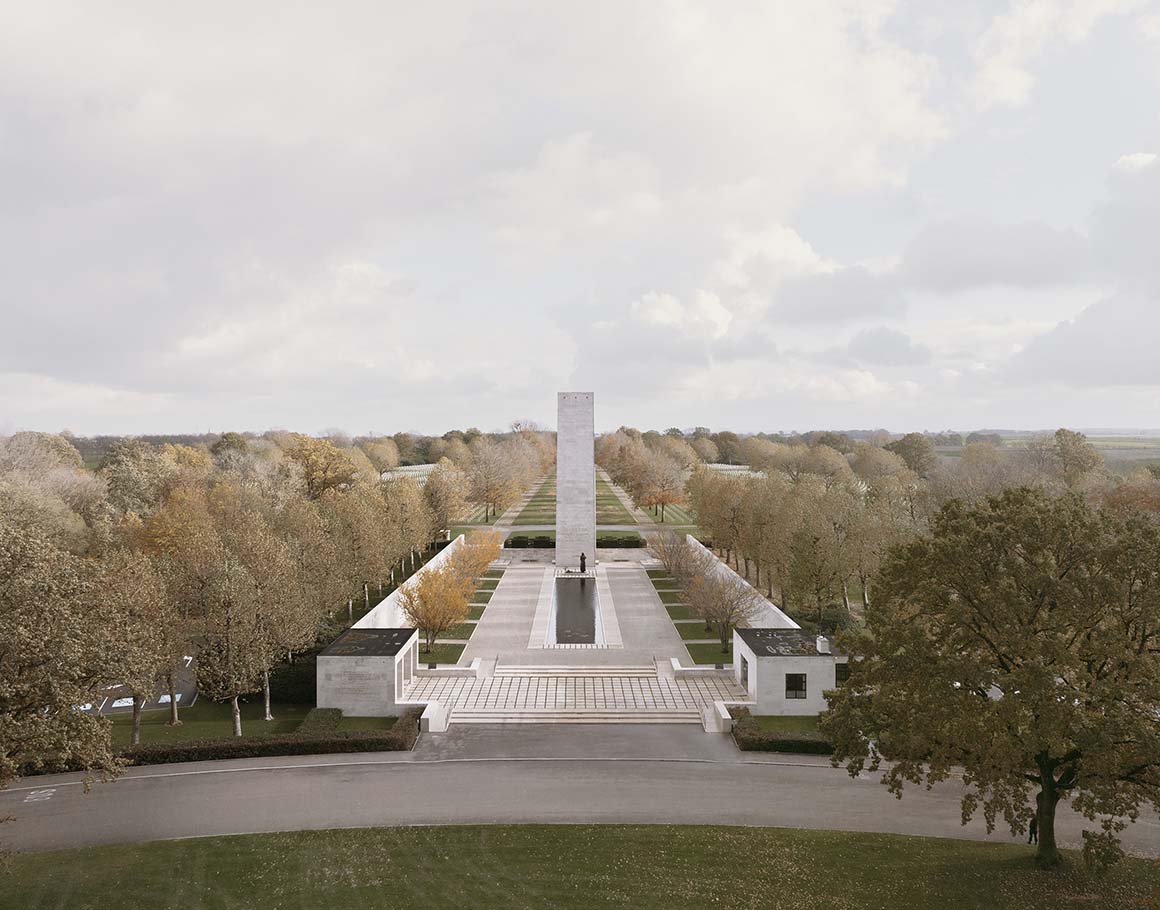
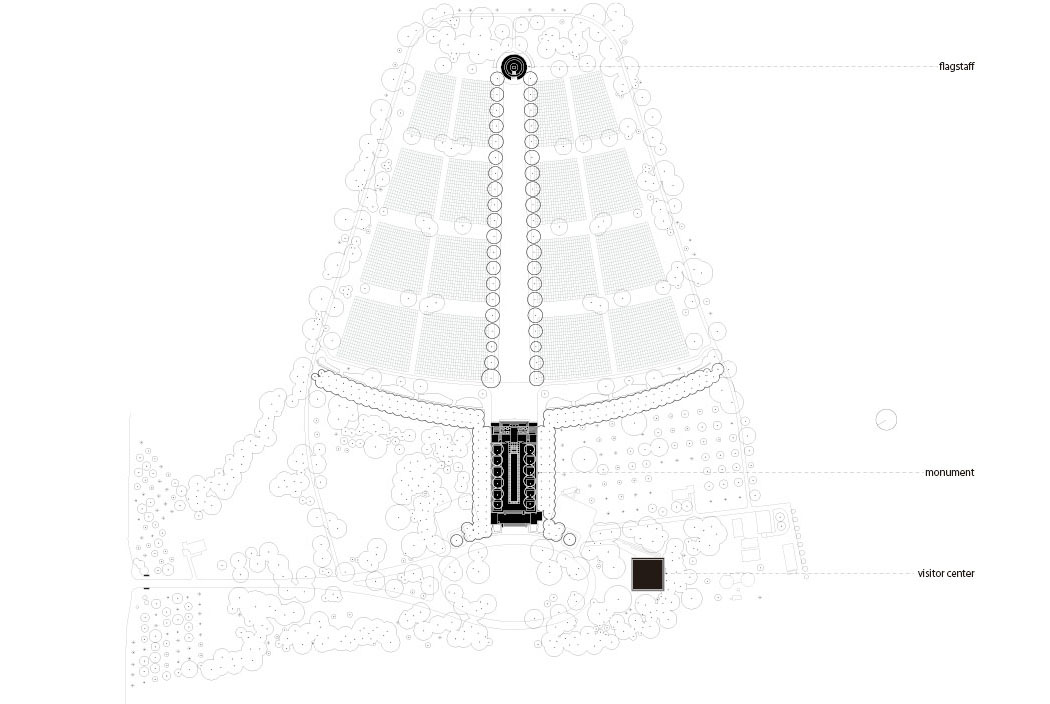
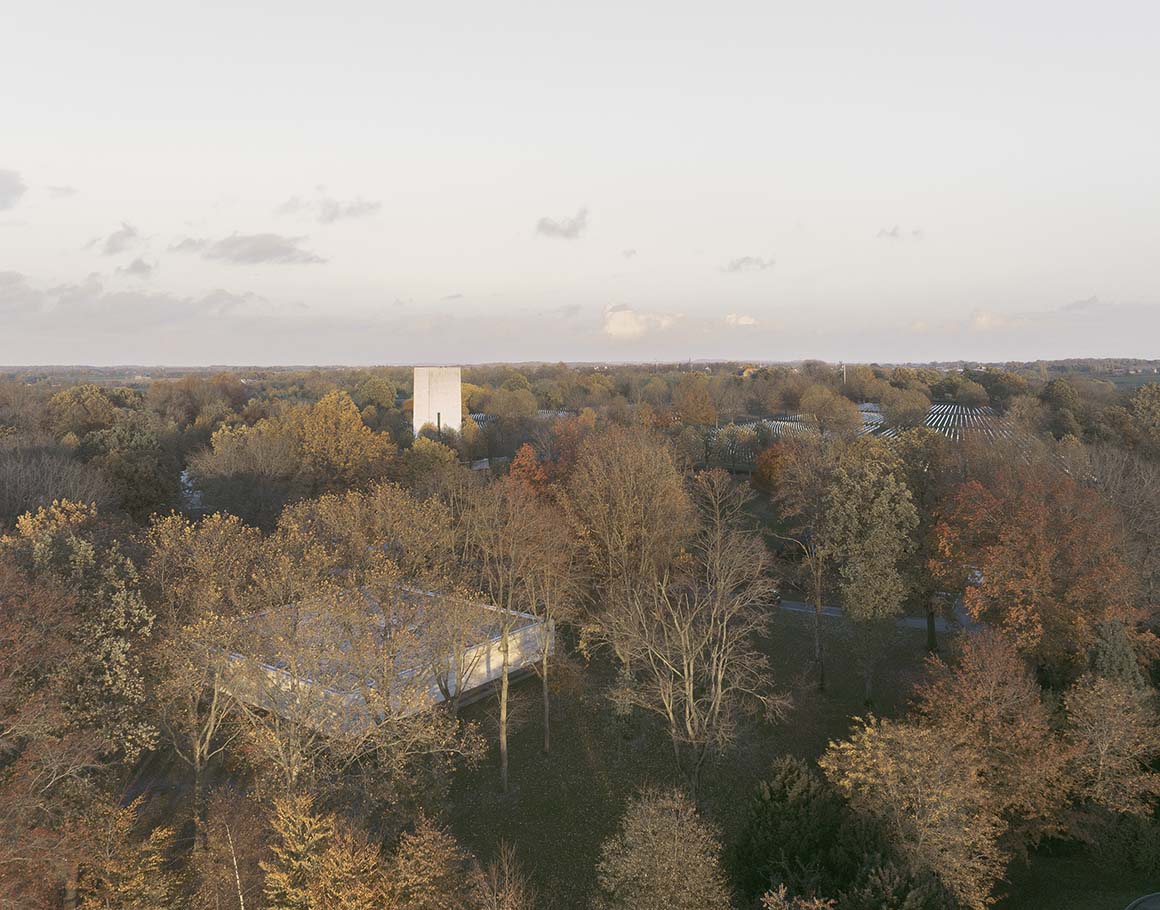
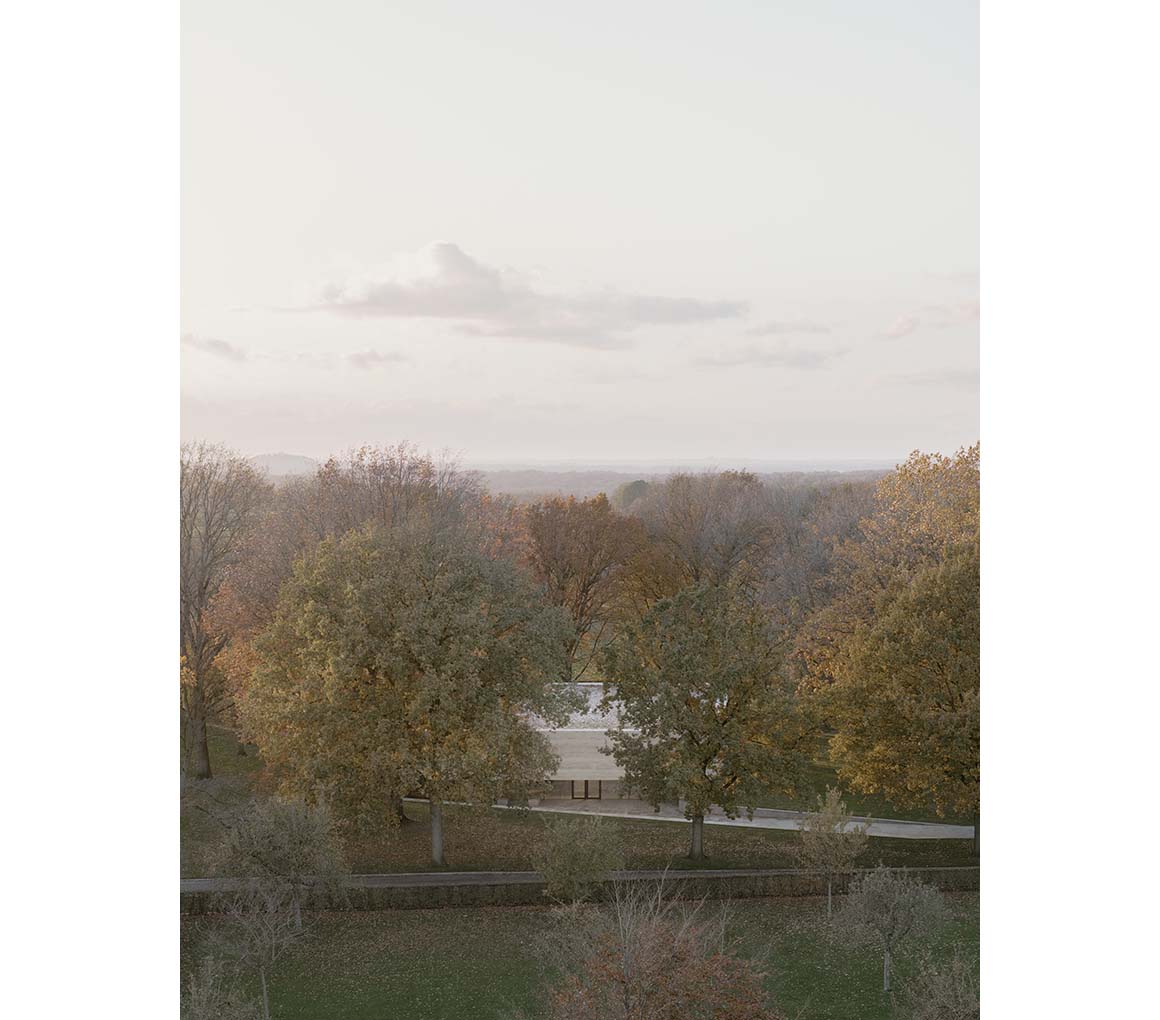
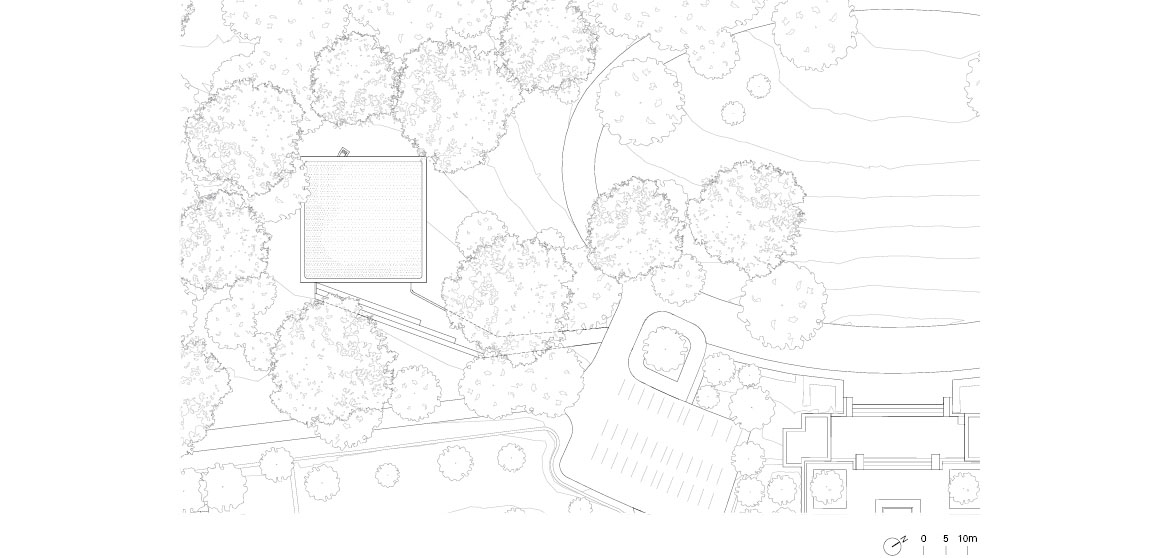
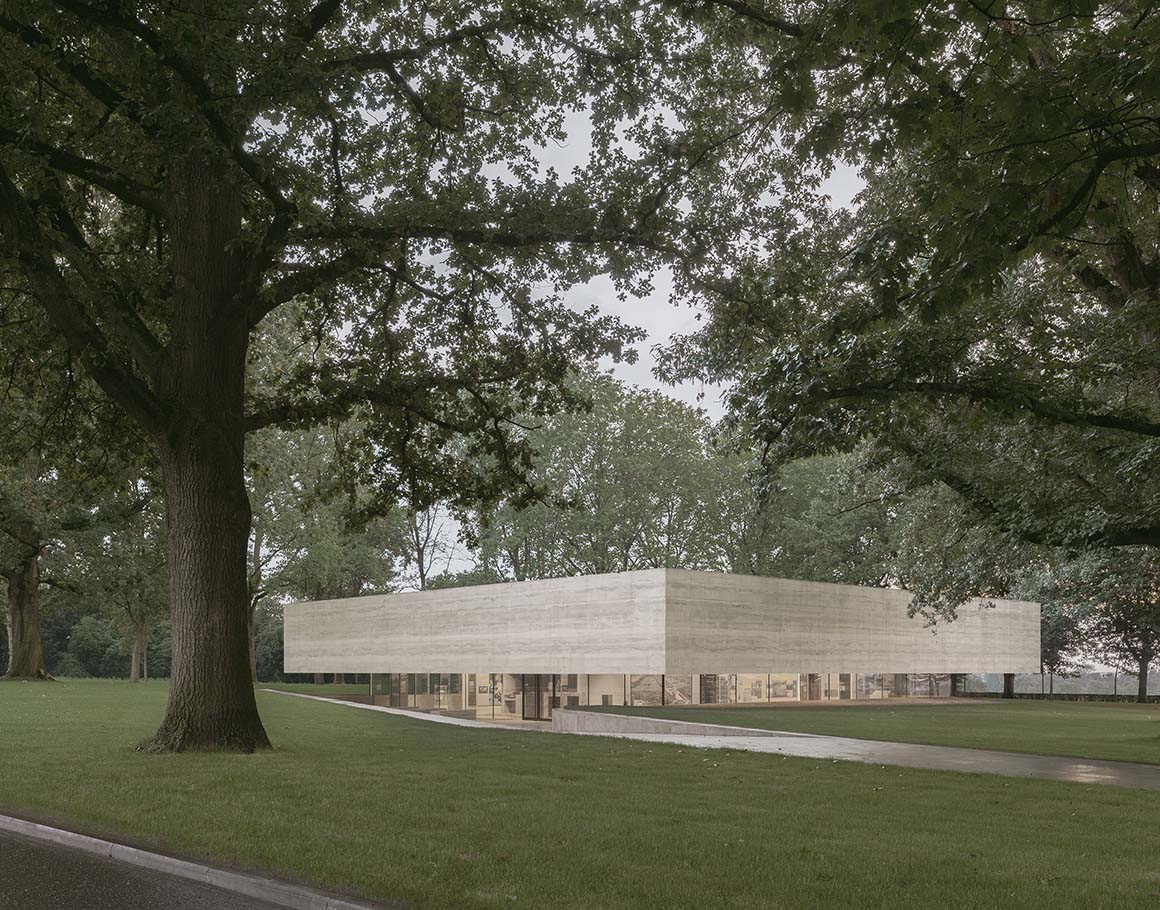

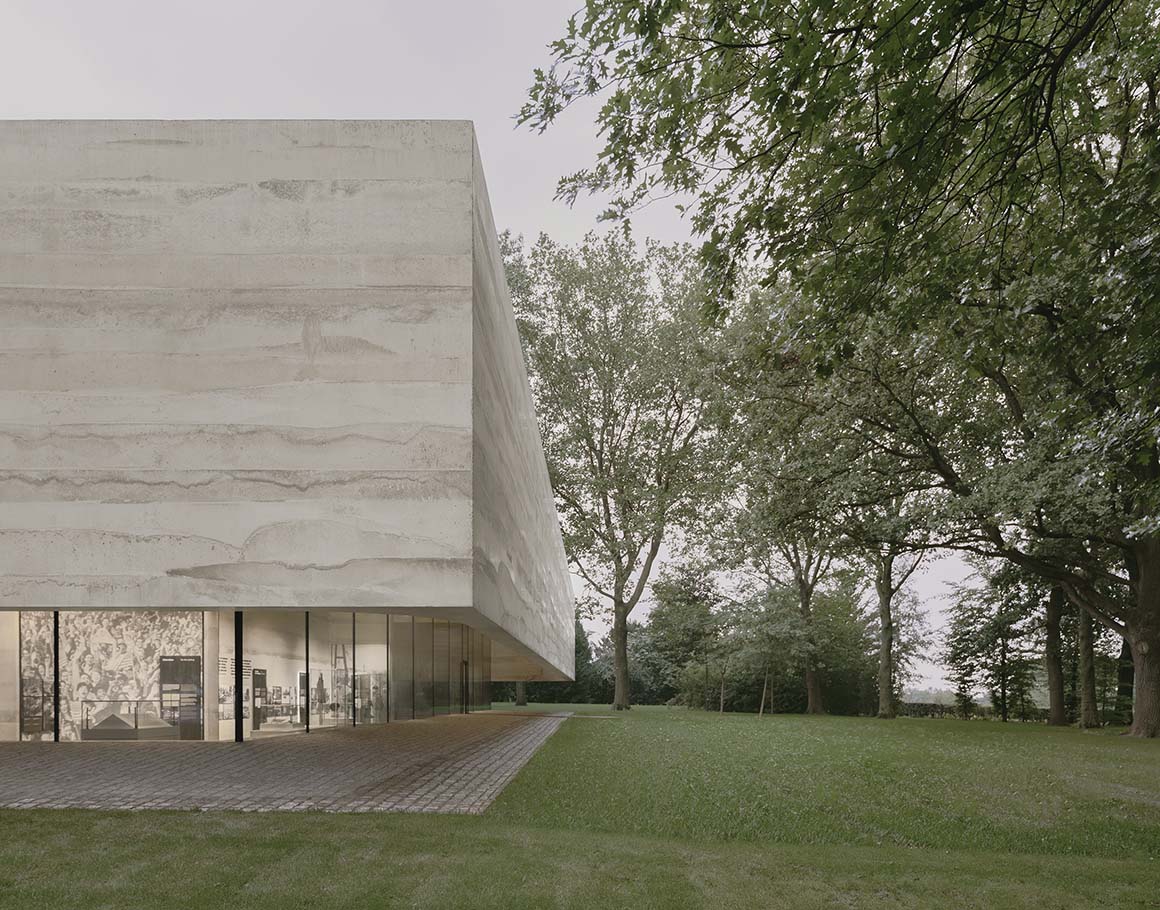
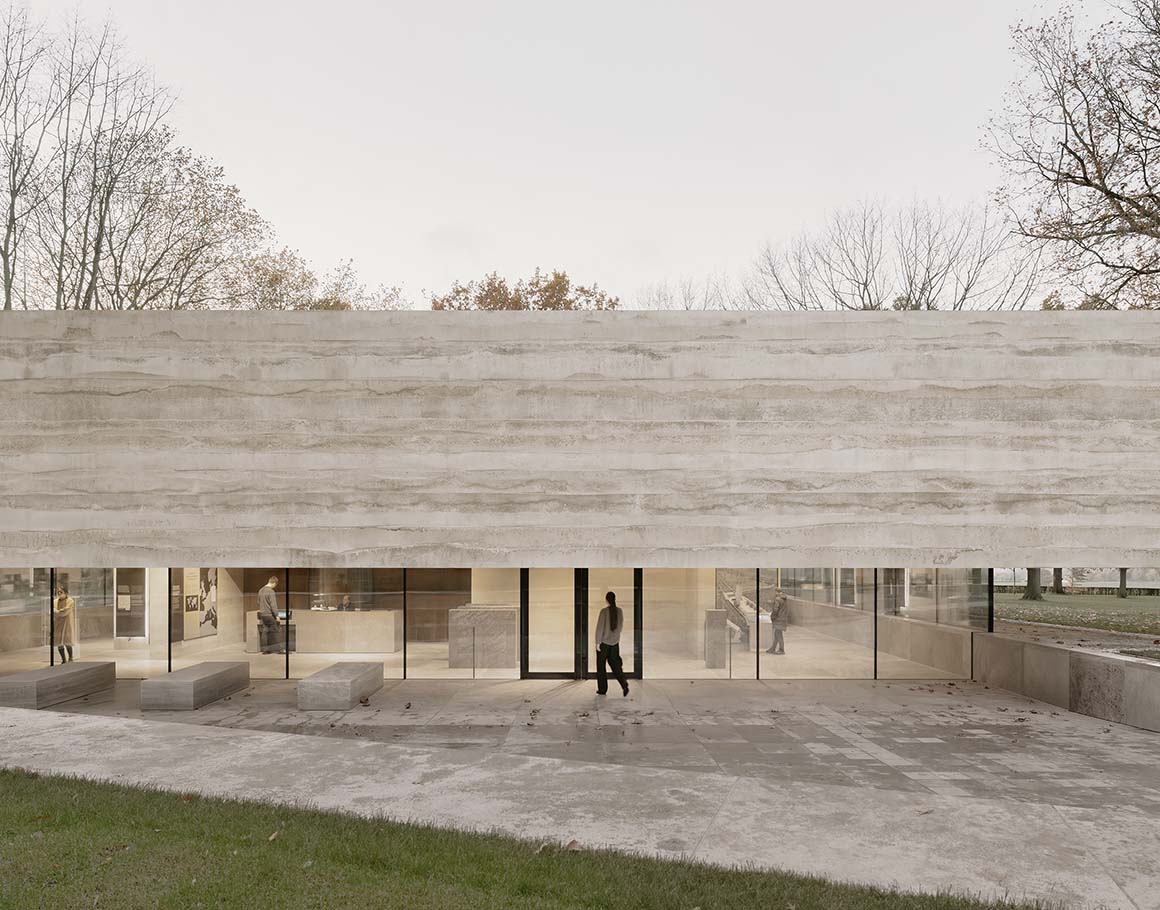
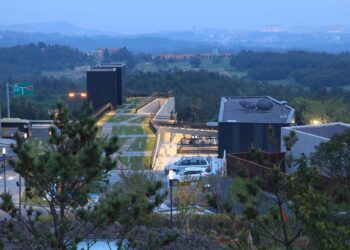
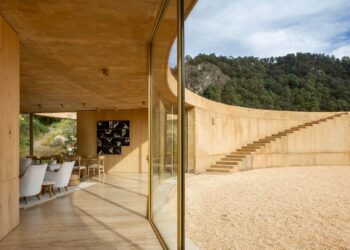
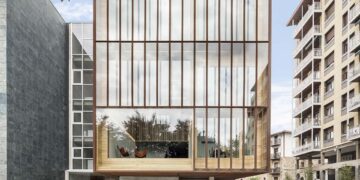
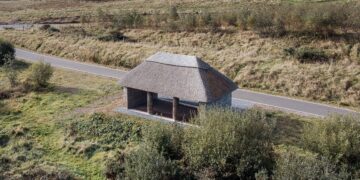
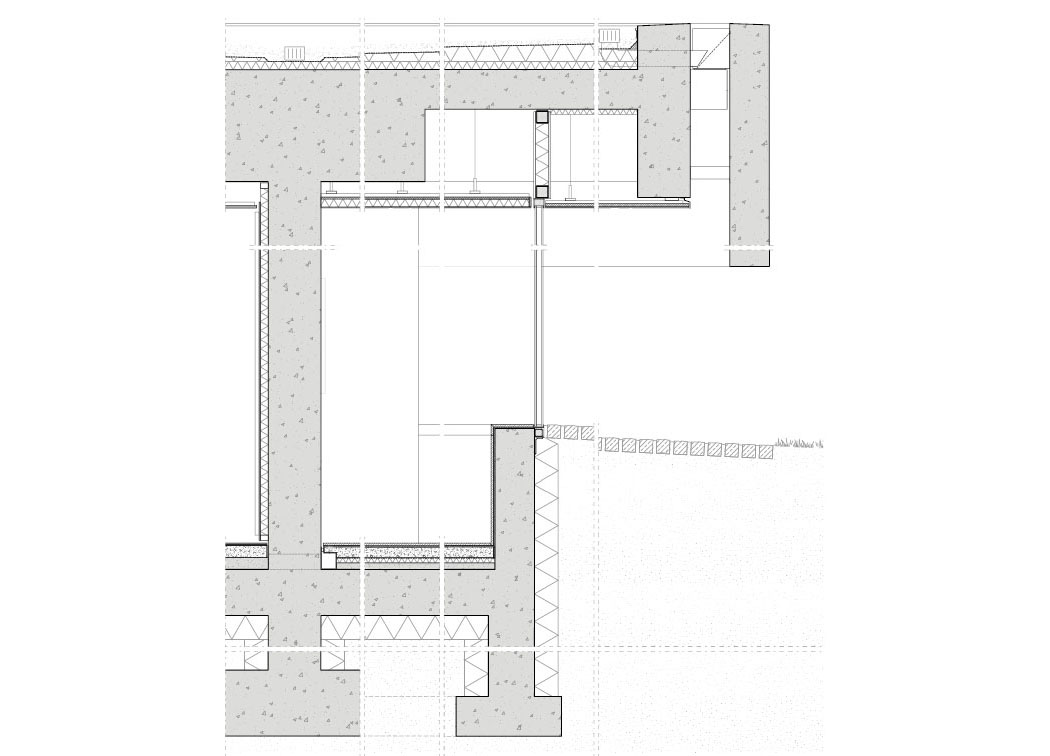
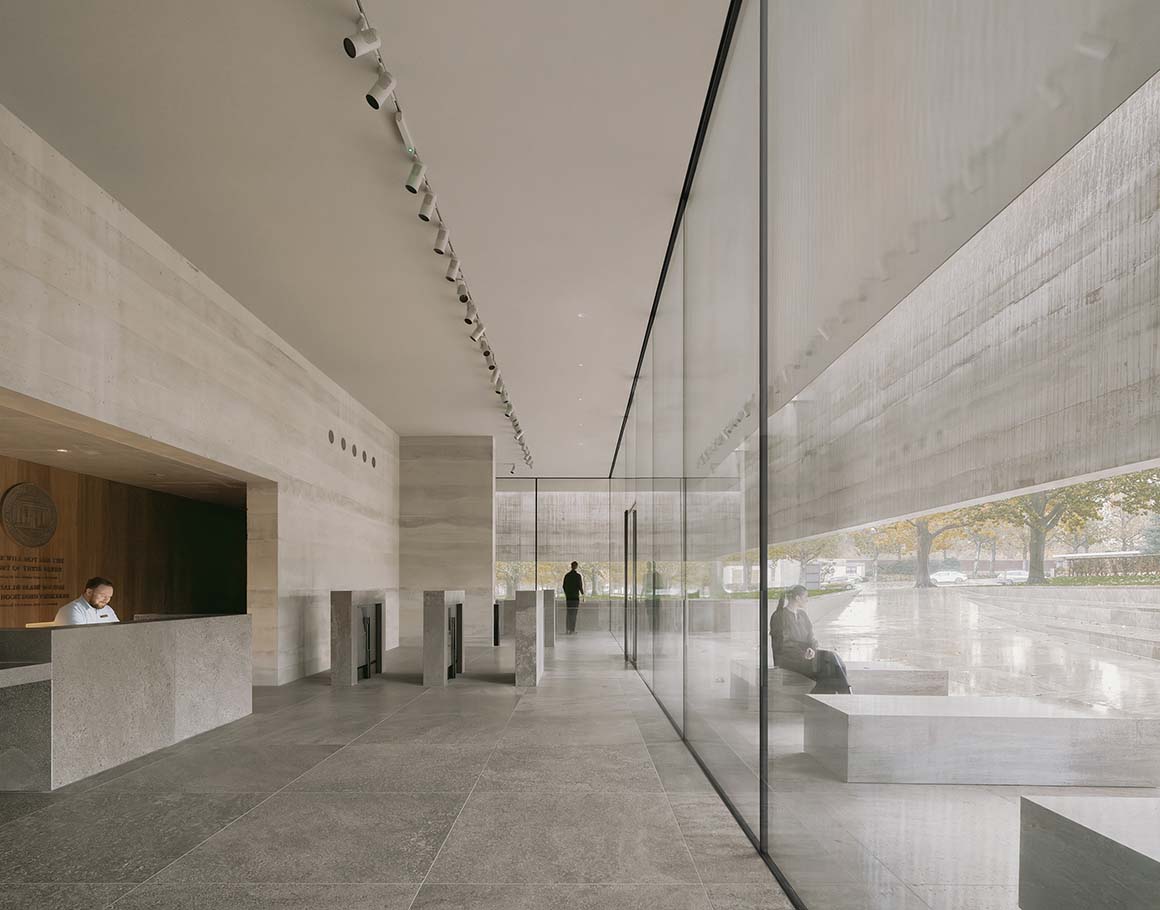
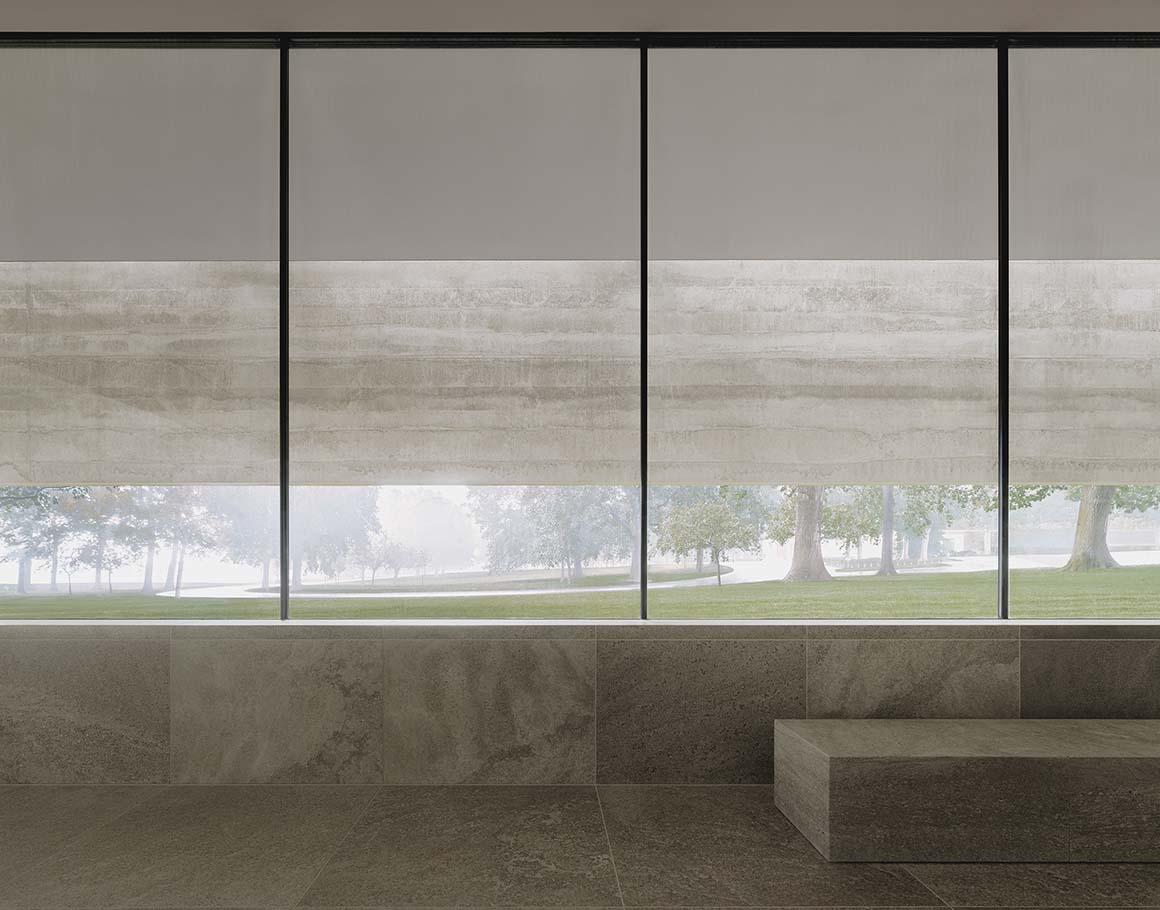
The visitor center is located east of the cemetery’s central Court of Honor. A winding, tree-lined pathway slopes gently downward, leading visitors to the patio at the front of the building, where a row of concrete blocks functions as seating. At ground level, the building is fully enclosed by full-height glazing with minimal framing, rendering its outline almost imperceptible. Above, a thin, layered concrete facade wraps the upper portion of the structure. Supported by the internal walls, a narrow band of daylight is introduced between the façade and the roof. With the floor set below the sloping terrain, the building maintains a deliberately subdued profile, appearing from a distance as a stone floating above the grass. From within, panoramic views open toward the rolling hills and scattered trees of the surrounding landscape.
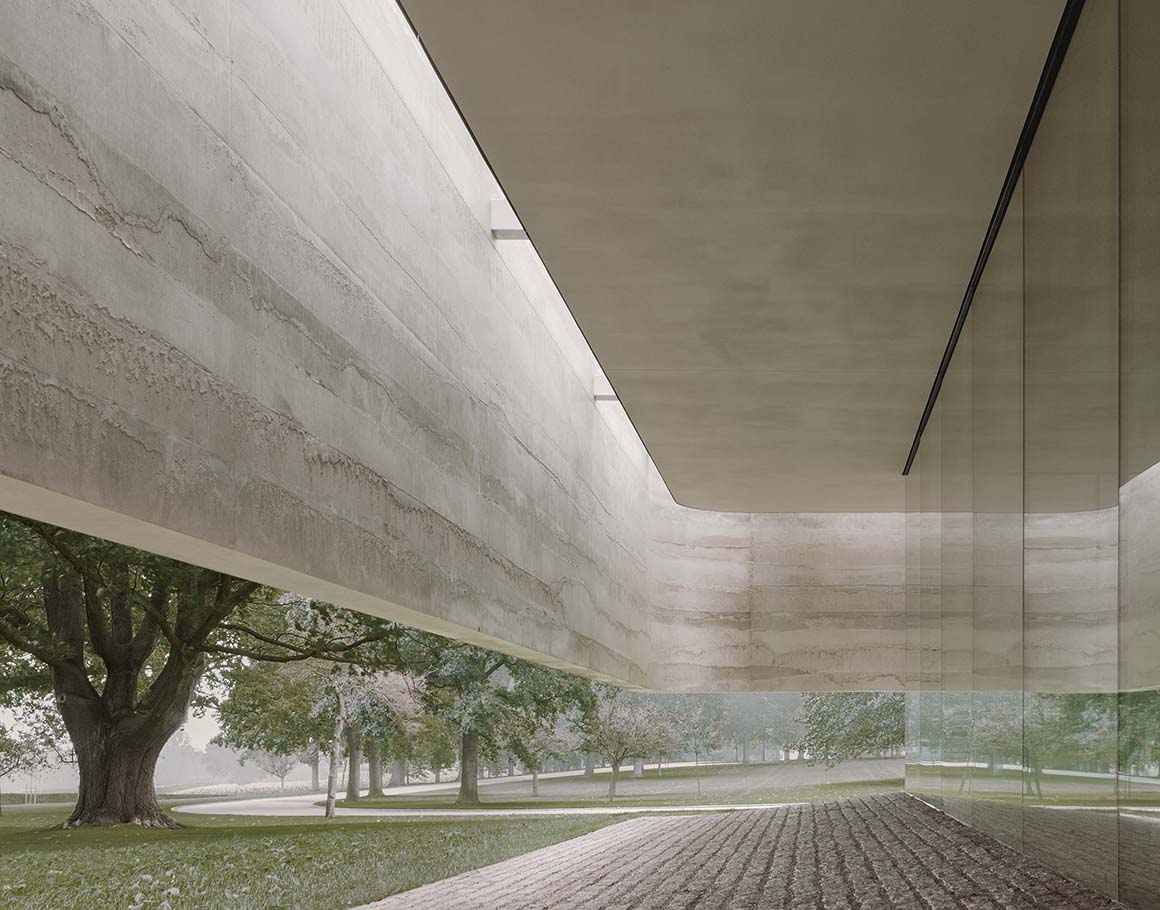
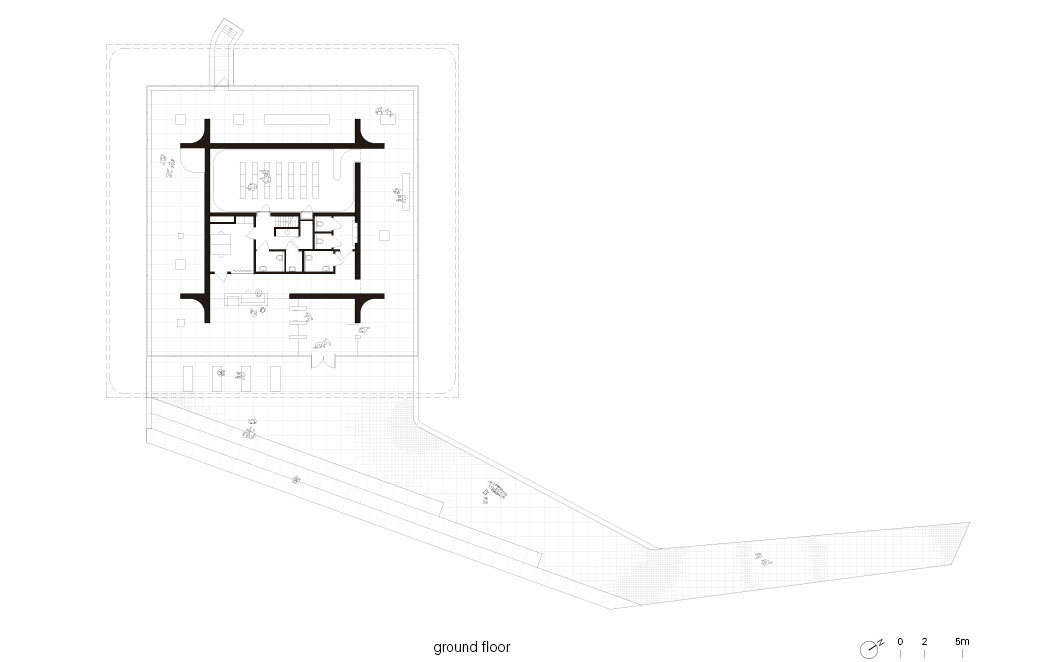
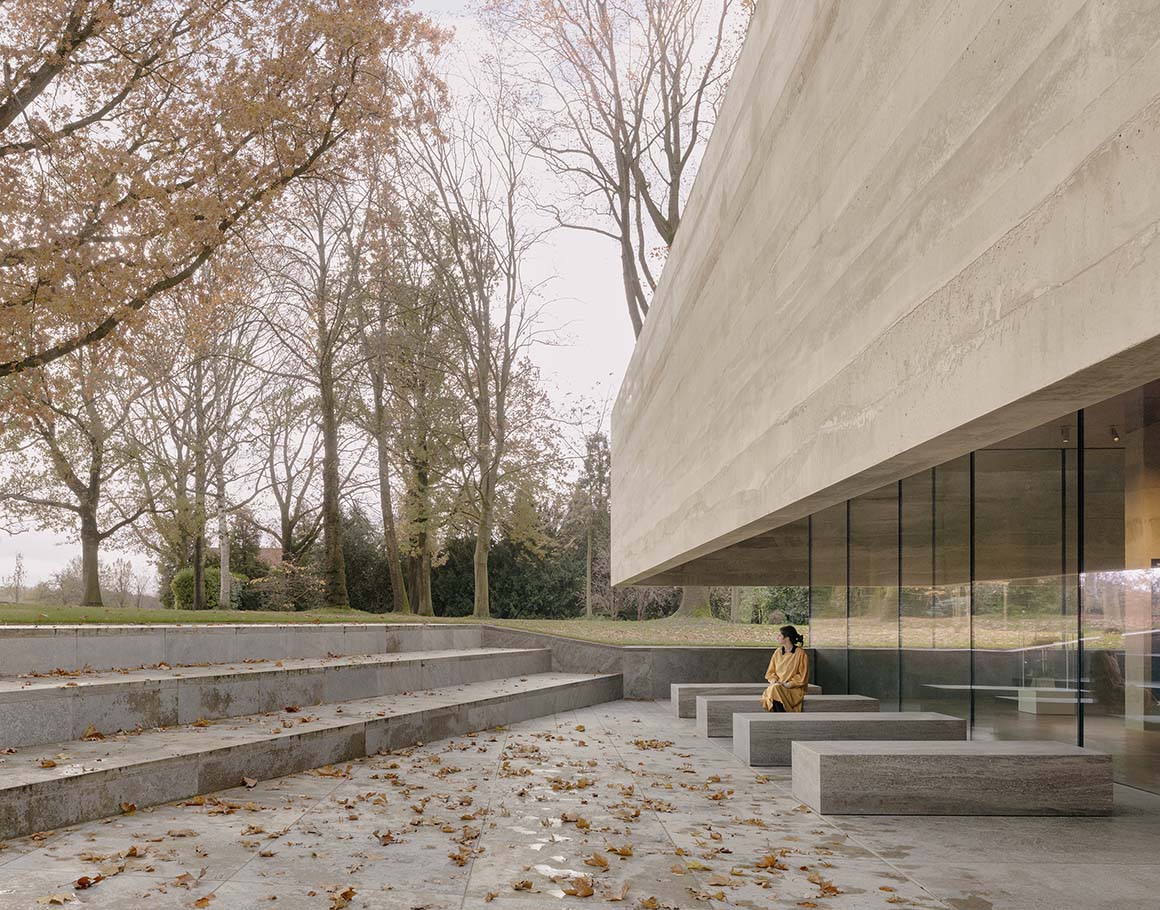
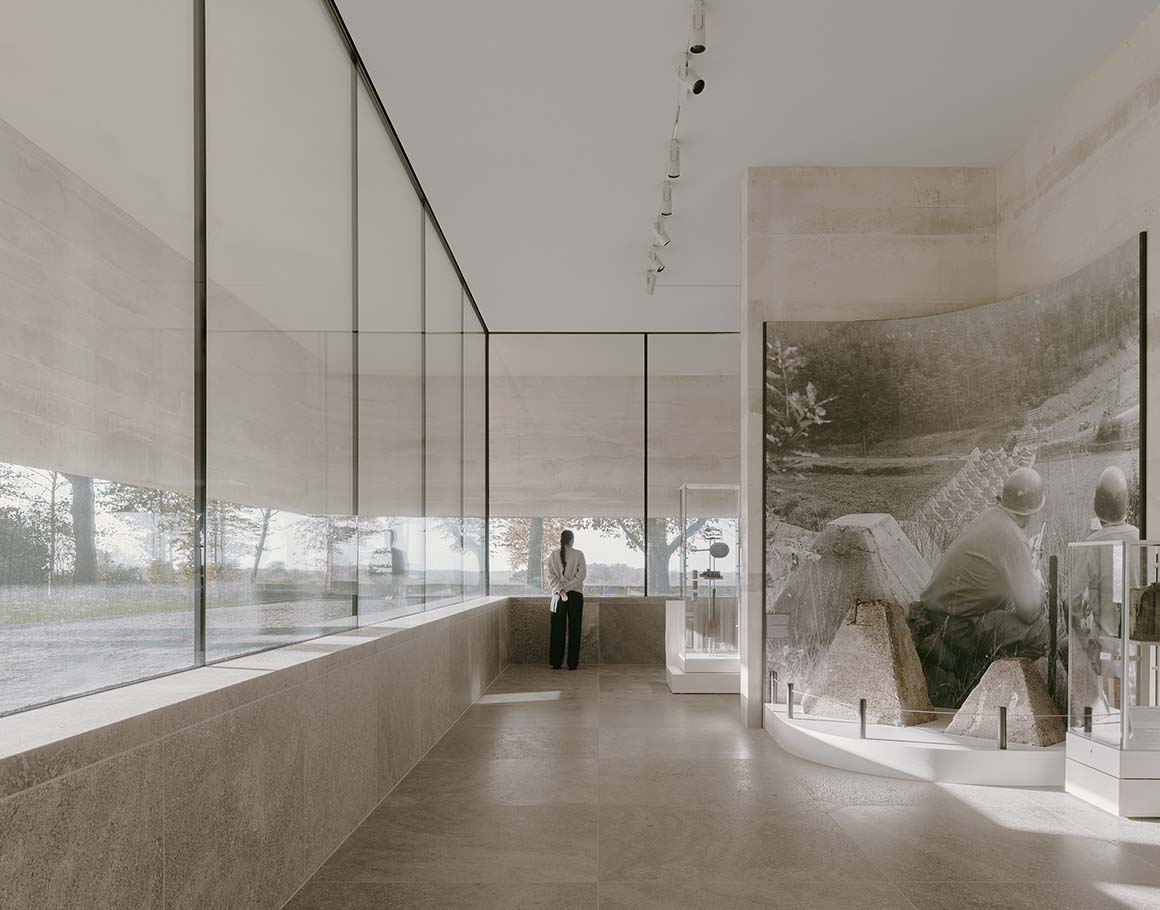
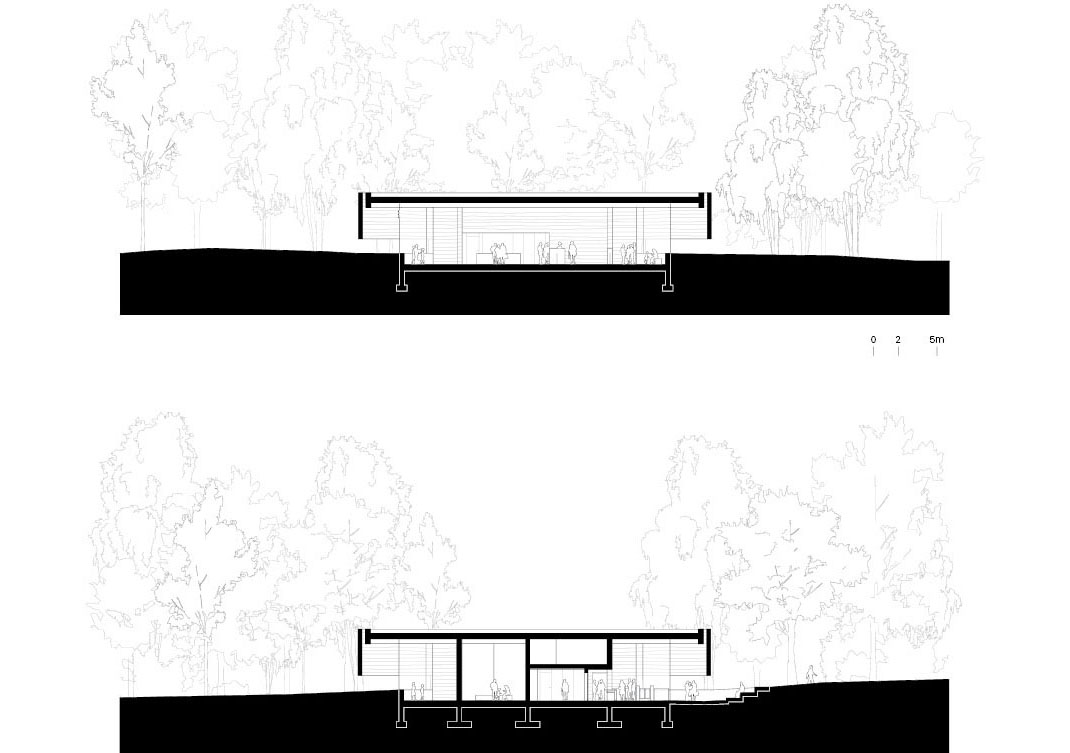
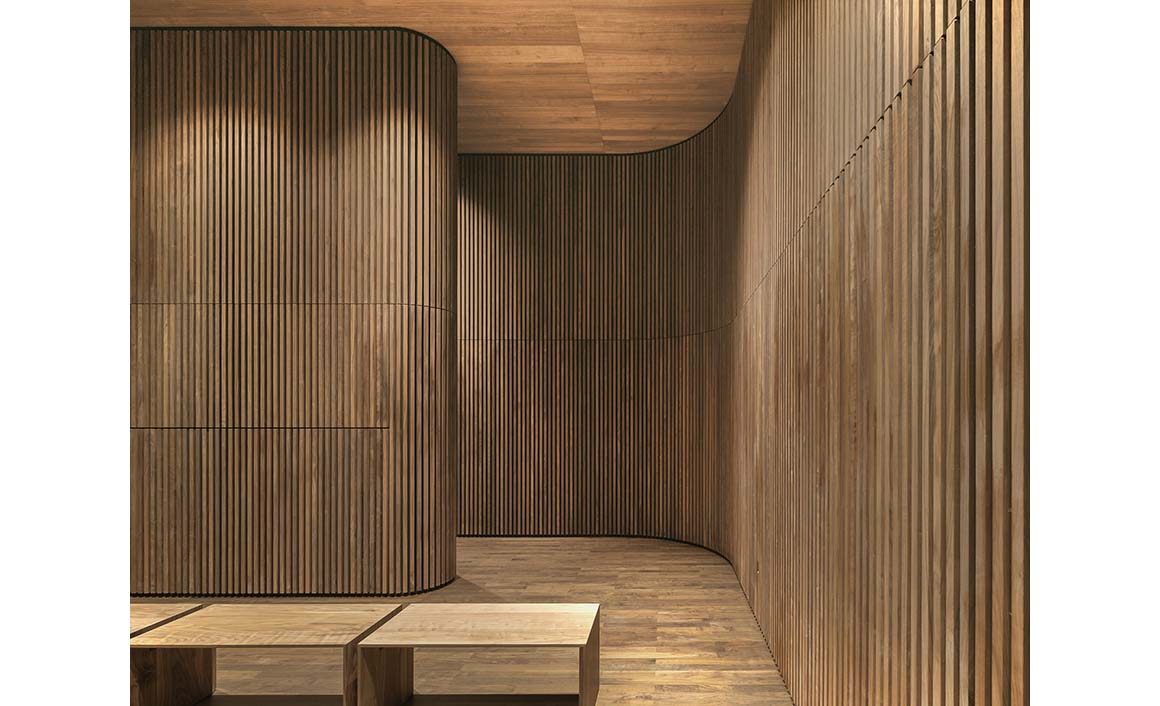
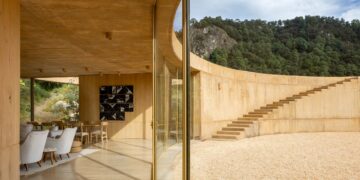
At the center of the plan, behind interior concrete walls cast with the same texture as the exterior, are the auditorium and visitor facilities. The wood-lined auditorium features rounded corners that enhance the perception of spatial openness. Focusing on the personal stories of those buried at the cemetery, the exhibition invites reflection on the realities of war and the lessons carried forward through time, while emphasizing the importance of striving toward a stable and peaceful future. By deliberately refraining from asserting its presence, the building deepens the sense of place, offering visitors time for learning and contemplation within the surrounding stillness. One of 26 cemeteries worldwide administered by the American Battle Monuments Commission, the Netherlands American Cemetery reminds us that while the immediacy of mourning may fade, awareness of the lasting impact of the World War II must continue to be renewed. In an era of increasing international conflict and uncertainty, the visitor center plays an important role in understanding the historical dynamics that followed the war.
Project: Netherlands American Cemetery Visitor Center / Location: Amerikaanse Begraafplaats 1, 6269 NA Margraten, Netherlands / Architect: KAAN Architecten (Kees Kaan, Vincent Panhuysen, Dikkie Scipio) / Project team: Rita Alessio, Alessandro Arcangeli, Bas Barendse, Alice Colombo, Sebastian van Damme, Andrea Gentilini, Thomas Hagemeijer, Kees Kaan, Adam Kelly, Nicki van Loon, Edoardo Mancini, Alexis Oh, Vincent Panhuysen, Dikkie Scipio, Frane Stancic, Claudio Zampaglione / Landscape designer: Karres + Brands landschapsarchitecten B.V., Hilversum / Structural designer and supervisor: Pieters Bouwtechniek, Delft / Civil designer and supervisor: Smits Rinsma, Zutphen / Mechanical and electrical designer and supervisor: HP Engineers, Gent / Building physics supervisor: DGMR, The Hague / Fire safety engineer: DGMR, The Hague / Acoustics advisor: DGMR, The Hague / Building costs advisor: B3 Bouwadviseurs, Wassenaar / Site coordination supervisor: INEX Architecten, Maastricht / Main contractor: Groep Van Roey, Rijkevorsel / Structural engineer: DeClerk & Partners, Waregem / Structural engineer contractor: C.T. de Boer, Nieuwegein / Mechanical engineer: Deltha, Diepenbeek / Electrical engineer: Maris, Heusden-Zolder / Civil engineer: Dirix, Elsloo / Client: American Battle Monuments Commission (ABMC) / Use: visitor center / Gross floor area: 600m² / Design: 2018.6~2020.9 / Construction: 2022.1~2023.5 / Completion: December 2023 / Photograph: ©Simon Menges (courtesy of the architect)