






An angular emphasis
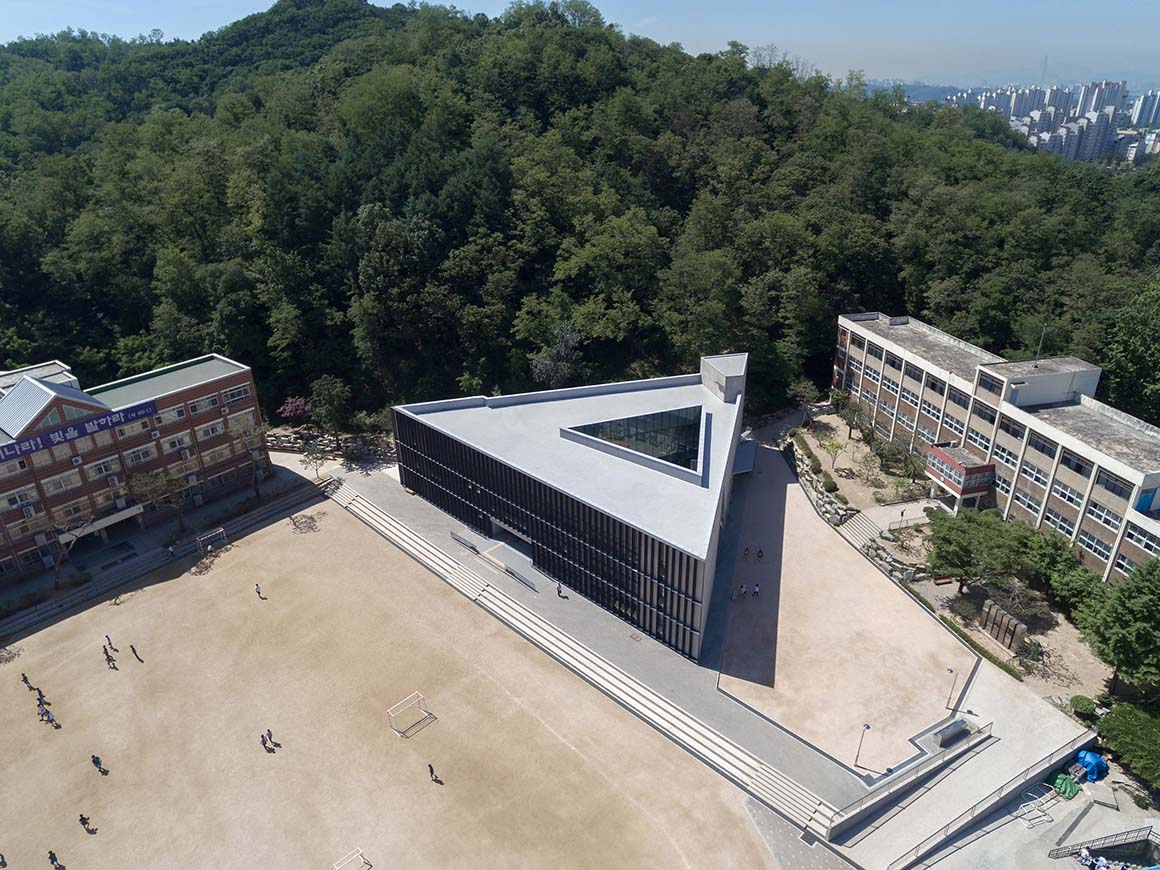
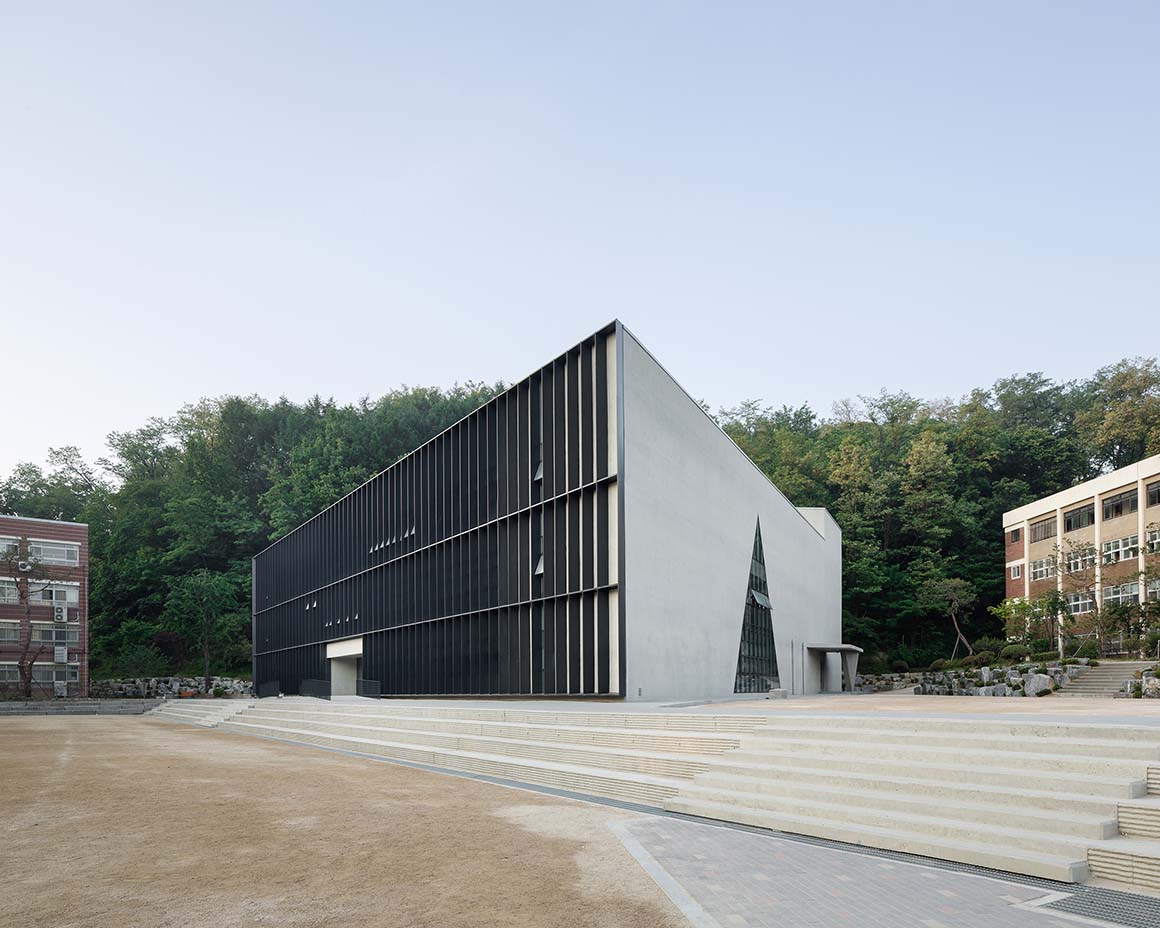
The site was once a piece of ground where greenery slowly spilled into the empty playground between buildings. Exactly at this spot, a new order has been introduced—one that distinctly alters the existing flow. It comes as a large point of emphasis, yet feels unfamiliar, like an angular accent mark. The once loose and relaxed terrain now carries a sense of tension imposed by a sharp-edged triangle. That unfamiliar tension is breathing new energy into the otherwise static scenery of the surrounding old buildings, the empty playground, and the adjacent forest edge.
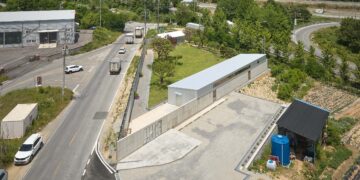
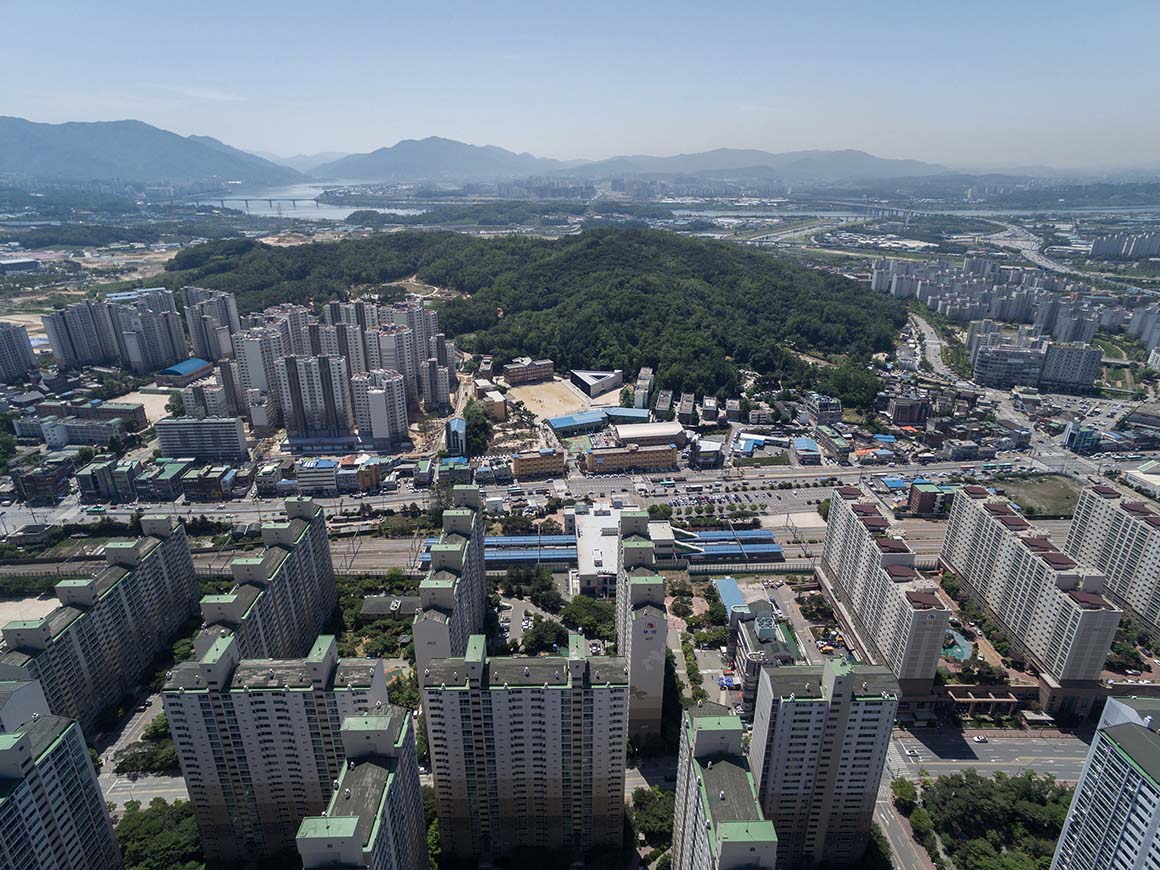
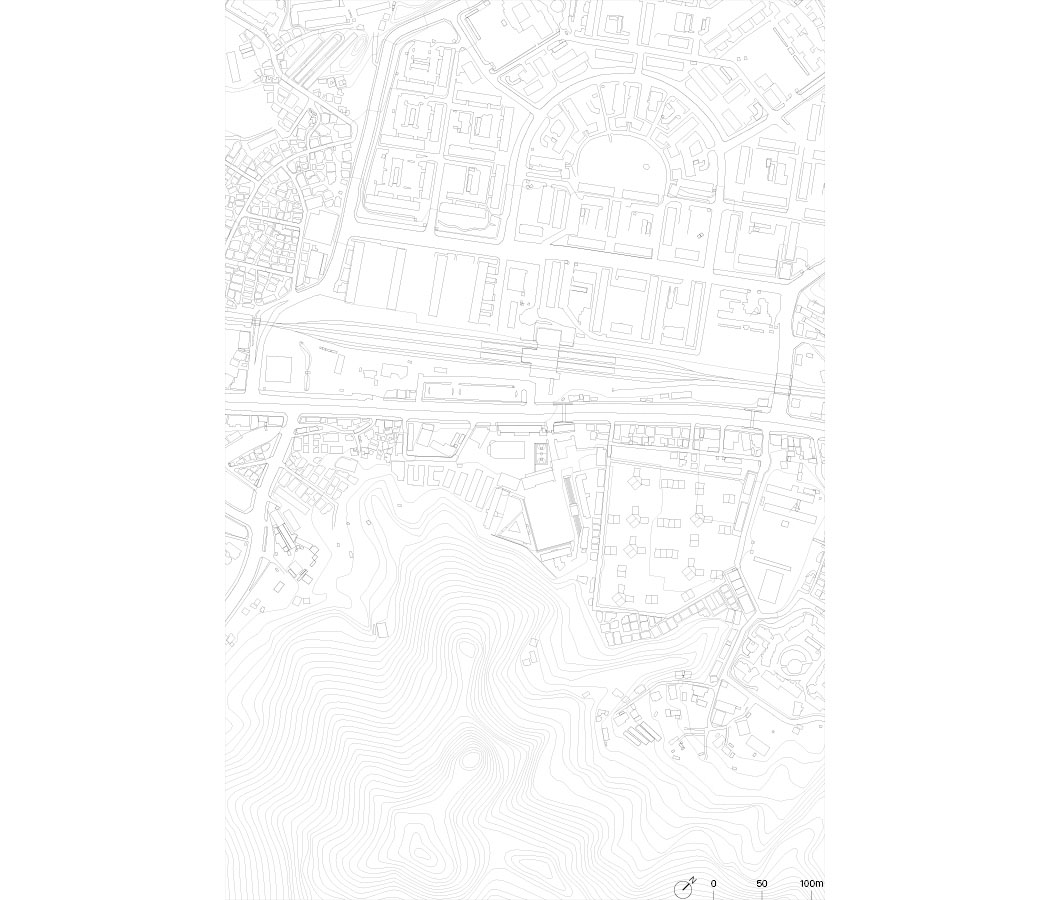
This new structure stands on the campus of Donghwa High School in Namyangju, Gyeonggi Province. As its nickname, “Triangle School,” suggests, the architecture begins with the three edges of the site: the empty playground to the north, the wooded hillside to the east, and the middle school building to the west. These three distinct contexts naturally draw out a triangular configuration. The building opens wide toward the playground, closes itself toward the middle school, and responds to the forested hillside with a mediated approach in both façade and plan.
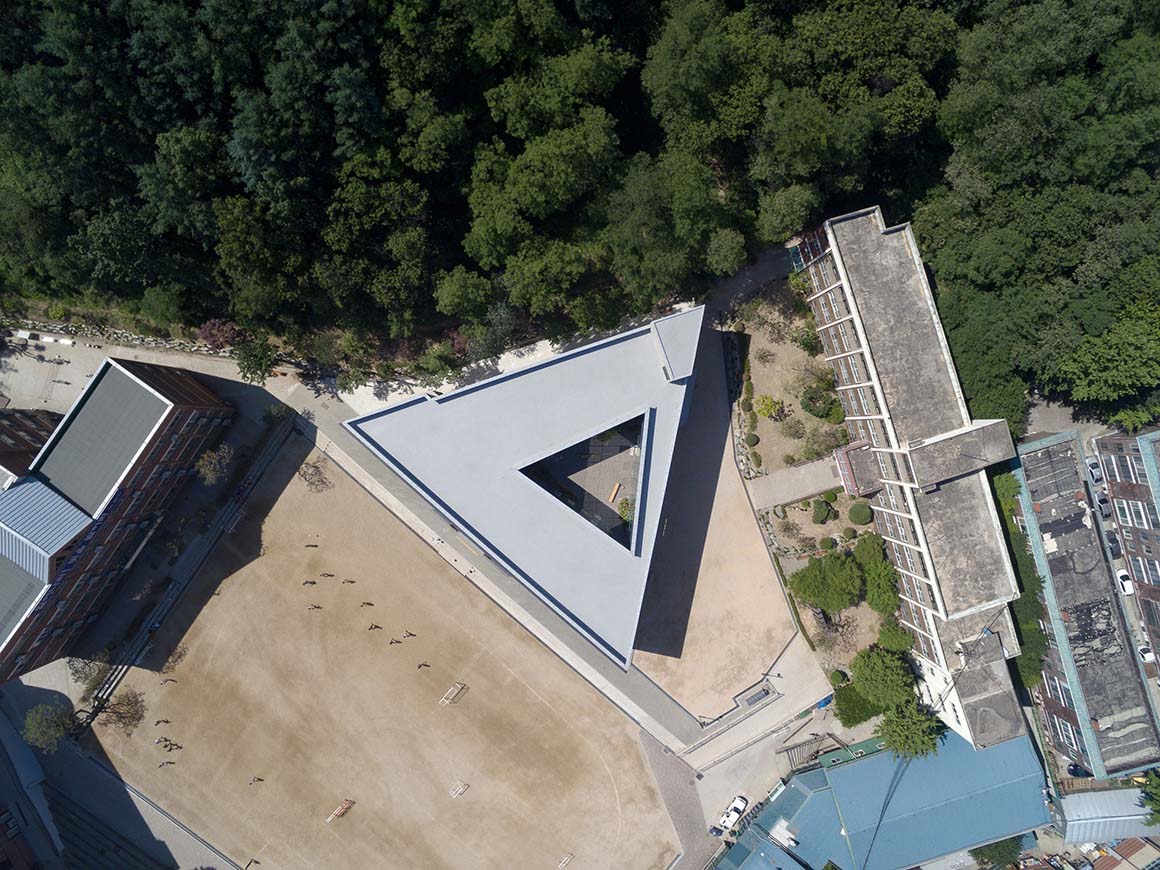
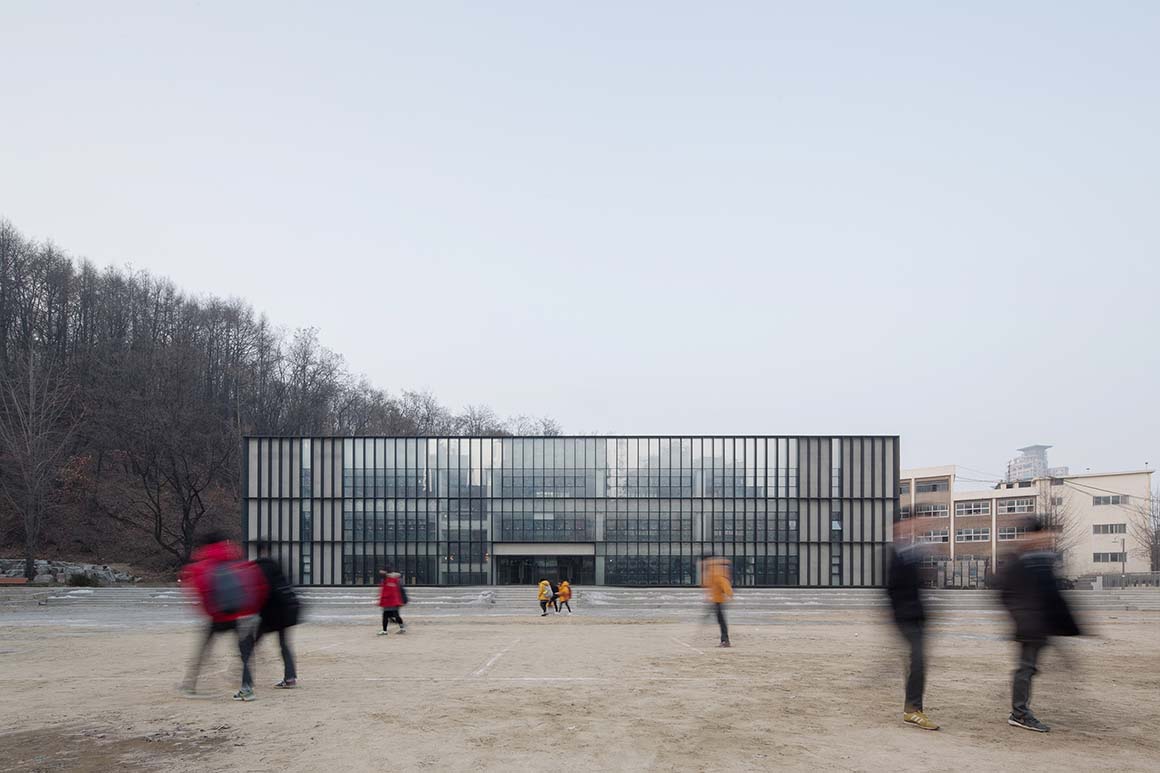
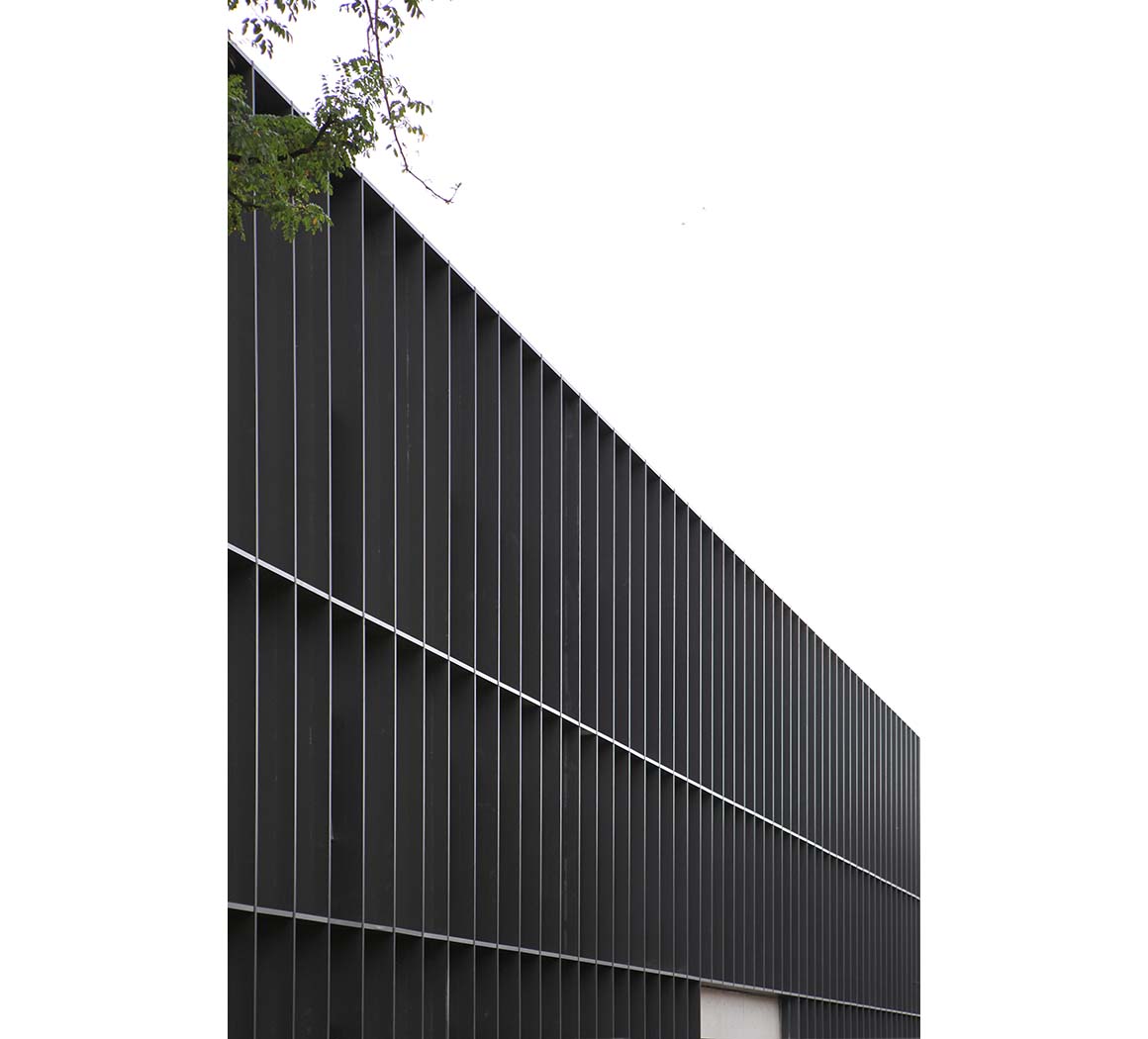
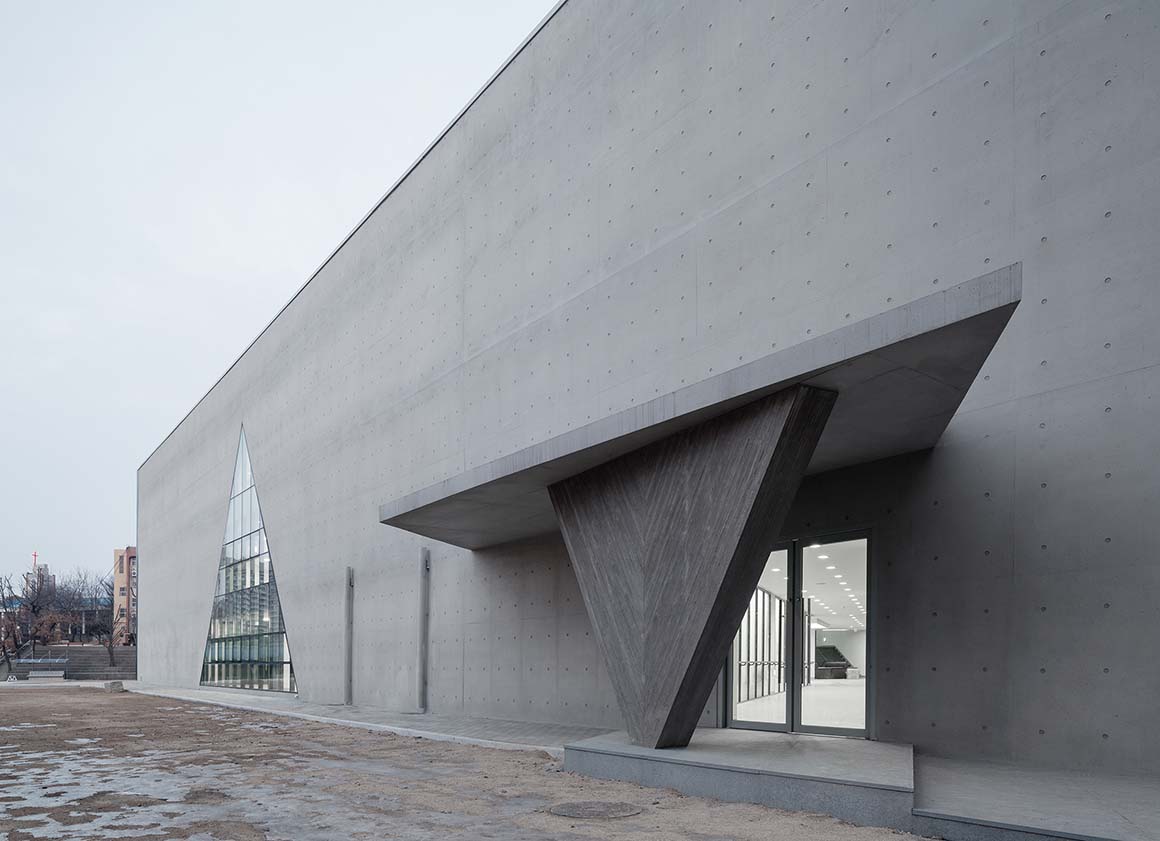
At the center of the triangular building lies another triangular volume—a courtyard open brightly to the sky, serving as a small inner yard where light, wind, and sky are encountered from within. Unlike the exterior’s three differently finished faces, the three inner faces of the courtyard on the second and third floors are fully transparent. These two student-occupied levels open generously toward the courtyard, both visually and physically. As a result, consistent daylight reaches not only the corridors facing the courtyard but also the interior of the classrooms.
The inner triangle does not align with the outer one. In other words, the angles of the inner triangle that defines the courtyard diverge from those of the exterior triangular form. Where this misalignment occurs along the corridor, a generous vertical gap opens up. From the courtyard, this gap extends continuously from the second floor—which forms the courtyard’s ground level—up to the third floor, linking the two levels into a single spatial volume. As a result, the third-floor corridor appears to float like a balcony facing the transparent courtyard.
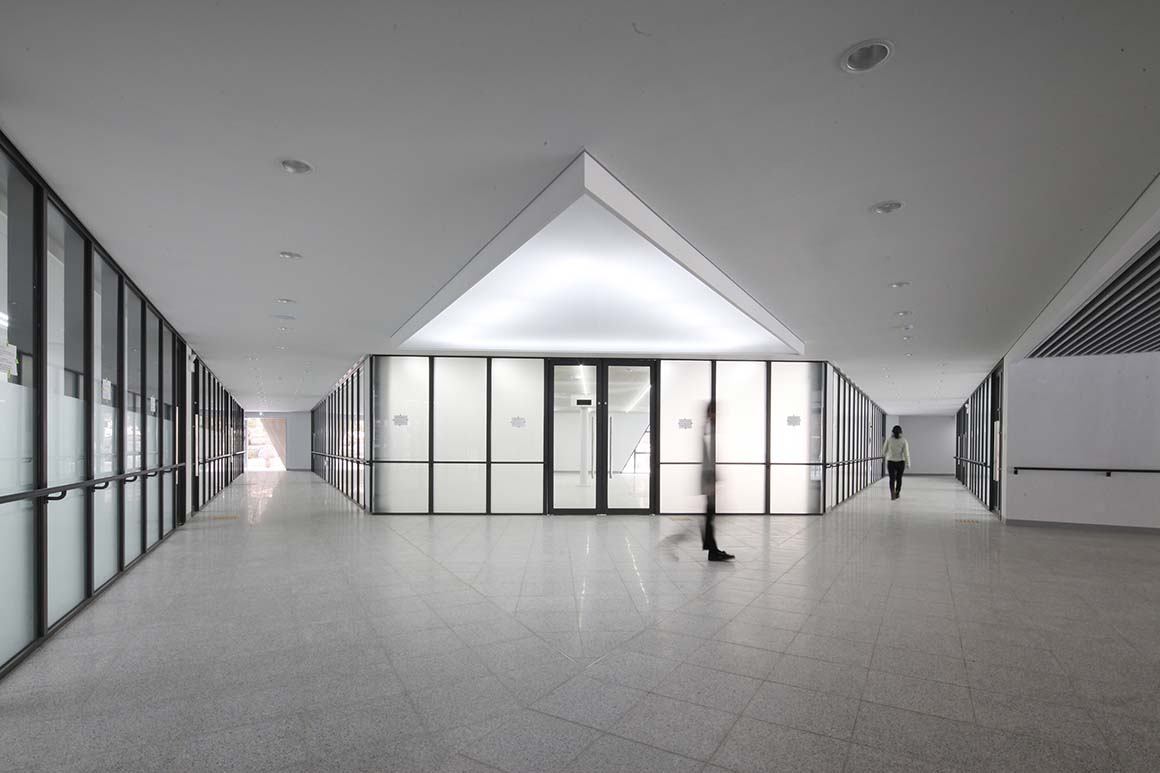

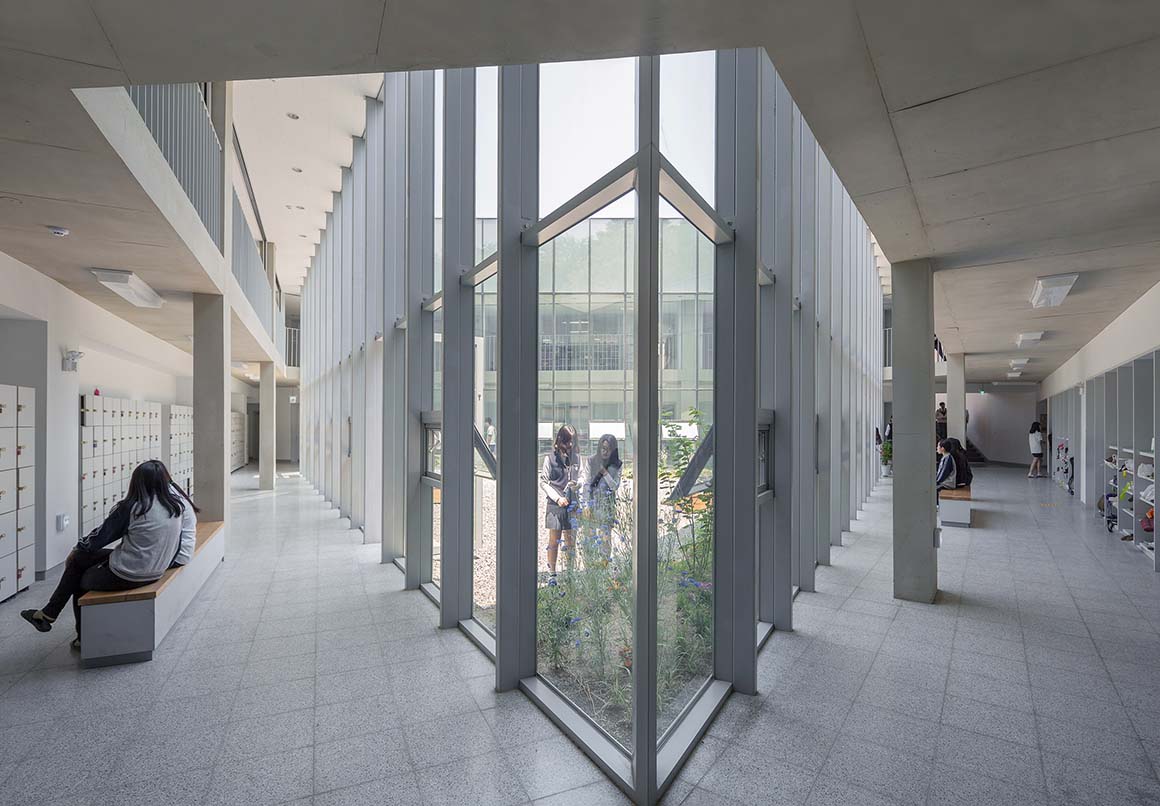
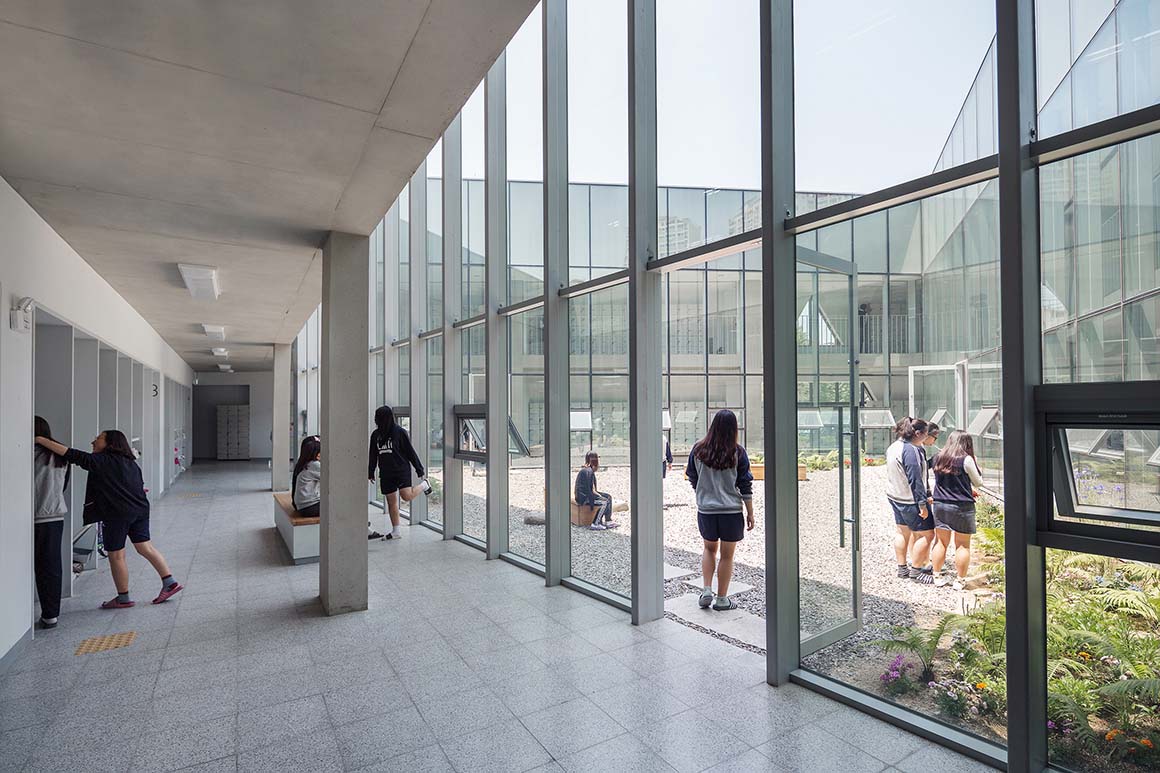

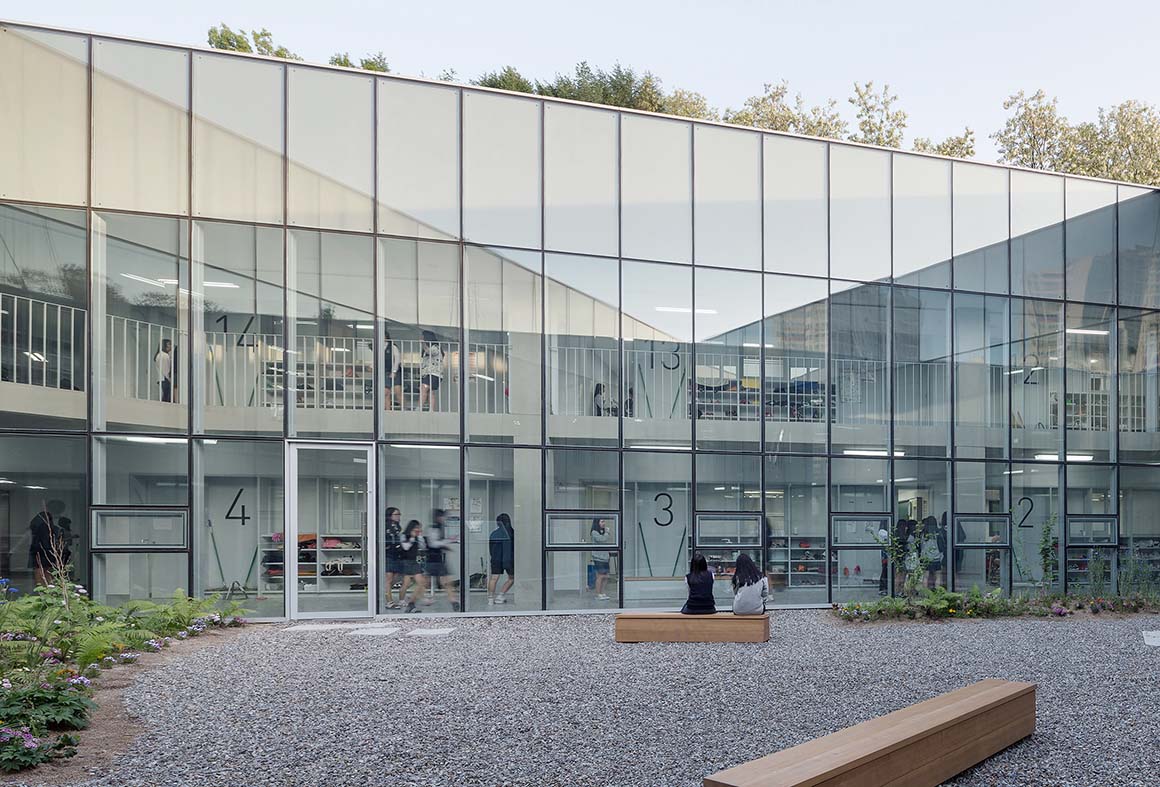
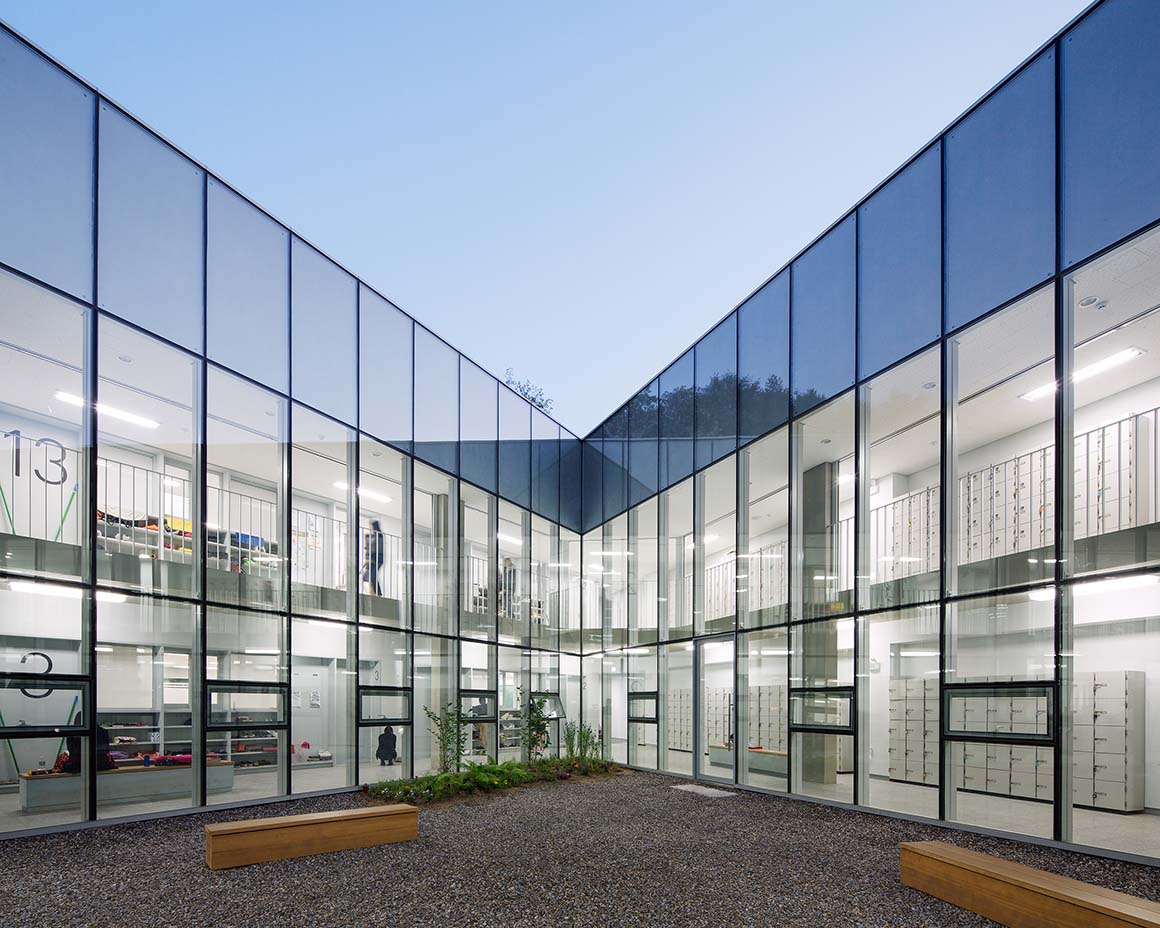
Not only does the building allow communication between floors, but it also opens views across the courtyard to the left and right, enabling visual and spatial connection from virtually any point inside. This is what allows the fluid movement of its users to unfold naturally within an otherwise rigid physical structure. Above all, the transparency of the courtyard dissolves the boundary between inside and outside, unfolding an open learning environment like a panoramic scene. These bright, expansive scenes seem to express a commitment to fostering a school life that feels psychologically as well as physically uplifting.
The corridors facing the courtyard vary in width from 2.4 to 5.5 meters. Although they form a typical triangular circulation loop around the courtyard, they do far more than function as passageways. As a space where students spend their daily lives, it extends its function into a place for discussion, chatter, learning, and play. Rather than being controlled and restrained in the name of school order, it is envisioned as a lively, bustling environment—almost like a noisy marketplace—filled with the students‘ autonomy and social energy.
Project: Triangle School / Location: 434, Gyeongchun-ro, Namyangju-si, Gyeonggi-do, Republic of Korea / Architect: NAMELESS Architecture (Unchung Na, Sorae Yoo) / Contractor: Dolim Construction (Sangbum Park) / Client: Dongwha School / Use: school / Site area: 35,008m² / Gross floor area: 2,628.68m² / Bldg. scale: one story below ground, three stories above ground / Finishing: exposed concrete, steel lover, pair glass / Completion: 2015 / Photograph: ©Kyung Roh (courtesy of the architect)